Buckwheat – but not a cereal
Full of surprises
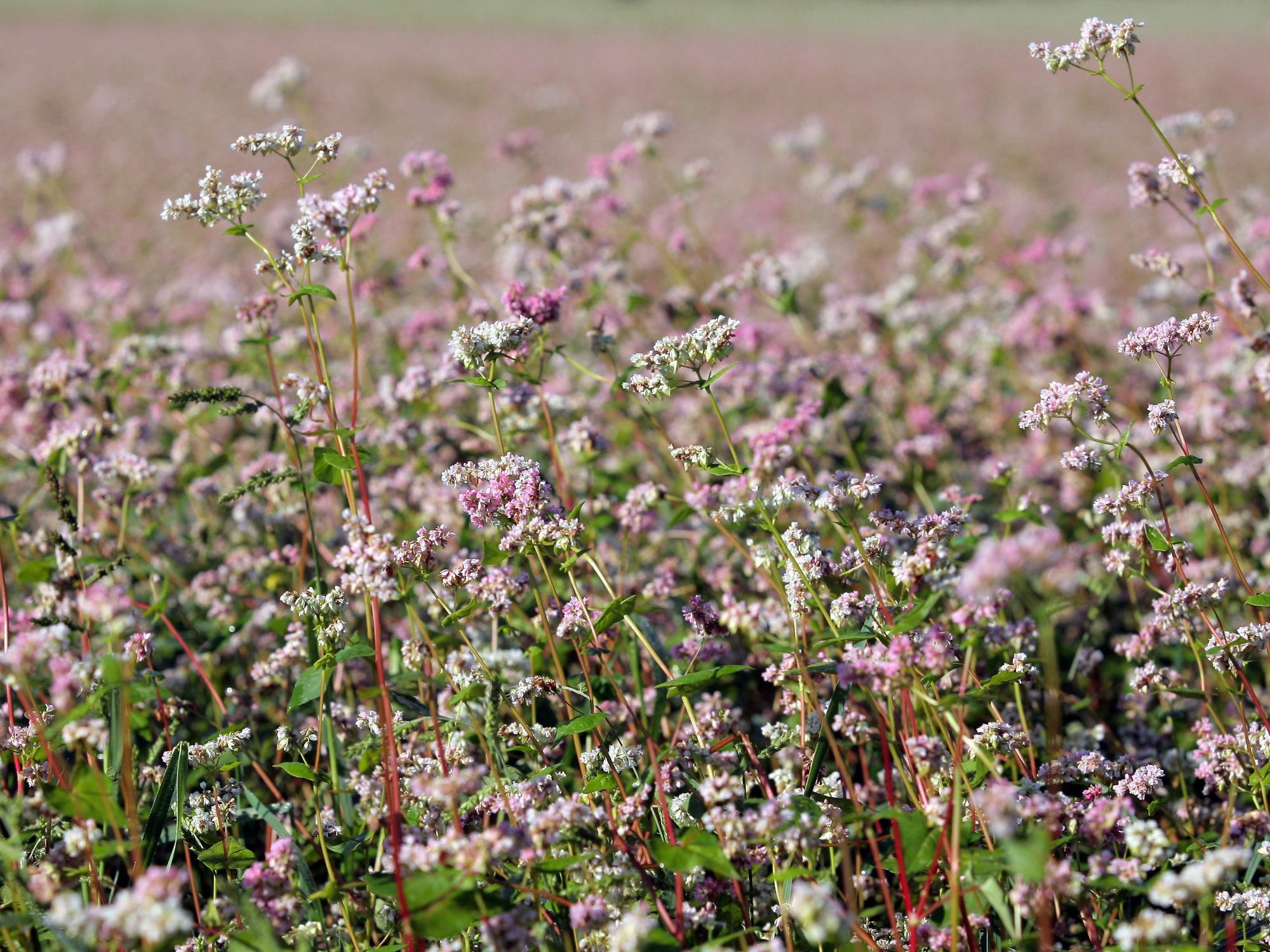
Buckwheat can be found in dishes throughout Slovenia. It is one of the most typical crops in Eastern Slovenia, i.e. the Thermal Pannonian region. A view of the endless white plains at the end of the summer when buckwheat is in bloom can be quite spectacular.
Buckwheat is considered a cereal but is botanically classified as a grass. The plant originates from Central Asia. It was cultivated by the Scythians in the early Iron age and was brought to Europe in the late Middle Ages. It was first mentioned in the Slovenian territory in the land register of the Benedictine monastery in Gornji Grad in 1426 under the name poganka (pagan). Its name suggests that it was brought from pagan countries.
Buckwheat is an annual flowering plant growing between 15 to 60 centimetres tall with red stems and pink to white flowers. The leaves are arrow-shaped, and the stems are short. The fruits are blackish achenes with three prominent sharp angles. They are pollinated by insects, particularly bees. This is a modest plant that also thrives in more challenging conditions, as it is quite resilient.
Buckwheat porridge with chanterelles
Photo: STO
Noble mouths have no reason to despise it
It was used in the form of buckwheat porridge and mixed with other flours to make bread and other farinaceous foods, but also in medicine against venous diseases and for the prevention of vascular calcifications. After dehulling, we use its seeds for porridge and after milling, we get buckwheat flour. Buckwheat porridge can be cooked or baked. It has been gaining popularity recently, as it does not contain gluten and is also suitable for people suffering from coeliac disease.
In 1689, Janez Vajkard Valvasor, a Slovenian polymath, wrote in his book, The Glory of the Duchy of Carniola, “Buckwheat grows particularly well and is widespread in Carniola. Eight seeds usually come from one. From buckwheat, regular bread is made that is completely black like soil. This bread is usually eaten by farmers everywhere, throughout the entire country. Although it is black, noble or urban mouths have no reason to despise it because it has quite a nice flavour and is good to eat. In places where a lot of oats is mixed in with it, the bread is rather crumbly. Otherwise, buckwheat is usually mixed with barley and millet and good bread is made from it.”
Rolled dumplings with buckwheat
Photo: STO
Buckwheat in Thermal Pannonian Slovenia
In the Dolenjska region, buckwheat potancelj, a savoury flat cake with cottage cheese filling, is made. This can be an independent dish or a side dish to meat and vegetable dishes on festive occasions. It got its name after the way it is made since the upper layer of the dough is pressed (trampled) down into the baking tin. Bizeljsko buckwheat cake is a juicy cake made from unleavened buckwheat dough with a cottage cheese filling. It was once eaten when working in the fields and vineyards and on important holidays. It is said to be at its most delicious immediately after baking, when still warm.
In Prlekija, you can order buckwheat krapec, which the locals also call kropec. This delicious cake is made of a thin layer of buckwheat dough filled with cottage cheese and sour cream. Across the Mura River in Prekmurje, buckwheat zlejvanka with pumpkin seed oil and pork cracklings is made. This is a cake made of liquid buckwheat mixture that is poured into a hot baking tin. At the time of pig slaughter, traditional sausages with buckwheat and millet porridge are made in Prekmurje.
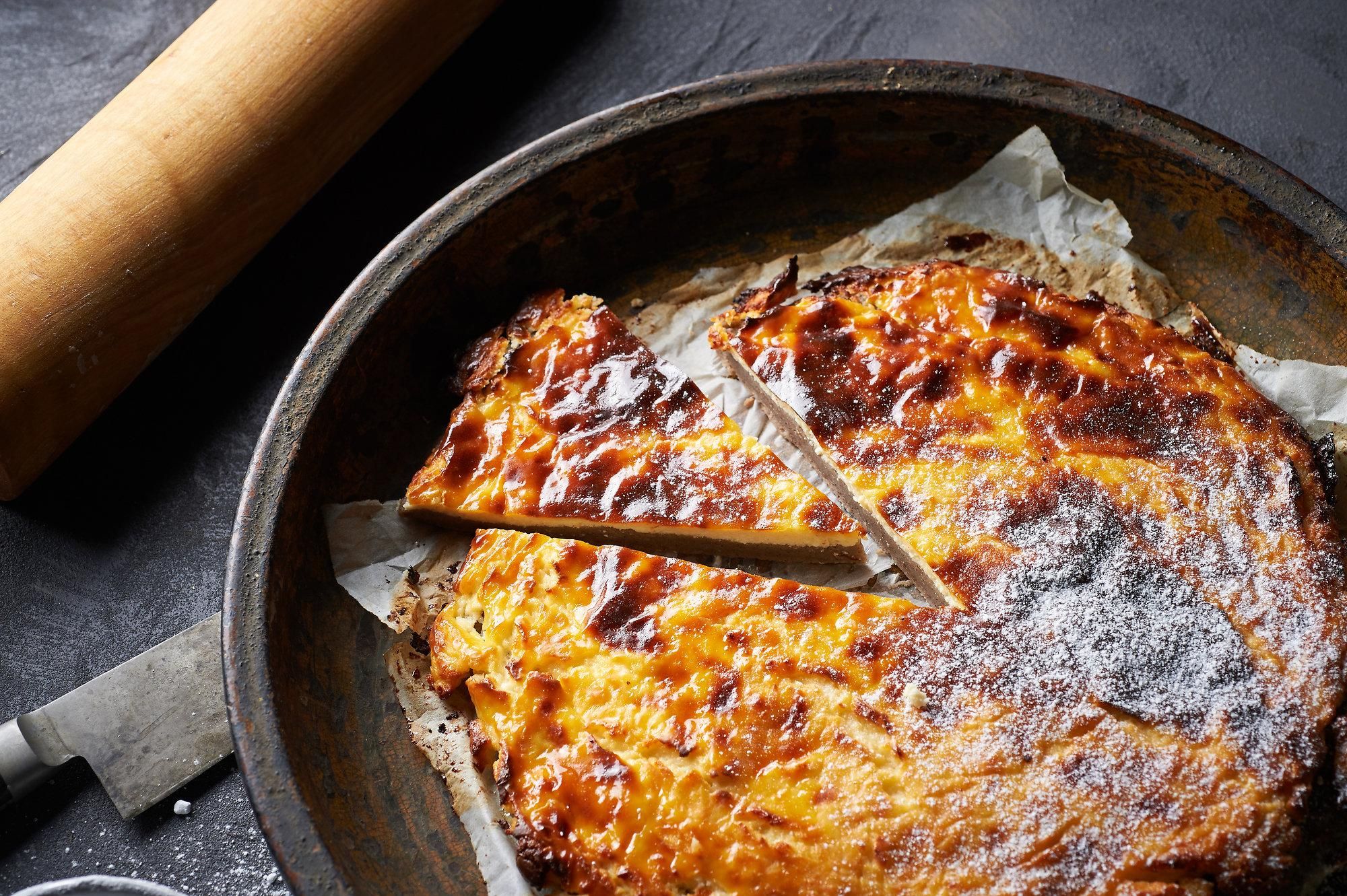
Buckwheat krapec
Photo: Tomo Jeseničnik
Kozjansko krapi or buckwheat parjek are floury pockets cooked in salted water and made of buckwheat dough, stuffed with millet porridge and topped with pork cracklings and cream. These can be served as a main course or a side dish to meat dishes with sauces.
Not far away, in the Pohorje Hills, you can try the Pohorje pot, a typical meat and vegetable stew made of pork, beef and mutton, to which buckwheat porridge is added and also mushrooms when in season. Povitnek is rolled in Koroška, which is a roll of filo dough with a cottage cheese, buckwheat, egg, cracklings or chives filling. This can be served as a savoury side dish to meat or an independent dessert.
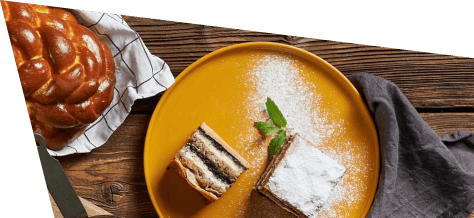
Several traditional buckwheat dishes can be found in the Upper Savinja Valley. Ubrnjenik or obrnenk or ubrnenk is made of roasted wheat, buckwheat or corn flour over which salted boiling milk is poured in which cream and butter are mixed. Balls are made from the dough, which are eaten cold or warm with coffee or sour milk. Firuš are spoon dumplings made of buckwheat flour and fresh pig’s blood, which the locals cook in a soup when pigs are slaughtered. They also bake ajdnek, a juicy cake made of buckwheat dough and several layers of fillings such as ground walnuts, honey and cinnamon.
Ajdnek
Photo: STO
Buckwheat is also found in the west
Buckwheat porridge with mushrooms is typical of the Gorenjska region. The combination of cooked porridge and sautéed fresh porcini mushrooms or other mixed mushrooms is particularly delicious and flavoursome. Buckwheat and corn žganci (mush) was one of the fundamental dishes in Gorenjska. In this part of Slovenia, buckwheat krapi are frequently made in accordance with various recipes. These are cooked floury pockets or krapci made of buckwheat dough and filled with cottage cheese or colostrum. It is served as an independent dish with a topping. In summer, it is served with a salad and with sour cabbage or turnip in winter.
Buckwheat krapi
Photo: Tomo Jeseničnik
»Žganci is the pillar of the Carniola.«
Folk saying in the 19th century
Jurjeva kapa (George’s cap) is prepared as a sweet or savoury addition to enrich buckwheat žganci. The cap is a pancake or omelette made of eggs, flour and water laid over žganci as a cap. Masovnik or maslenik is a rich thick dish made of buckwheat, white and corn flour cooked in hot cream. It is eaten as a side dish with buckwheat or corn žganci or independently with brown bread. Škofja Loka is known for loška medla, a creamy dish made of millet porridge and buckwheat flour eaten together with milk.
Buckwheat and corn mush
Photo: Tomo Jeseničnik
In the valley of the emerald Soča River, buckwheat flour is used in the preparation of marble trout, which is traditionally rolled in buckwheat or corn flour and then fried in lard or oil.
Buckwheat is a plant that enriches local menus throughout the country and is greatly valued. It has always been appreciated in this country, which is also displayed by the fact that more than three thousand Slovenian women are called Ajda (buckwheat in Slovenian).