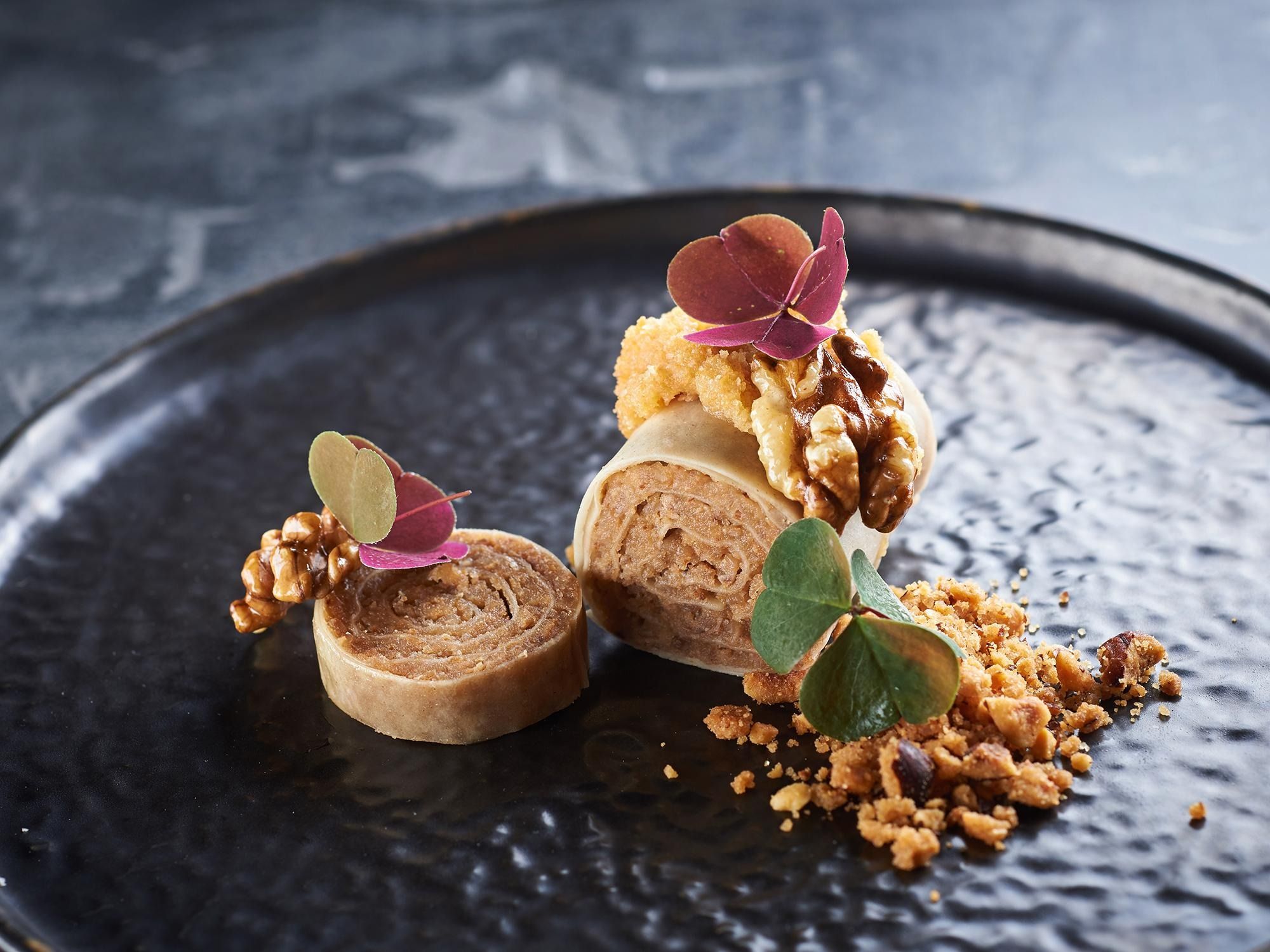
Famous Slovenian desserts
Sweet and delicious is the path from the queen of Slovenian desserts, potica, to rolls, cakes and other pastries
They go perfectly with morning coffee or an afternoon one, round up your dinner or even replace it, and are excellent whenever you just feel like something sweet. For every day and for holidays.
Slovenian desserts are just as diverse as the towns and villages they originated in. However, some traditional recipes have won over the hearts of all generations across Slovenia. The most famous one is definitely potica; there is Bled cream cake, and there are štruklji, which can even be eaten as the main dish. We also love buckwheat pockets, layered cakes, fritole, kroštole and other sweet treasures of Slovenia.
Rozinova potica
Photo: Tomo Jeseničnik
Holiday potica, the queen of Slovenian desserts
Most traditional Slovenian holidays just don’t feel right without potica. It has a very special place in Slovenian cuisine and is made in every region of Slovenia. It is made from leavened dough that is rolled out, covered with filling and then rolled up. The name potica (po-vitica) in Slovenian means rolled-up cake. There are many different versions with different fillings, different types of dough and baked in different shapes. All in all, there are more than 120 types of potica with sweet or savoury fillings, which are baked during different seasons, months or for different holidays. The most typical fillings are walnut, hazelnut, tarragon, poppy, raisins and cottage cheese.
The Slovenian potica is protected under the traditional specialty guaranteed scheme. This means that the production is not geographically limited, but to bear the name Slovenska potica, it must have a certificate that guarantees it was made in accordance with the specified criteria. It can be made with the five traditional fillings which also represent the four seasons: tarragon potica in the spring, tarragon and cottage cheese in summer, raisin potica in autumn, and walnut filling or walnuts with raisins in the winter. The traditional potica must be baked in potičnik, a round pan with a hole in the middle and with smooth or ribbed walls, to ensure the correct traditional form. Potica can be dusted with powdered sugar.
It was first mentioned as far back as in 1575 in writing by Primož Trubar, author of the first printed Slovenian book, and then described in detail around a century later by Janez Vajkar Valvasor in his famous book The Glory of the Duchy of Carniola.
Tarragon potica
Photo: Tomo Jeseničnik
First poppy, then cottage cheese, then walnuts and finally apples
The star of Eastern Slovenia is Prekmurska gibanica, a layered cake that crossed the regional boundaries long ago and has a special place in the hearts and stomachs across Slovenia as a popular holiday cake. With its four repeated layers it is also a feast for the eyes. The layers of phyllo dough are filled, from the ground up, with poppy, cottage cheese, walnut and apple fillings that are repeated again in the same order. After each filling also comes cream or fatty sauce. Prekmurska gibanica is protected under the traditional specialty guaranteed scheme as well. The first one to mention this layered cake as a specialty of Prekmurje was pastor Jožef Kosič in 1828.
There are several other desserts with similar names in the Eastern parts of Slovenia – Prleška gibanica, Slovenjegoriška gibanica and Haloška gibanica – but all have only cottage cheese filling. Another dessert that looks similar, but has a different name, is buckwheat pocket or ajdovski krapec. As you might guess from the name, this one is made from buckwheat flour and is filled with cottage cheese. It can also be found in the Western regions of Slovenia, but with a dried fruit filling. Most of these desserts are made from unleavened dough, but there is also a tradition of making sweet cakes from leavened dough in the Thermal Pannonian region of Slovenia, such as kipjena pogača and wedding pogača.
Prekmurska gibanica
Photo: Tomo Jeseničnik
Famously delicious
Bled cream cake might be much younger, but it is no less famous. Since Bled is such a popular destination, the Bled cream cake, or kremšnita, is probably one of the most photographed desserts in Slovenia. Ištvan Lukačevič, former head of the Hotel Park pastry kitchen, had been experimenting with many recipes and combinations for a long time before creating the perfect cream cake in 1953. The original kremšnita is still made from natural ingredients in the very same pastry kitchen.
The characteristic combination is a wider yellow layer of vanilla custard with a narrower layer of whipped cream, a layer of perfectly baked puff pastry at the bottom and the top, and a dusting of icing sugar to complete the picture. Hotel Park pastry kitchen can proudly say that they have made more than 15 million original Bled cream cakes so far. At some of the running competitions in Bled, the runners even get forks instead of medals, so that they can have a bite of this famous dessert right at the finish line.
Bled cream cake
Photo: Tomo Jeseničnik
Sweet pockets and rolled dumplings
When exploring the Alpine region of Slovenia you can sweeten your days with different pockets made from dough, filled with various fillings, then cooked and covered with melted butter. In Kobarid, they are filled with breadcrumbs, walnuts and raisins; in Rateče the filling is made from cottage cheese and corn meal or from cooked and ground dried pears, honey and cinnamon. Pears play an important part in the dishes of this region. The most common are tepka pears, which are small and aromatic, perfect for desserts such as compotes and jams, or as a filling in štruklji. And while we’re talking about štruklji, which can be sweet or savoury, let’s mention that they can be found in all regions of Slovenia.
They are one of the more recognisable dishes of modern Slovenian gastronomy, with more than 80 kinds of sweet or savoury fillings. These rolled dumplings can be made from phyllo dough or leavened dough and are most often cooked in boiling water, but can also be steamed or baked. The sweet versions of štruklji are very popular, with the most common fillings being cottage cheese, apples, tarragon and walnuts.
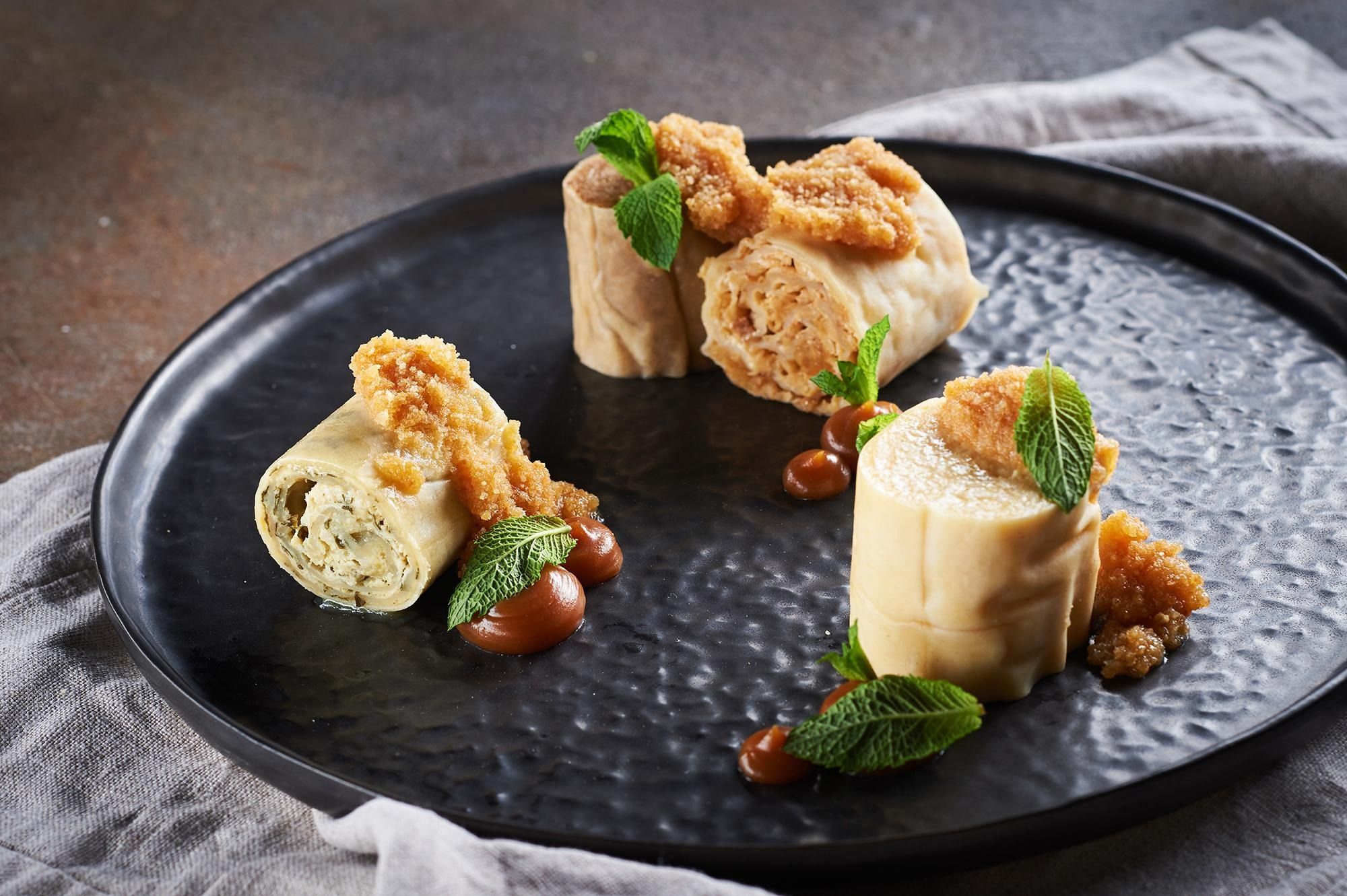
Štruklji
Photo: Tomo Jeseničnik
Sweets by the sea
Fritole and kroštole are mandatory during the Shrove carnival, but often also accompany other celebrations. The round fritole are also called ‘little mice’ and are made from fried leavened dough, while kroštole, also known as hroštole or krhki flancati, are fried pastries made from unleavened dough.
In the Slovenian part of the Mediterranean you can also enjoy the fig loaves, which are made from dried figs cut into small pieces and kneaded into loaves with grape juice. Then they are covered with laurel leaves and dried in the sun for at least a week. This completely natural fruit dessert can be kept on the shelf for several months.
In Goriška Brda, you can find a special goriška gubanca, which still has the ancient form of the rolled-up potica: instead of baking it in potičnik, they simply roll it in a spiral. In the West of Goriška Brda it is made from phyllo dough, and in the East from leavened dough.
Fritole in kroštole
Photo: Tomo Jeseničnik
Fig loaf
Photo: Tomo Jeseničnik
Goriška gubanca
Photo: Tomo Jeseničnik
01/03
Desserts in Central Slovenia
Ljubljana štrukelj is said to be one of the first dishes with mentioned geographical origin. Its recipe was first published by Magdalena Pleiweis in 1868. This rolled dumpling is made from leavened buttery dough and filled with apricot jam and candied orange peels. It is topped with almond slices and coated with a beaten egg.
Pancakes are another popular dessert in the capital, in addition to different types of potica and štrukelj. In Ljubljana this international dish took on a local flavour. The pancakes are filled with cottage cheese and tarragon, covered with an egg mixture and prepared au gratin. The dessert course of the traditional Ljubljana dinner, which became popular in the 19th century, were exactly these cottage cheese and tarragon pancakes.
Several sweet loaves and even ritual breads can be found in the surrounding area, such as janška vezivka and different kinds of poprtnik – Christmas breads. One of the most common desserts is apple strudel, especially during the apple harvest, and among the more contemporary desserts, we should mention the Maxi cake, the Ljubljana cake and the chocolate covered Prešeren Figs, named after the greatest Slovenian poet.
Ljubljana pancakes
Photo: Tomo Jeseničnik
The best chefs all across Slovenia took these traditional desserts and gave them a modern make-over. Instead of the traditional form, you can experience a familiar taste in a completely new way. Bled cream cake ended up in a glass and as an ice-cream. Prekmurska gibanica can also be found as an ice-cream, or rolled in a štrukelj. Potica became a miniature potica or lePotička.
There are many other desserts that complete the sweet exploration of Slovenia, which are typical for smaller towns or regions, or even pastry shops, restaurants or families. They are a reflection of the environment in which they were created and the seasons when they were prepared. Among these seasonal dessert ingredients are fresh or dried fruit, berries, herbs, nuts and of course honey, which is the oldest and still very popular sweetener in this country with an autochthonous honeybee and a rich beekeeping history.