Typical dishes

Typical dishes

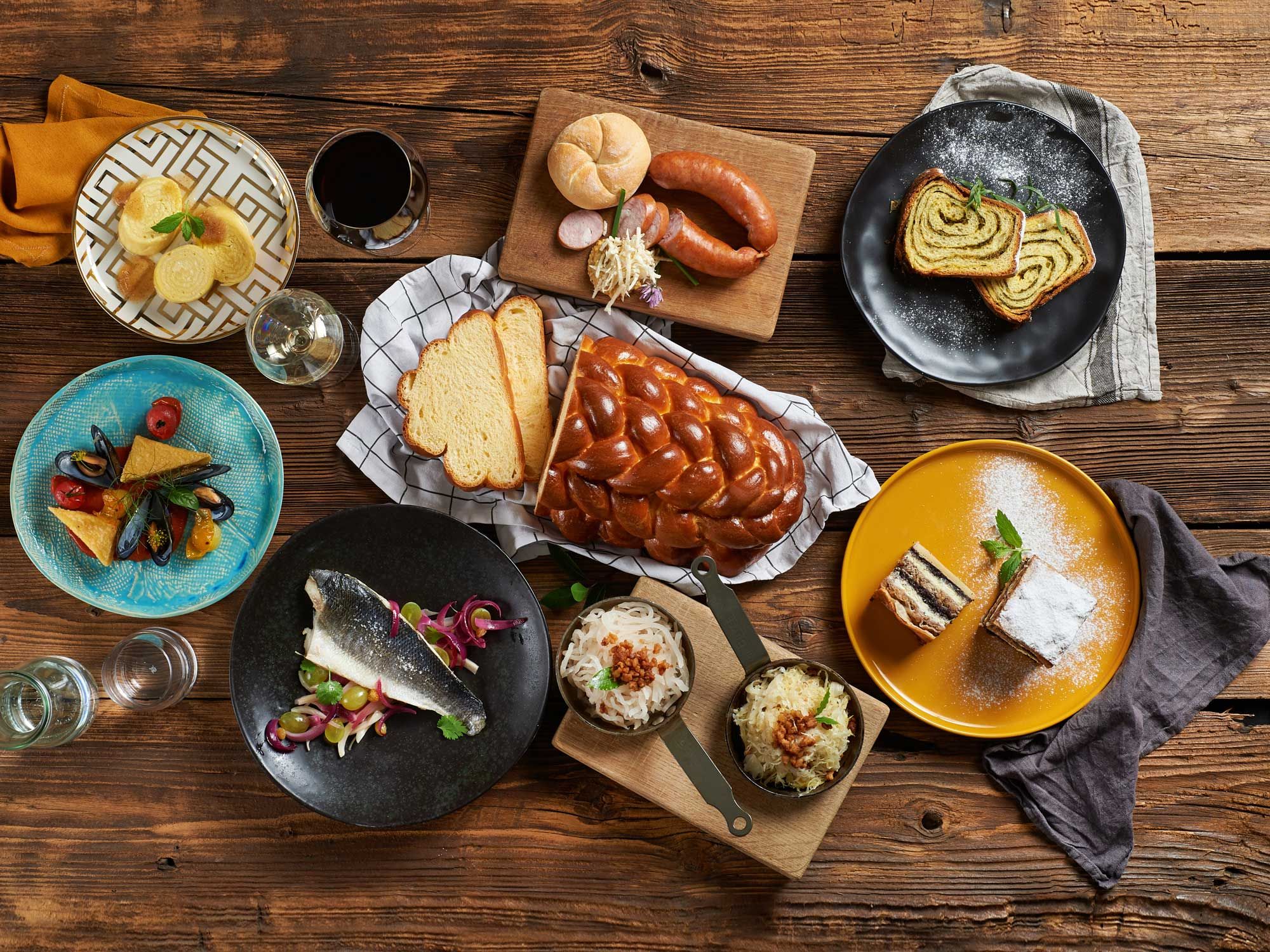
Different food is available on the coast than among the Alpine peaks. The flavours of the Pannonian Plain are different to those of the Karst. Everywhere you go, you will discover how nature and culture have always been combined here on a plate with distinctive local dishes.

Photo: Tomo Jeseničnik

1–13 of 13

  • MEDITERRANEAN & KARST SLOVENIA

    ‘Bakala na belo ali rdeče’ (dried codfish, white and red)

    A delicious cold dish, spread, or a dish commonly served with polenta. The basis for this dish is dried cod. This is a typical Christmas Eve dish and a dish served when tasting new olive oil. The dish is called ‘na rdeče’ if the codfish is prepared in tomato sauce.
  • MEDITERRANEAN & KARST SLOVENIA

    Fig loaf

    One of the culinary traditions in Istria is making loaves from dried figs. Figs are cut up and kneaded into a thick dough together with grape juice. This dough is then formed into loaves and dried in the sun, covered in bay leaves, for at least a week. The loaves can then be stored and enjoyed for months.

  • MEDITERRANEAN & KARST SLOVENIA

    ‘Fritole and kroštole’

    ‘Fritole’ are fried dough balls, also known as ‘miške’, a typical Christmas dish. In some places, raisins are added to the dough, too. ‘Kroštole’ or ‘hroštole’ are a fried brittle pastry, also known as ‘flancati’. This is a typical holiday dessert that was most typically enjoyed during the Shrovetide period in Istria.

  • MEDITERRANEAN & KARST SLOVENIA

    Frtalja ali fritajaFrtalja or fritaja (omelette)

    An omelette typical of Istria and Mediterranean cuisine in general in Slovenia. It is particularly common in the spring when there are many fresh young plants, herbs, and vegetables available. Throughout the year, other ingredients are also added to the eggs, such as mushrooms, ‘pršut’ ham, sausages, bacon, and white and red wine.

  • MEDITERRANEAN & KARST SLOVENIA

    ‘Goriška gubánca’ (potica cake made from sweet dough)

    A typical holiday dessert from Mediterranean Slovenia and the neighbouring Friuli-Venezia Giulia region. It is an older ‘relative’ of the Slovenian ‘potica’ cake; however, it differs in how it is made and shaped, as it does not have a hole in the middle but is snail-like in shape. The first written record about the ‘gubanca’ dates back to the second half of the 16th century. ‘Gubanca’ is made in the Gorica region from filo dough, while it is made from leavened dough in the Vipava Valley.

  • MEDITERRANEAN & KARST SLOVENIA

    ‘Jota’ (a sauerkraut/turnip hotpot from the Karst, Vipava, and Istria regions)

    There are three types of this hotpot, which is originally from Carnia, but has since been adapted to the dietary needs of locals from the Karst, the Vipava Valley, and the Slovenian Istria. ‘Kraška jota’ is made from sauerkraut and potatoes, ‘vipavska jota’ from sour turnip, also from sauerkraut, Savoy cabbage or beet leaves, and ‘istrska jota’ is made without potatoes.

  • MEDITERRANEAN & KARST SLOVENIA

    Calamari

    The Italian world ‘calamari’ is often used for different squid dishes made in Slovenia. Due to their various fillings, these dishes represent a wide array of different flavours. The most common method for preparing calamari with different fillings is grilling.

  • MEDITERRANEAN & KARST SLOVENIA

    Klapavice or pedoči (Mediterranean mussels)

    Klapavice or pedoči (Mediterranean mussels) are a popular type of seafood, which can be found in the sea off the Slovenian coast. They are prepared in various ways, e.g. in a ‘na belo’ sauce or ‘na tržaški način’ (Trieste-style), in a soup, grilled, or in delicious risottos.

  • MEDITERRANEAN & KARST SLOVENIA

    ‘Kraška šelínka’ (a celery hotpot from the Karst region)

    ‘Šelín’ is the name for aromatic celery in the Karst dialect. This is one of the staples in the vegetable dishes of Karst cuisine. The leaves and the tuber are used to prepare soups, sauces, hotpots, and salads. The most popular hotpot is called ‘šelínka’. Celery leaves are also dried and used as a seasoning.

  • MEDITERRANEAN & KARST SLOVENIA

    ‘Kraški pršut’, ‘kraški zašink’, and ‘kraška panceta’ (Karst ‘pršut’ ham, Karst air-dried pork neck, Karst pancetta)

    These famous dried meat products with a European protected geographical indication are made through salting and drying procedures in the typical Karst ‘Burja’ wind. Traditionally preserved pork legs and other meat products are paired with excellent cheeses and red wines.

  • MEDITERRANEAN & KARST SLOVENIA

    Minestrones

    This is a name for the most common dishes, hotpots in Istria, which differ from one another depending on the ingredients used and on the season of the year. The most important thing when preparing minestrones is the duration of cooking on moderate heat and adding pieces of pork or pršut ham bones, which enhances the flavours. Minestrones became a diet staple in the early 20th century. The most typical minestrones include ‘bobići’ (bean, potato, and maize minestrone) and ‘paštafažoj’ (bean and pasta minestrone).

  • MEDITERRANEAN & KARST SLOVENIA

    Piran branzino

    The branzino that meets the highest food standards, and which is farmed in Piran Bay using world-class expert knowledge, has become a staple in many world-class cuisines outside of Slovenia, too.

  • MEDITERRANEAN & KARST SLOVENIA

    Polenta

    Historically, polenta spread to the area of Mediterranean Slovenia from the neighbouring region of Friuli in the 18th century. Maize polenta is of younger origin, as older polentas were made from millet, sorghum, and buckwheat, and they were cooked as early as the days of antiquity. Today, yellow and white polenta are most frequently made, and as of 1991 a Polenta Festival has been held in Ozeljan.

Taste Slovenia

Read more

News with Flavour

Subscribe to the tastiest newsletter Taste Slovenia.