Domačija Javornik: By the Krka river, offering trout straight from the water to your plate
Thermal Pannonian Slovenia
It is somewhat surprising how close to Ljubljana there is a little piece of paradise by the Krka river, known as Domačija Javornik homestead. A hidden gem for some, due to the Javornik family’s choice not to engage in advertising or social media, but their homestead does not need advertising.
Tables are booked in advance, often by regular guests from the capital who have been coming here for 30 years, ever since Barbara Kotar Javornik and her husband Borut added catering to their list of services which also include kayak school and kayaking tours on the Krka river. A growing number of guests are locals, which makes them happy.
Domačija Javornik started hand in hand with trout farming, a business taken over by Barbara’s brother-in-law Rado from their father (“More of a hobby,” he remarks modestly).
Photo: Suzan Gabrijan
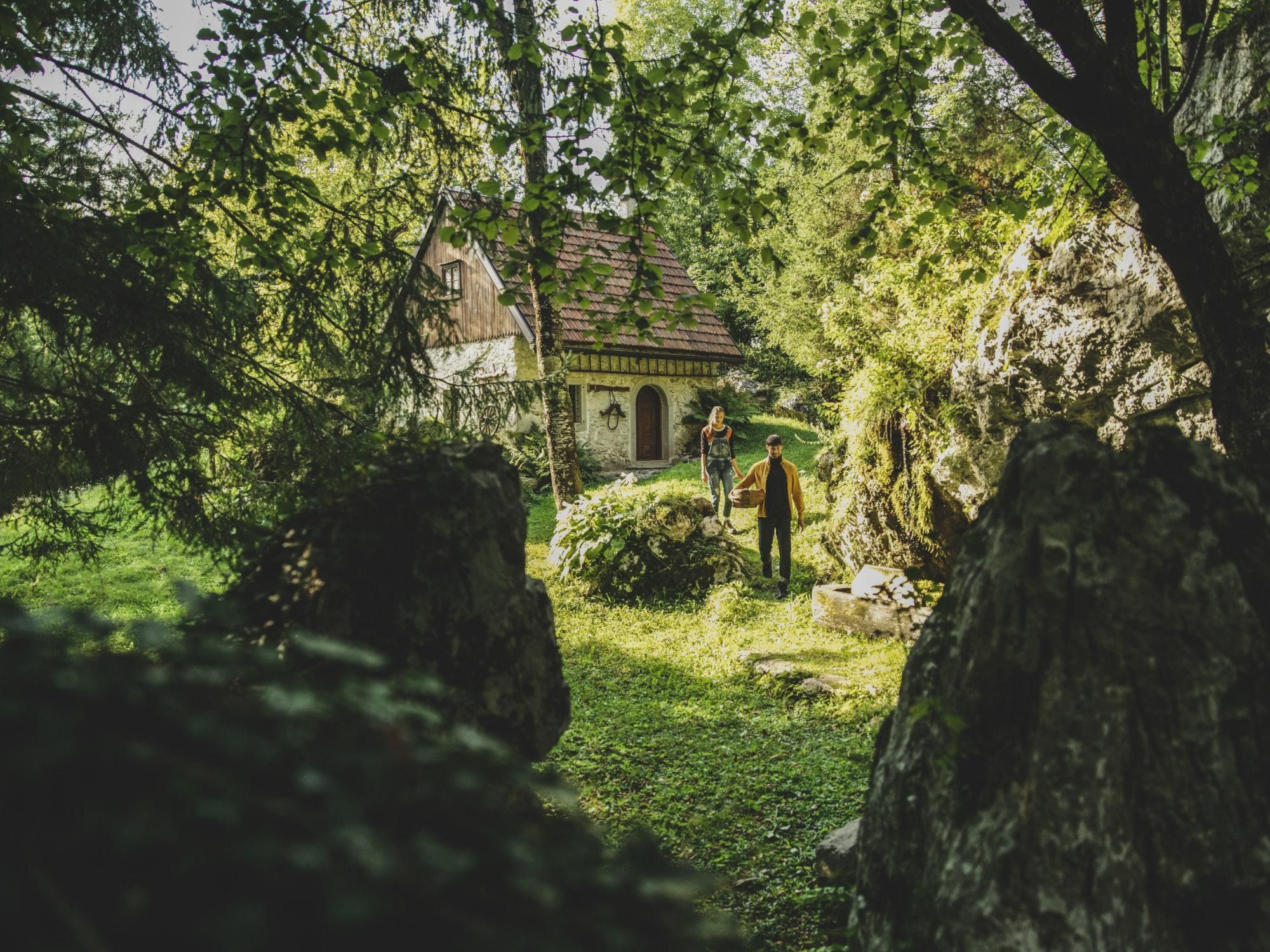
The fish farm is housed in an old mill, which were once numerous on the Krka river. Its entrance is screened by vines and greenery, and the burble of the river is the only sound cutting through the serene silence of this place, where they have been raising trout for about a century.
“The market has changed a lot. People used to come for fish much more than they do now. There was a time when we sold everything. Now habits have changed, but people still come, also from the near places,” explains Rado, balancing on the narrow footbridge with a net in his hand.
Photo: Suzan Gabrijan
Photo: Suzan Gabrijan
Photo: Suzan Gabrijan
Photo: Suzan Gabrijan
01/04
He deftly reaches into the water in one of the concrete ponds above the river and pulls out shimmering rainbow trout, gasping for air and twitching as they are about to die. The farmer delivers a few skilled, firm blows on their heads. “I still take no pleasure in this part,” he admits, turning his gaze towards the 400-year-old house that is now his home, just a few metres from the ponds and the Krka river.
The homestead is a family business and the Javornik family is proud to be running one of the few restaurants that can actually claim that the trout comes straight from the water to the table.
The restaurant has been converted from a house dating back to 1878, which was once a wagon shed. In front of it is a fairytale-like patch of green with a lazy river and a wooden footbridge across it. The wooden tables in the front row, usually reserved for couples who come here for a romantic lunch in nature’s embrace, are shaded by a canopy of willows and beeches.
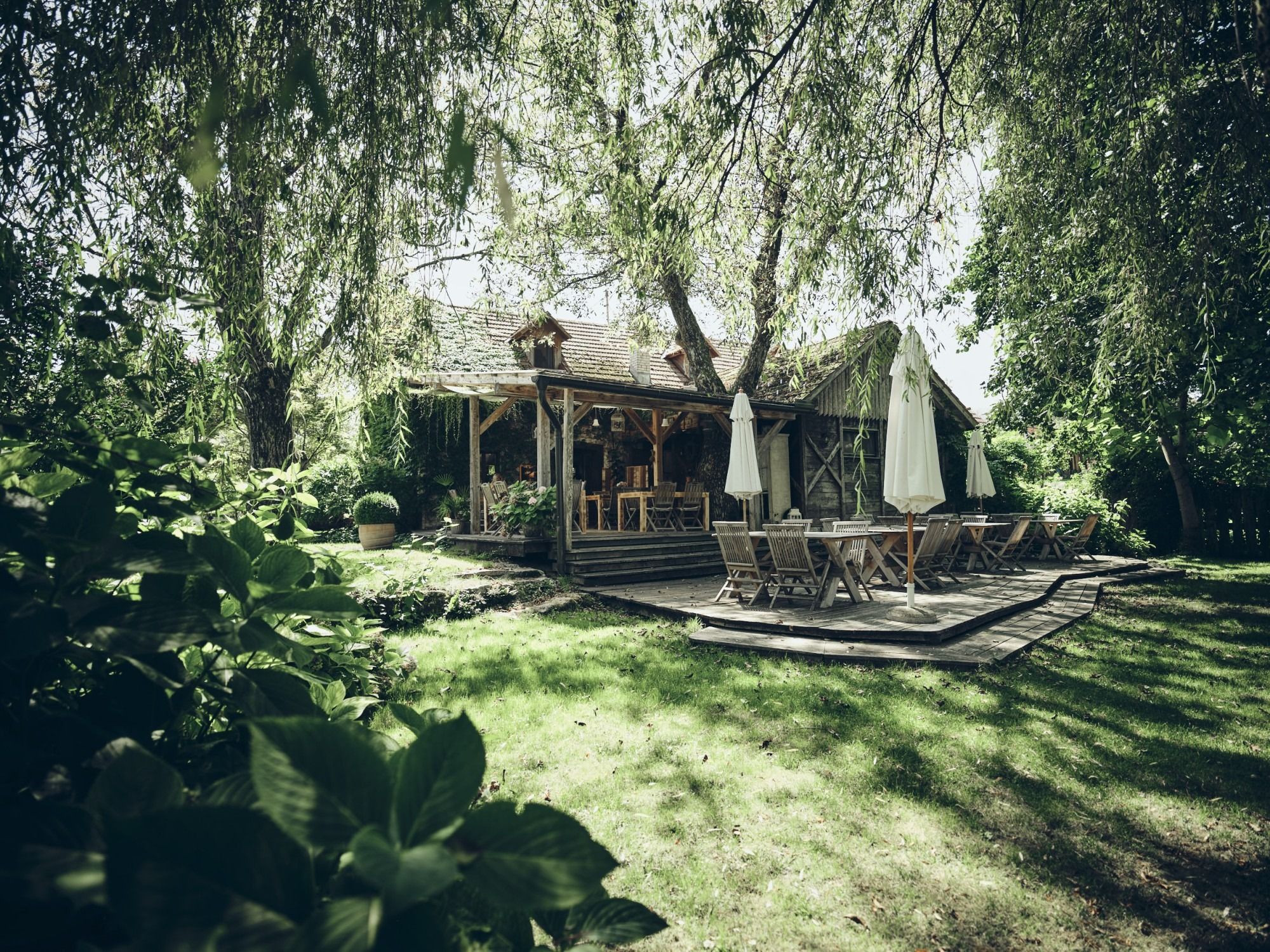
Photo: Suzan Gabrijan
Behind the homestead are the herb and flower gardens. Barbara gets many vegetables from her parents, who are still very active and also provide apple cider vinegar, which she uses in the kitchen. “Yes, we are quite self-sufficient,” she says with a little smile.
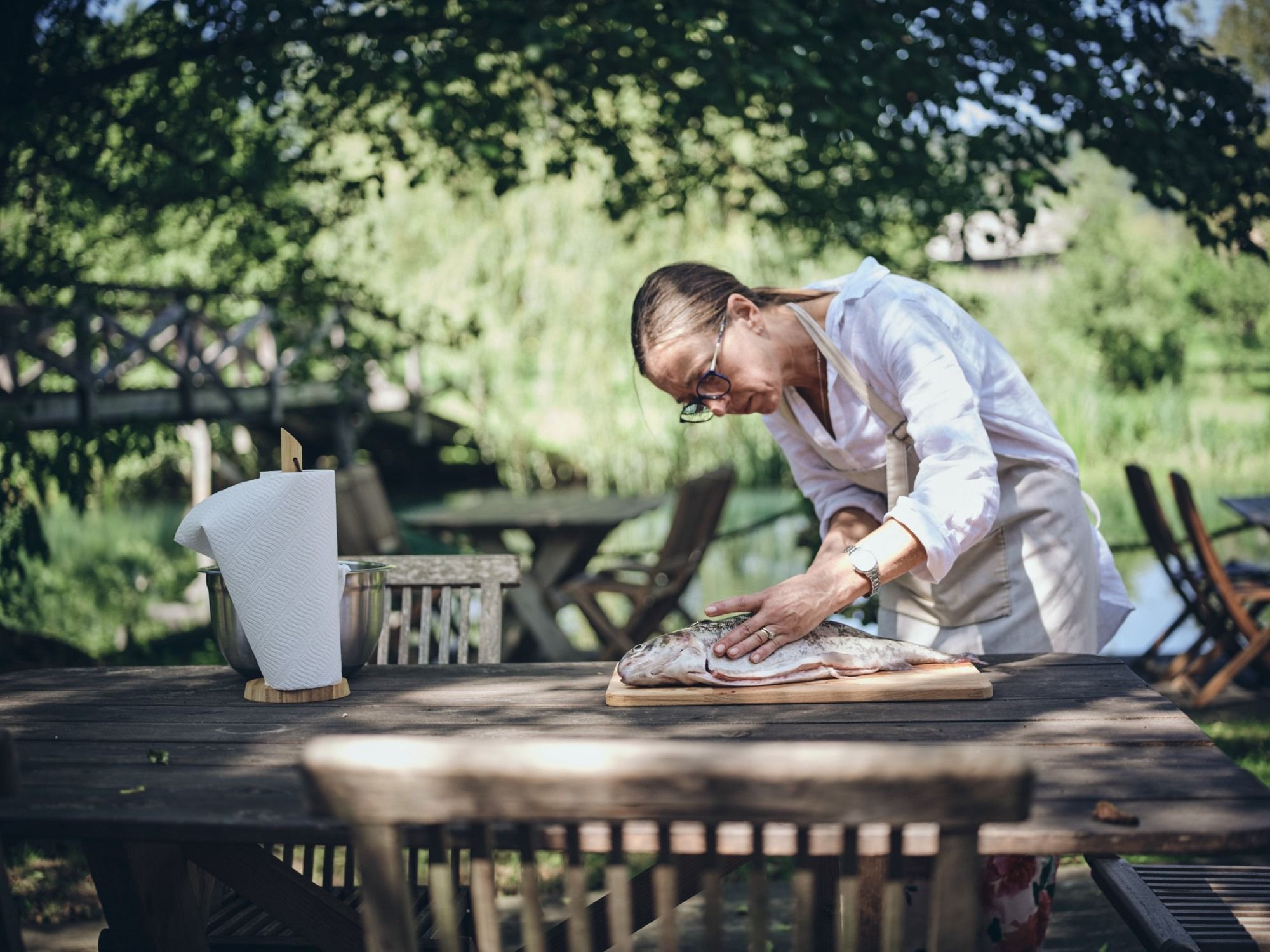
But even though the offer at Domačija Javornik extends beyond the river, the focus is clear – trout. Barbara can be found in the kitchen, alternately filleting trout and preparing trout gravlax. “Nothing special,” she replies when I ask about the recipe.
“Beetroot, salt, lemon, sugar, a bit of horseradish, herbs… That’s it,” she shrugs, and offers a bright red slice of compact trout meat resting on tip of a sharp knife.
Photo: Suzan Gabrijan
Photo: Suzan Gabrijan
The beginnings of Domačija Javornik were not so sophisticated. “Far from it. We were still learning the ropes. Trout and roast potatoes were the only things on the menu,” says Barbara, laughing. She is a self-taught cook and has never worked in a kitchen before. But the restaurant grew and evolved organically, and Barbara with it. She creates the recipes herself, incorporating also the ideas of her colleagues.
Photo: Suzan Gabrijan
She says she has slowly become a gourmet, sharpening her palate while travelling and visiting restaurants. Once she saw that the place was ready, she started upgrading the offer at the home restaurant.
And while the classic cornmeal-meal crusted trout served with a slice of lemon, a spoonful of tartar sauce and buttery boiled potatoes is still the biggest hit, they also like to explore more gourmet versions, from trout pâtés that change seasonally, to smoked trout and the mentioned gravlax.
She also makes home-made pasta. Spinach pasta, venison ragout and – of course – trout were on the menu that week.
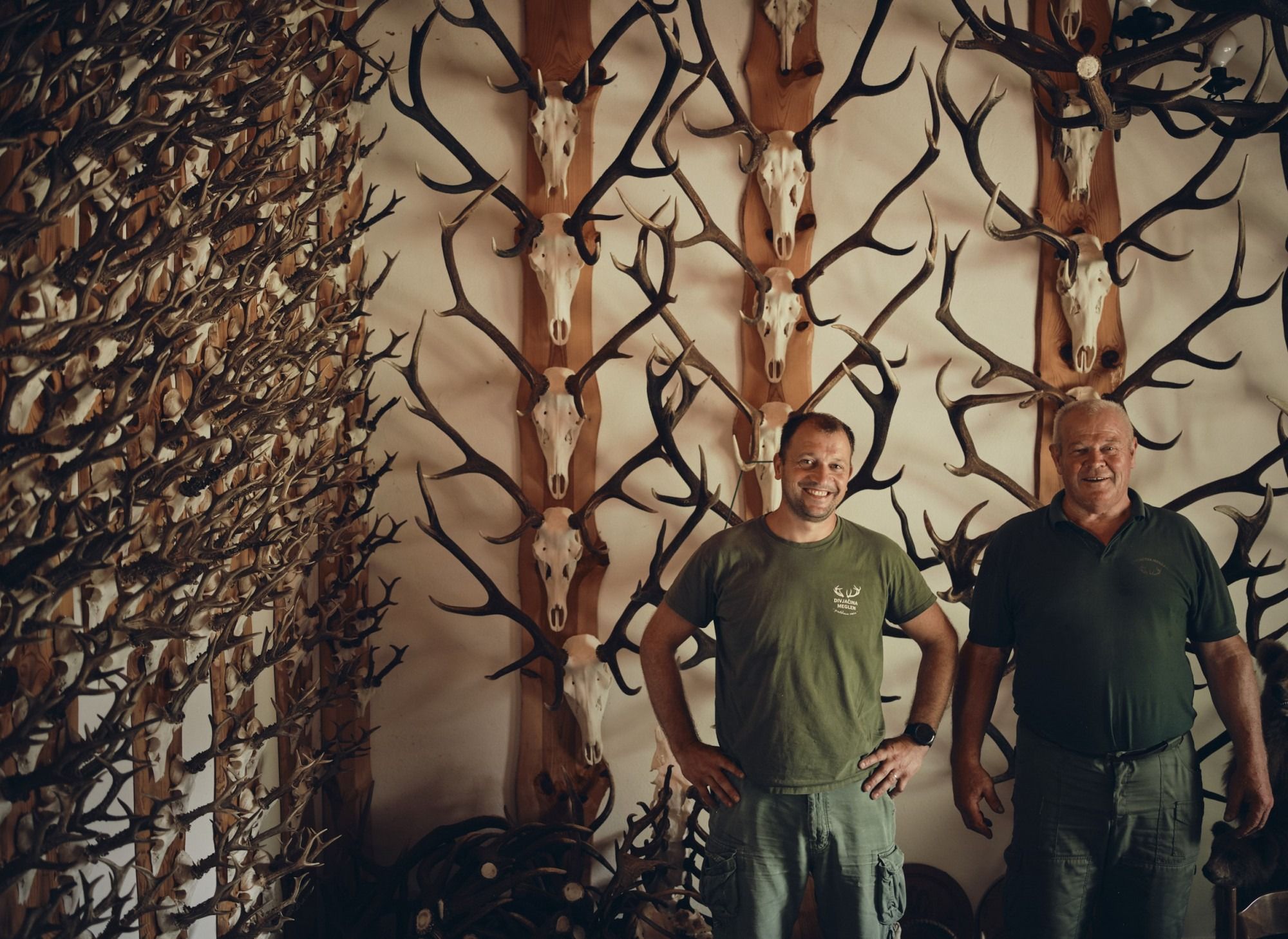
To Meglen for deer and bear
There is one more constant on the menu at Domačija Javornik, and that is venison. “My husband and I are enthusiastic mushroom foragers, so we have been thinking of developing a ‘river and forest’ concept for the restaurant. Venison seemed a logical choice,” reflects Barbara.
But for good venison you need a good and reliable supplier. They found just such in the Meglen family in Struge, a village no more than 20 kilometres away.
The family business is run by Toni Meglen, a hunter, a butcher and the plant manager. He learned everything he knows from his father, Anton, a red-cheeked Lower Carniolan with a wide smile, a passionate hunter who went hunting as far away as Canada, from where he brought back some impressive trophies that today complete the collection displayed on the walls of the Meglen trophy room.
It is September and the hunting season is at its peak. The Meglen family sources game from the Struge Hunting Family, and at home they process, cure and dry the meat.
A pleasant aroma emanates from the meat curing chamber as soon as Toni opens the door. Salami of venison, chamois and wild boar, venison sausages, venison, bear and wild boar prosciutto, and wild boar pancetta hang there like naturalistic Christmas ornaments. “This is Barbara’s favourite, she eats a lot of it,” says Toni. “This one also, unsmoked wild boar back bacon.”
Photo: Suzan Gabrijan
At the moment, the most popular among customers is venison prosciutto, however, foreigners are most keen on and fascinated by bear salami and prosciutto, which have a much more distinctive and primal taste. “Bear meat is very much on the rise in Slovenia. Ten years ago, we had to sell it below the price,” he explains.
“Not everyone likes it,” says Toni with a smile, looking at us as we are chewing on round slices of dark red cured meat. The Meglen family insists on offering game meat as pure as possible, and is one of the few that actually puts a high proportion of venison (70 percent) in their venison sausages and salami.
The Javornik family, mostly buying cured meats and roe deer and deer loin, are just one of the many in the restaurant business who swear by Meglen.
The family supplies chefs like Igor Jagodic (Strelec), Uroš Štefelin (Hiša Linhart) and Bine Volčič (Monstera Estate), among others, and their chamois salami is served at two Michelin-starred Milka in Kranjska Gora.
Photo: Suzan Gabrijan
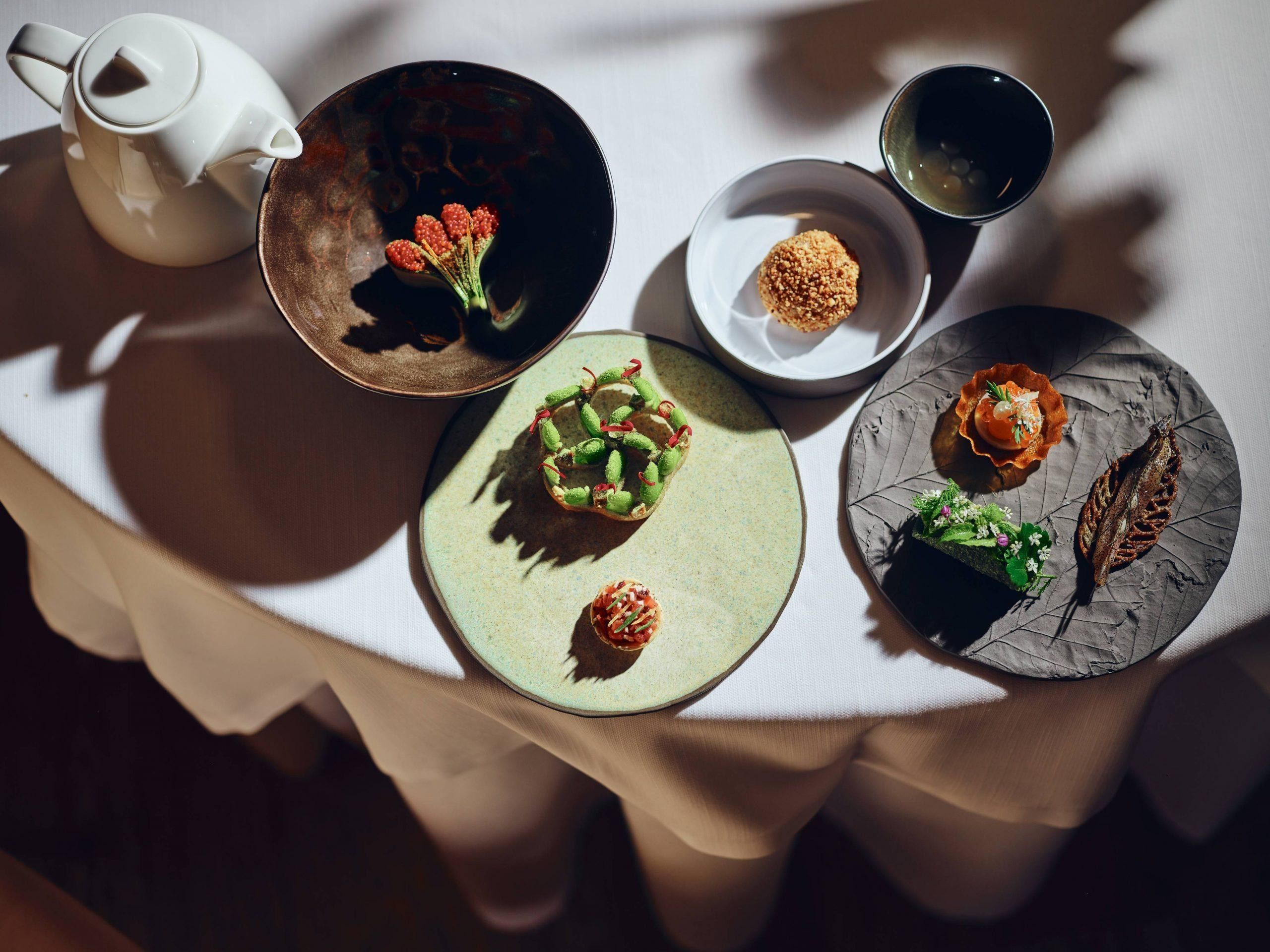
On returning to Domačija Javornik homestead, we are greeted by an exquisite selection of cold starters, including a trio of trout pâtés, cottage cheese with pumpkin oil, pumpkin rolls with cottage cheese, gravlax, smoked trout with horseradish crème fraîche, trout carpaccio and roast beef with roasted peppers.
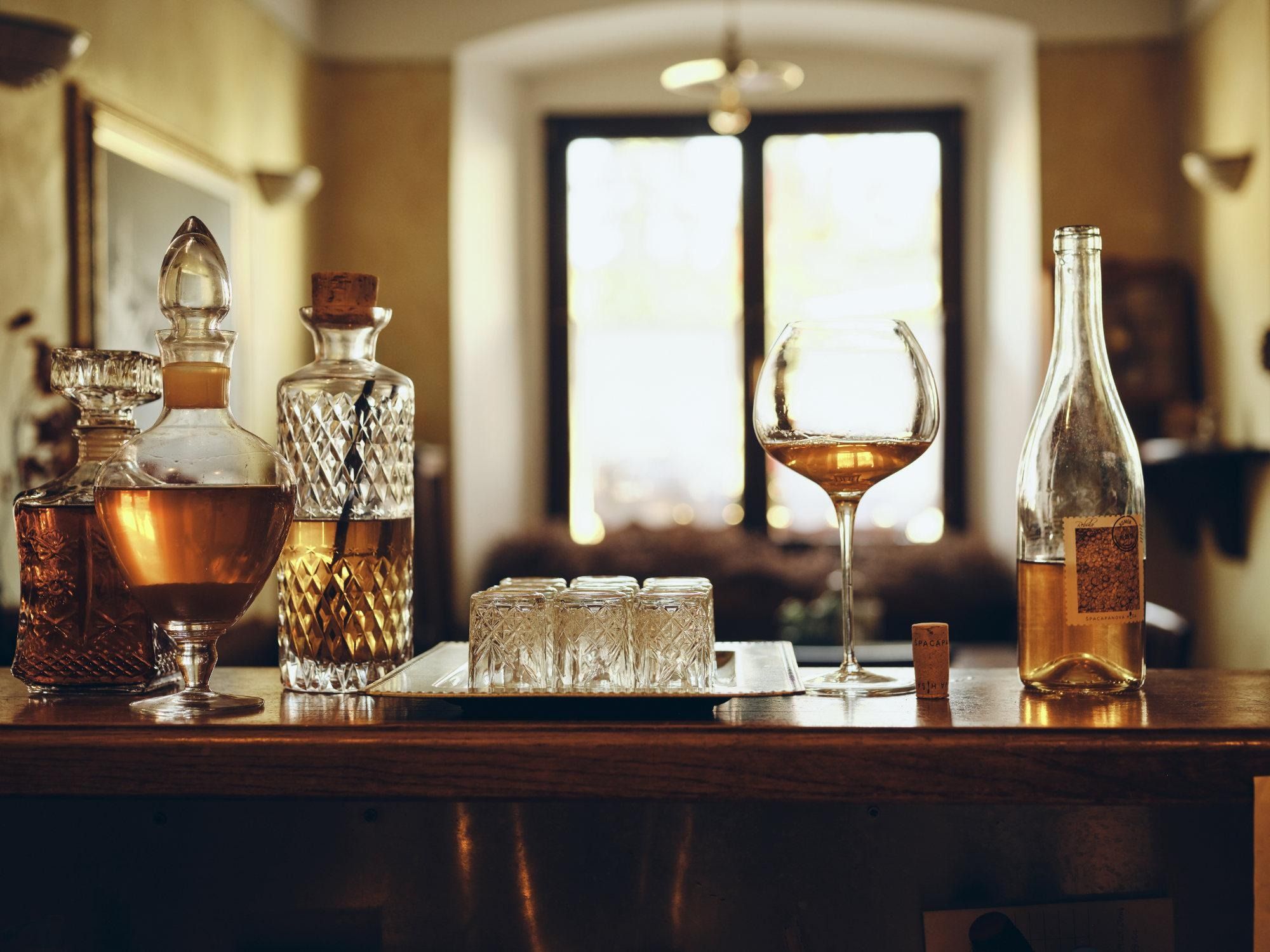
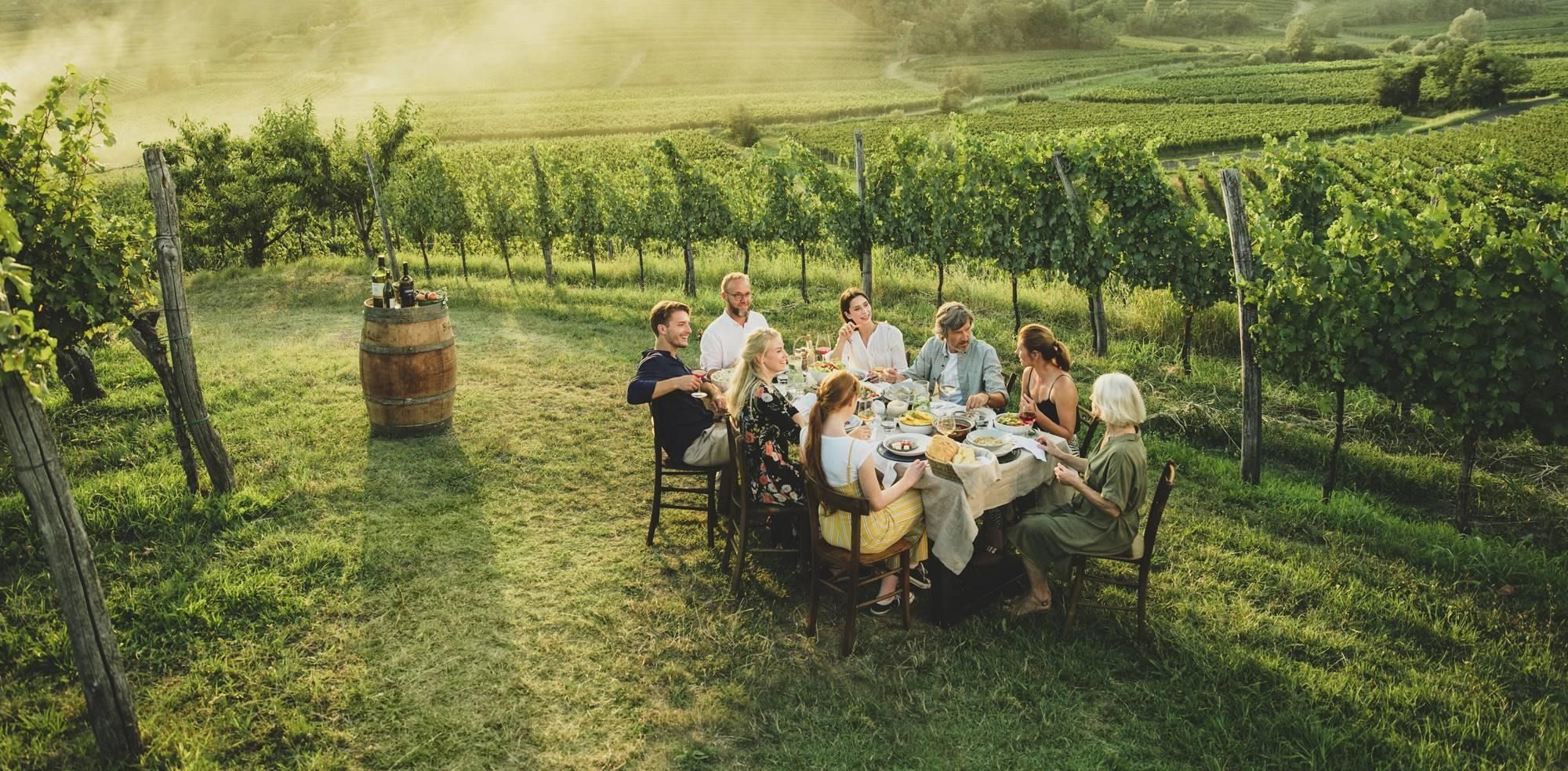
Late afternoon light streams through the treetops and into the glasses holding golden wine. Time stands still at the Javornik homestead by the Krka river.
Photo: Suzan Gabrijan
Unique stories