Vegan Ljubljana: from fermentation labs to trendy "green" bistros
Ljubljana & Central Slovenia
Following the burger craze, the sourdough bakery boom, and the rise of mixology, vegan cuisine and plant-based products eventually found their place in Slovenia's culinary scene, albeit somewhat later. It took some time to get from those early beginnings, when Ljubljana's first vegan eatery opened in the early 1990s and the Slovenian Vegan Society was established in 2011, to the range of genuinely high-quality vegan options available today.
The most celebrated vegan restaurants in Slovenia attract not only vegans, but also many omnivores who are constantly on the lookout for high-quality, healthy dishes made with locally sourced ingredients, focusing on organically grown vegetables and small-scale producers. Not to mention the exciting fermentations that add sharpness and character to every dish!
Photo: Suzan Gabrijan
Photo: Suzan Gabrijan
Ten years later, the story of vegan Slovenia truly began with Kucha. Martin Rojnik's project is widely considered to be the country's first authentic plant-based bistro and fermentation laboratory, with a team that broke new ground in the culinary landscape of Slovenia.
At the time, the younger generation was inspired by Scandinavian influences, particularly Copenhagen, where fermentation trends and the principles of New Nordic cuisine were emerging — the same foundations on which the world-famous restaurant Noma, led by chef René Redzepi, was built.
Today, Slovenia's leading vegan restaurants promote an ethical and sustainable approach, using organic, locally sourced ingredients and engaging deeply with longevity research. They collaborate with universities, draw inspiration from abroad and consistently emphasise that their goal is not to imitate meat, but to create flavour.
Many of them started out as complete amateurs, but through enthusiasm, curiosity and hard work, have become invaluable contributors to Ljubljana's (and Slovenia's) vibrant culinary scene.
Veganika: the journey from apprentice to owner of Ljubljana's hottest vegan restaurant
One of these trailblazers is Nika Babić, who treats guests at Gornji trg to the delights of her plant-based restaurant, Veganika. Hailing from Bela krajina, Nika comes from a family with a long-standing tradition in hospitality in Črnomelj. However, she never imagined that she would follow in their footsteps. In an attempt to escape the hospitality business, she moved from her hometown to Ljubljana, only to find herself right back in it.
Nika credits Darja Končarevič, a pioneer of vegetarian and healthy cuisine, with giving her a chance. Končarevič hired her at the Bazilika restaurant and gave her complete creative freedom, something Nika had not been given at home. Despite having no background in the culinary arts herself, Končarevič opened Bazilika with the help of her two vegetarian brothers. The restaurant specialised in quiches, soups and other quick dishes, focusing particularly on high-quality meat-free ingredients.
Nika saw an opportunity in vegan pies and soon added vegan desserts to her menu. Darja liked what she saw – and tasted – so much that she gave Nika her own display case. "I could hardly believe it!" Nika recalls, remembering how grateful she was for her mentor's support.
Photo: Suzan Gabrijan
Photo: Suzan Gabrijan
Shortly afterwards, she made the decision to open her own vegan restaurant. The story of how a once passionate meat-eater came to veganism is rather unusual. "Something just clicked while I was working at Cat Café. I suddenly started asking myself why we don't eat cats and dogs, and whether it all came down to which animals are considered cute and which aren't," she explains.
As a philosophy student, Nika had plenty of questions like this. During bioethics lectures, she considered putting forward the argument that eating meat is unethical to her peers. She has been vegan for ten years now, although she admits that she still craves meat from time to time. This is precisely why she strives to create depth and umami in her dishes, ensuring that her plant-based meals are so satisfying that nobody misses the meat. In short, her goal with Veganika is to dispel the stereotype that plant-based food is boring.
"Let's be honest, the word vegan has a negative connotation, so sometimes it feels as though the name Veganika itself is my biggest obstacle when it comes to winning people over," smiles the restaurant's owner. Veganika has been located at Gornji trg since 2023.
Veganika originally opened in 2019, but the pandemic hit soon afterwards. "During the pandemic, Odprta kuhna (Open Kitchen) was my lifeline. That's where I served the Soba 103 dish, which became an unexpected hit and is still on the menu today," says Nika.
The signature Soba 103 dish consists of soba noodles served with baby spinach, edamame beans, tempeh, homemade kimchi, wakame seaweed, peanuts and crispy onions, and is topped with a peanut dressing. The imaginatively and wittily named dishes on the menu include 'Un po’lenta', 'Peas on Earth' and 'Pho Mlad' (playing on the Slovenian word for spring – pomlad), while the drinks list offers a selection of Slovenian wines and Isa’s kombuchas.
Photo: Suzan Gabrijan
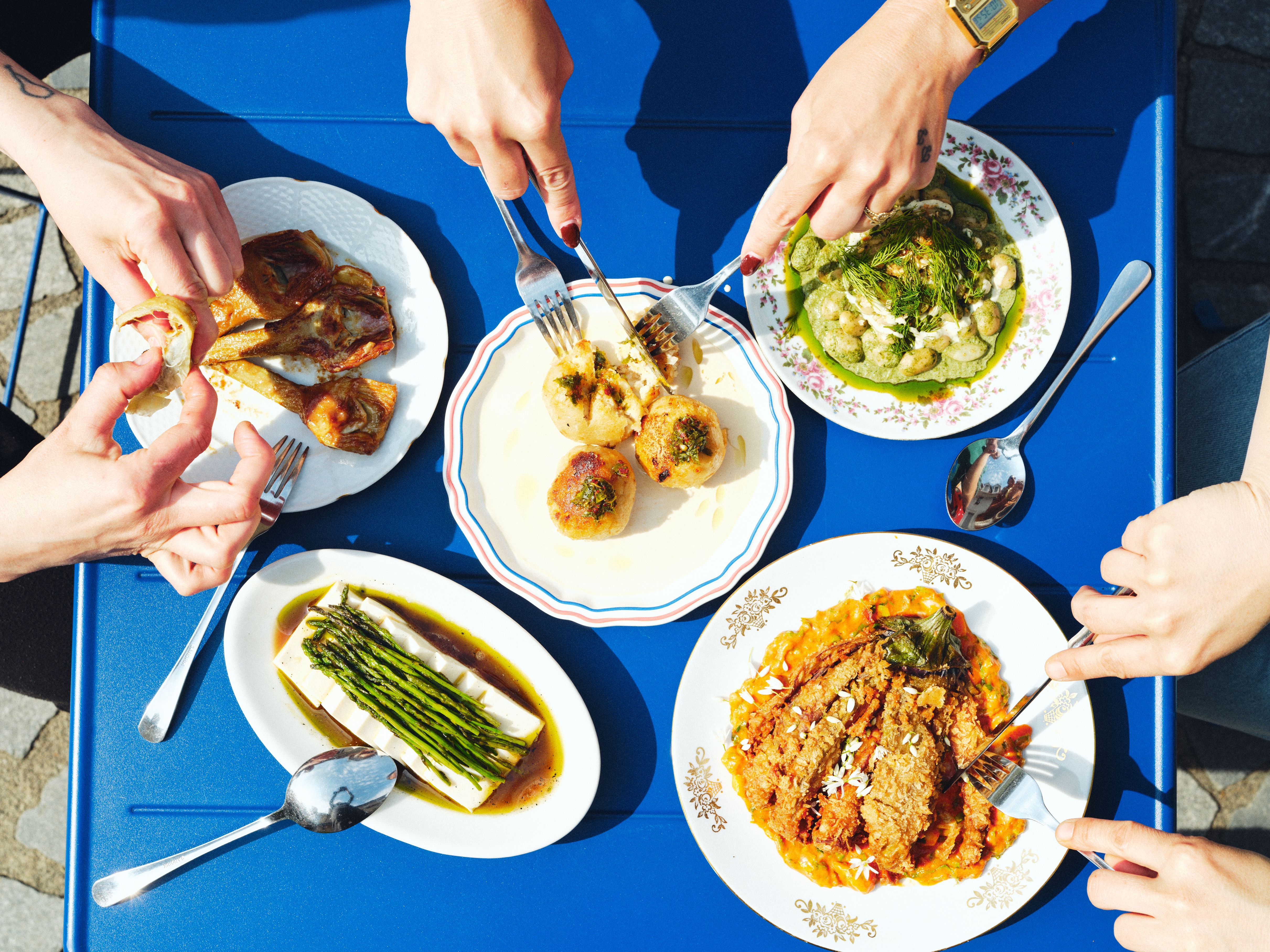
The dishes are playful and on-trend, and the menu offers a surprisingly diverse range of options without ever becoming excessive. There is an emphasis on high-quality ingredients — mostly vegetables, of course — and bold flavours, occasionally with an Asian influence. On the day of our visit, the kitchen also served exceptional bread dumplings with yeast sauce and chimichurri, roasted artichokes marinated in wine, garlic and lemon, and panko-crusted aubergine with spicy chive mayonnaise.
The table is also adorned with butter beans in a spinach sauce with wild garlic, lime leaves and fennel, as well as silken tofu served with wild asparagus and a fermented buckwheat sauce from Kis in kvas, a local fermentation producer from whom she also purchases pumpkin sauce and fermented tofu. "Goran and Sanja are practically my mentors — they taught me how to make kimchi, and I still consult them whenever I make tempeh."
Kis in kvas: masters of fermentation
Our next stop is Kis in kvas (Vinegar and Yeast), a small, modest shop tucked away on Tržaška Street, far from the hustle and bustle of Ljubljana's central tourist hotspots.
The owners, Sanja Čakarun and Goran Žerdin, are social science graduates who never planned to go into business, but they have become remarkably successful in the field they eventually embraced. Goran was the first to become interested in fermentation, leading him to make his own kefir and kombucha at home. Before long, he got his partner Sanja hooked on it too, when she realised that even the most ordinary ingredient could be transformed through fermentation into something fascinating.
Photo: Suzan Gabrijan
Photo: Suzan Gabrijan
"At one point, before we were doing this professionally, we ended up with a barrel of miso right in the middle of our living room," Sanja recalls.
In 2016, they started to look more seriously into what it would take to start producing food on a larger scale. It was a long process, as they had to learn everything from scratch through practice, books, and the internet. Their first kitchen was in Slovenska Bistrica, where they made their first food item, chickpea tempeh, in a modified bread-proofing oven. They remember that, although there was interest, knowledge of such products in Slovenia was still very limited. As with many trends that reach us with a slight delay, fermentation and veganism were no exception. These movements were spreading from Western countries and Scandinavia, where René Redzepi and his team at Noma in Copenhagen were writing the bible of New Nordic cuisine.
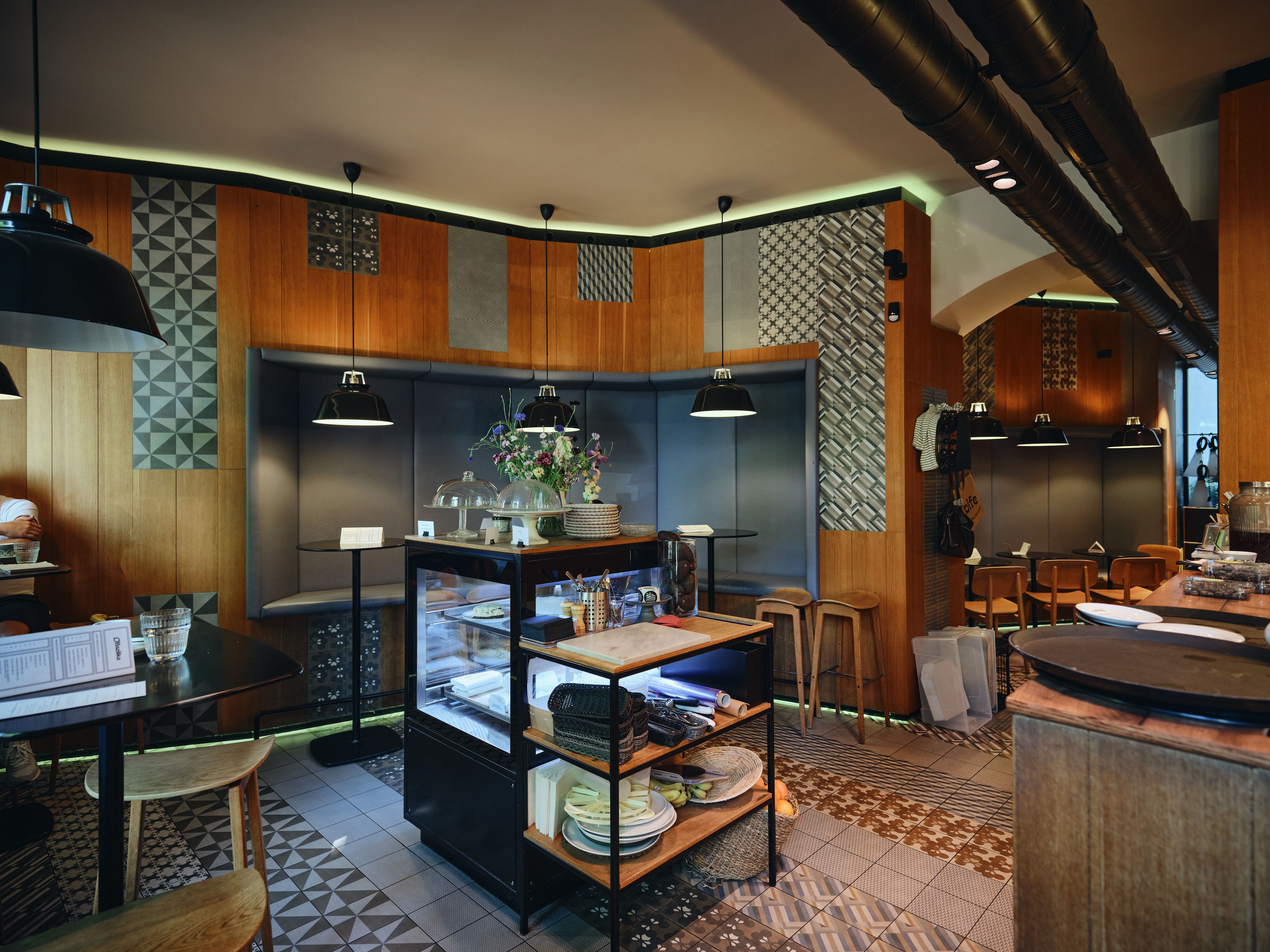
Photo: Suzan Gabrijan
Eventually, Sanja and Goran took the plunge. Sanja left her job and, and as this coincided with the start of the pandemic, they began delivering their products instead of inviting customers to the shop. Their most popular creations include chickpea miso, kimchi (they produce an impressive 400 kilograms per month), smoked pumpkin sauce and buckwheat sauce. Today, Kis in kvas's shelves feature an array of products, including black bean and pea tempeh, soy and peanut miso, umeboshi plum paste, natto, plant-based nduja, miso spreads and amazake (with ginger and oat varieties currently on offer).
They use organic Slovenian ingredients wherever possible, collaborate with the University of Maribor and avoid all animal products. Their goal is to create umami and distinctive flavours through fermentation alone, without taking shortcuts or adding artificial aromas.
Their exceptional fermented tofu perhaps best showcases this philosophy, proving that rich flavour can be extracted from seemingly boring ingredients. "We look for flavours where people think there are none," laughs Sanja. They also create small-batch, limited-edition house specials that are not intended for wider distribution due to their short shelf life or highly specific flavour. Yet these creations have impressed many chefs who have joined them in exploring this world. Today, they collaborate with numerous acclaimed restaurants, including JAZ, Georgie, Pavus, Strelec and Zanoodle, as well as chef Bine Volčič.
Grashka: a new story of food
Grashka's story began in 2023 as a start-up, when Kucha – Slovenia's first true vegan restaurant and fermentation laboratory, whose team had broken new ground in Slovenia's culinary landscape – closed its doors. Under Martin Rojnik's leadership, Grashka evolved into its current form, offering a range of plant-based foods and delicacies, with Jure Tovrljan and Bastiaan van den Berg joining as co-founders.
Photo: Suzan Gabrijan
With this project, Rojnik set out to write a new story about food – one that does not imitate meat. The idea is to use minimally processed or unprocessed plant-based foods that preserve their natural integrity. The team swear by ancient processing techniques such as fermentation, drying and smoking, using microorganisms in the process to make the raw ingredients more digestible and create natural umami.
The Grashka team is committed to a healthy lifestyle and nutrition that supports longevity and resilience. To this end, they have extensively studied the world's famous Blue Zones (the regions with the highest concentration of centenarians) and believe that their products align with the principles observed there.
All the ingredients used at Grashka are sourced locally or regionally, with none coming from more than a thousand kilometres away. The fresh produce used in their salad bowls is purchased at the central market in Ljubljana, which is literally just a stone's throw from their Center Rog branch on Trubarjeva Street.
A variety of their products are also available for purchase there, including tempeh, kimchi ketchup, vegan mayonnaise (made from borlotti beans, garlic and mustard, chickpea miso), Mandela (a fermented almond block), Chiko (a fermented chickpea block) and Kojibar, which is made from barley koji and comes in three varieties: one with porcini mushrooms, oregano and pepper; one with spinach, nutmeg and rosemary; and one with smoked paprika. You can also take home smoked oyster mushrooms and Roler (a buckwheat roll with miso).
Photo: Suzan Gabrijan
Photo: Suzan Gabrijan
These protein-rich products are an alternative to meat or cheese on Grashka's bistro menu, which features everything from salads to pizzas and burgers. The seasonal spring salad, for example, features roasted tempeh, chickpea cream, baked potatoes and garlic pesto, while the 'Proteinka' bowl includes buckwheat with herbs, roasted seasonal vegetables, runner beans, marinated roasted tempeh, seasonal greens, house-fermented produce and soy yoghurt dressing.
Their sourdough wholegrain pizzas are particularly popular. Highlights include the "Mandelita" Margherita, made with Mandela (a fermented, almond-based alternative to mozzarella), the "Peppe" with fermented chickpea cream and smoked buckwheat instead of salami, and the "Chikita" with tomatoes, sunflower seed cream, marinated spinach and a fermented chickpea block.
The sausage in a Grashka hot dog is replaced by a buckwheat roll. However, it is their Koji Burger that truly impresses, featuring a Kojibar patty and a Chiko fermented chickpea block with smoked paprika, tomato, cocktail sauce, red onion and house ferment.
Grashka has built such a strong reputation in just three years that its plant-based foods are now available in Spar supermarkets. The company produces a chickpea burek in collaboration with Pečjak, as well as a line of chickpea ice creams with Leone. Grashka also sells its products in the United Kingdom, where it collaborates with Juicy Marbles, a company that specialises in plant-based vegan meat.
Barbarella Juicebar: juices and smoothies for health and energy
When writing about Slovenia's vegan pioneers, Barbara Radojlovič is a name that cannot be overlooked. In 2016, she opened the meat-free Barbarella bistro in Ljubljana's central market, which quickly became a popular meeting place for those seeking vegetarian and vegan cuisine.
She has launched several similar locations over time, but only the Barbarella Juicebar on Slovenska Street remains open today. Radojlovič explains that veganism in Slovenia is still a fairly niche phenomenon, with those who follow a plant-based diet tending to look for snacks and quick meals rather than more ambitious vegan dining experiences.
Photo: Suzan Gabrijan
An outspoken advocate of vegan and gluten-free living, Radojlovič currently runs the Juicebar and organises catering services and hands-on workshops for preparing gluten-free and meatless dishes.
Like most of the interviewees, she firmly believes that vegan food should not imitate meat or its flavours. "At Barbarella, we've never used those kinds of products, nor have we ever tried to recreate meat flavours in our dishes," she says.
The same philosophy has built the clientele at the Juicebar, where cold-pressed juices and smoothies are prepared daily. The menu also features kamut sandwiches, savoury vegan pies, creamy soups and hearty stews, and creative salad and warm vegetable bowls, all of which are paired with homemade dressings made from top-quality plant-based ingredients.
Photo: Suzan Gabrijan
Photo: Suzan Gabrijan
Although the vegan trend is currently more prevalent in the capital, individual providers are slowly emerging elsewhere in Slovenia. One of the most ambitious is Tavči kuhna X Ayatana Deli in Lesce, which promotes itself as a provider of "plant-based comfort food for the soul". The eclectic menu features burgers made with Amaze or bean patties and oyster mushrooms, as well as falafel and gyros, and fresh salads. The café also serves a selection of artisan vegan cakes.
Unique stories