Holiday feasts
What Slovenians put on the table for holidays
Food plays an important role during many holidays in Slovenia; either the holiday is marked by a special dish or dedicated to it, or the gastronomy has become such an ingrained part of the celebration that it's hard to imagine the holiday without the food.
Photo: Tomo Jeseničnik
A month of feasting
The last month on the calendar is often called “Merry December” in Slovenia. The festive spirit is also created by culinary treats, both the traditional kind and those reserved only for the celebrations in December.
It’s impossible to imagine saying goodbye to the old year on an empty stomach; copious amounts of delicious food is an important part of celebrating the new year. Many traditions and customs during Merry December are related to food in one way or another, either to the preparation or the eating. Two groups of dishes in particular are often prepared and eaten: flour-based dishes such as potica, sweet breads, rolled dumplings, or layered cakes, and meat-based dishes.
Photo: Tomo Jeseničnik
Christmas bread or walnut potica?
The Christmas bread has a special place among the flour-based dishes and can be found in many parts of Slovenia in slightly different variations and with many local names, such as poprtnik, župnek, mižnjak, etc. This is a ritual bread imbued with Christian symbolism, and often baked in a specific shape, but its origin can be found in pagan celebrations of the Winter solstice. The slightly sweet decorated milk bread made from white flour symbolised the wish for health and abundance in the coming year, and families ate it on specific dates, following a specific ritual.
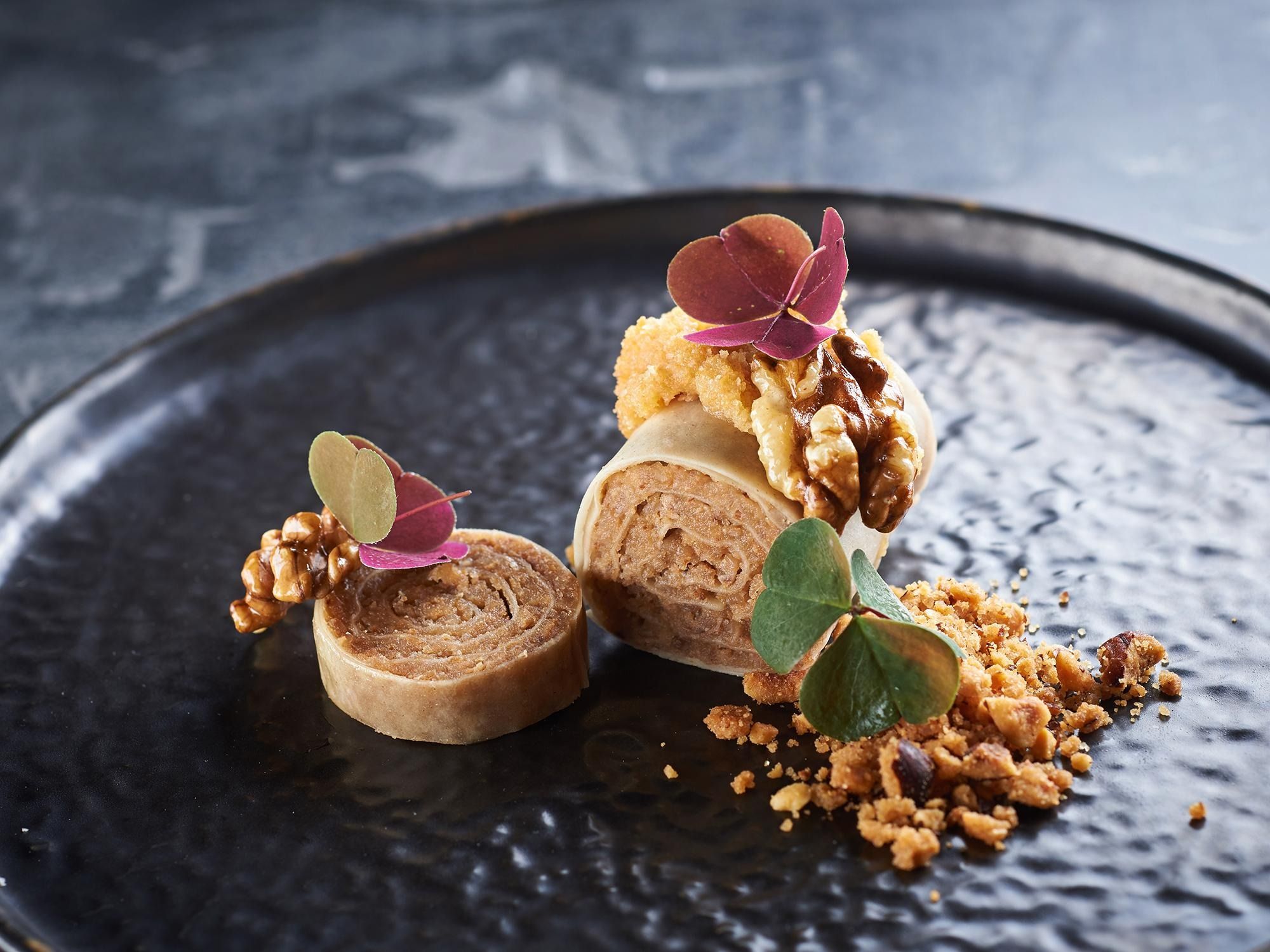
However, in modern kitchens, the Christmas bread is often replaced with the star of Slovenian gastronomy, the famous potica. The traditional choice is walnut potica, but we can also find it with a hazelnut, honey, carob, raisin, or almond filling, or in a savoury version with crackling, and in many other variations. In December, the tables are covered with homemade biscuits, different types of dumplings, layered cakes, and sweet breads, such as fruit bread, a sweet and fudgy bread made with dried fruit and sometimes walnuts, hazelnuts, figs and similar.
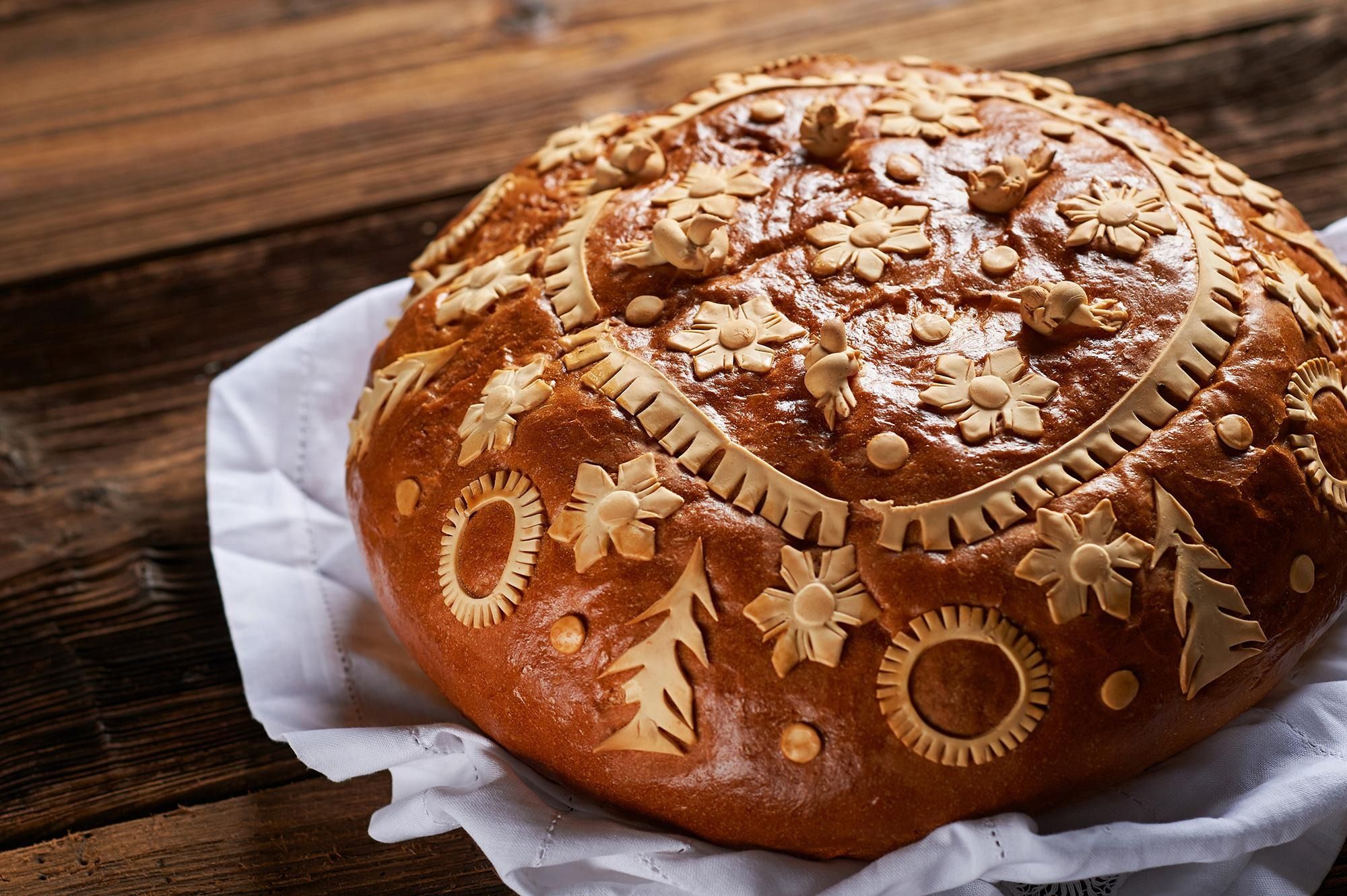
Photo: Tomo Jeseničnik
It's no good to begin the new year by scratching backwards with claws; it's better to push forwards with a snout!
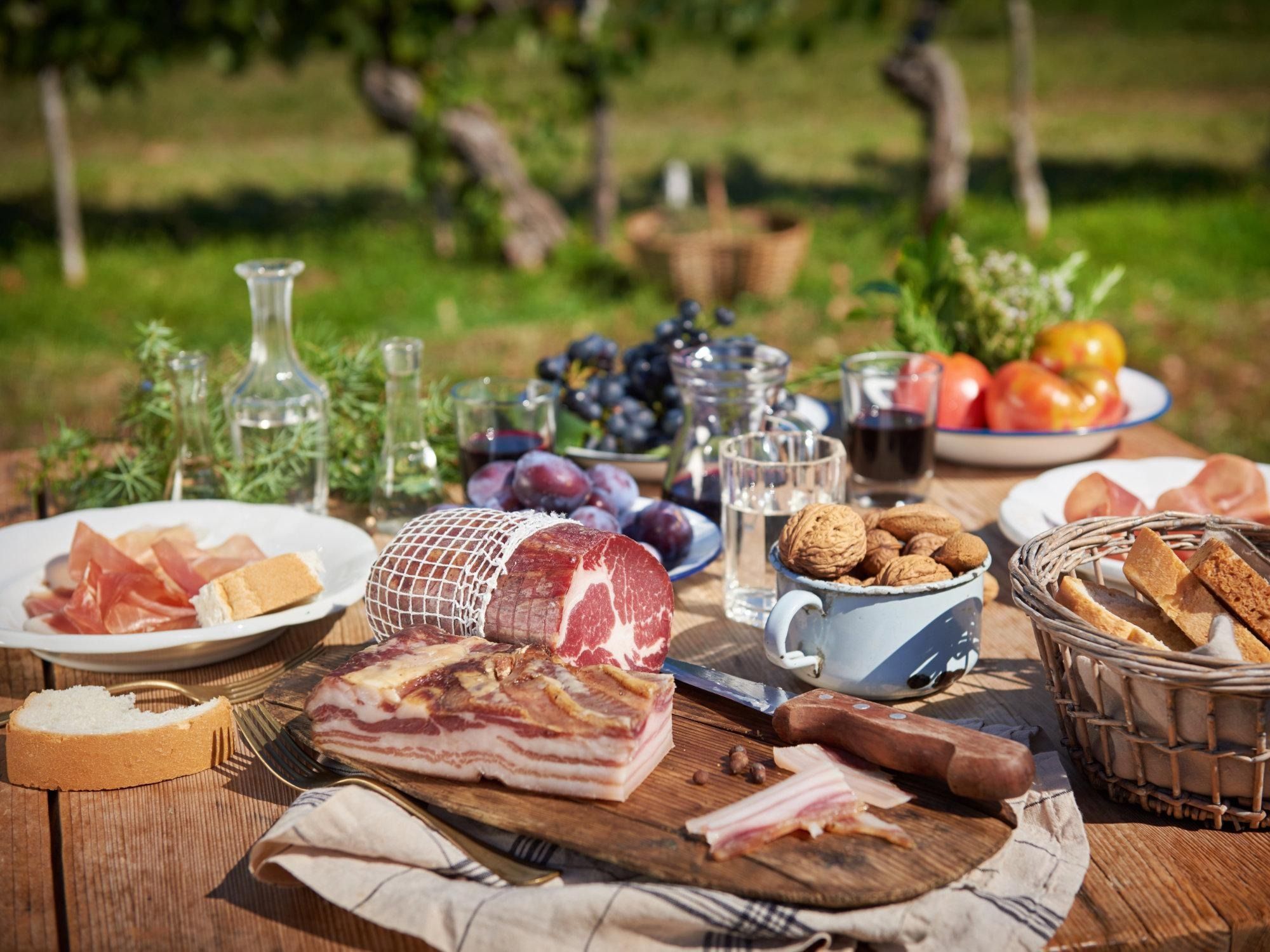
This old saying advises us to eat pork, not poultry, during the December festivities, revealing the eating habits of our ancestors. December is also the time for koline, an event where families and neighbourhoods slaughter and process a pig to make food stores for the winter. Every region has different recipes and processes for preparing the meat products; we could even say that every farm has a secret family recipe for the best results. In addition to blood sausages, bratwurst-style sausages, and other sausages, the menu often includes prosciutto, meat preserved in a special container called a tünka, minced lard, pork roast, aspic, blood soup, etc., depending on the region and the local traditions.
Photo: Tomo Jeseničnik
Seasonal produce even in December
Life of the past generations used to be closely connected with nature and its cycles. The seasons also dictated the holidays and the dishes used to celebrate them. In December, the seasonal menu included various grouts prepared in different ways, combined with cabbage, turnip, and potatoes, and seasonal salads such as lamb’s lettuce and chicory. In the Primorska region, Christmas dinner was not complete without the bakalá, a dish made from dried salted cod, and in Ljubljana, people used to enjoy a carp at Christmas.
Cabbage and turnip were most often fermented, and the fermentation process has not changed much to this day. Fermented cabbage, or sauerkraut, is said to have many health benefits.
The most popular festive side dish is cooked potatoes, pan-fried with lard and onions. The oldest written Slovenian recipe for these pan-fried potatoes can be found in the Slovenian Cookbook from 1868. In fact, pan-fried potatoes are so popular in Slovenia that we even have an Association for the Recognition of Pan-fried Potatoes as a Main Dish, which also organises an annual World Festival of Pan-Fried Potatoes.
But with modern times came modern dishes, such as shrimps, clams, venison, pasta, carpaccio, steak tartare, and caviar, and there was more and more innovative cuisine. In many households, the month of festive meals culminates with the New Year’s Eve Dinner, when the cooks pay special attention to the dishes and perhaps prepare a gourmet surprise.
Photo: Tomo Jeseničnik
From feasting to fasting
The first large celebration in the new year is definitely the Shrovetide festival, called Pust, when masked creatures take over for a few days. The Pust festivities and parades occupy the streets and squares on Shrove Saturday and Sunday, announcing the last big feast before the forty-day fast starting on Ash Wednesday, when people give up meat and sometimes other vices. But before the fast, there must be feasting! The ritual dishes that mark the Pust are fermented turnip and cabbage, dried meat, a spoon-bread dish called žganci, roasted pig head and potica with crackling, and of course the children’s favourites, jam-filled doughnuts and other traditional fried dough sweets, such as miške and flancati.
Photo: Tomo Jeseničnik
Easter eggs and other Easter treats
In spring, after the fast, comes the largest Christian holiday in which food plays an important role. The symbols of Easter in Slovenia are dishes that tell the story of Christ’s crucifixion. The horseradish symbolises the nails, the ham the body, the potica – baked in a round mould and often with a tarragon filling at this time of year – symbolises the crown of thorns, and the bread symbolises life. But the most important Easter symbols are the painted Easter eggs called pirhi. Eggs are an ancient and natural symbol of fertility, and today almost every family paints the pirhi. Painted Easter eggs are traditional everywhere in Slovenia, but with some regional differences. Big family meals are also an Easter Sunday tradition in most families, regardless of their religion.
Photo: Tomo Jeseničnik
Celebrating the harvest
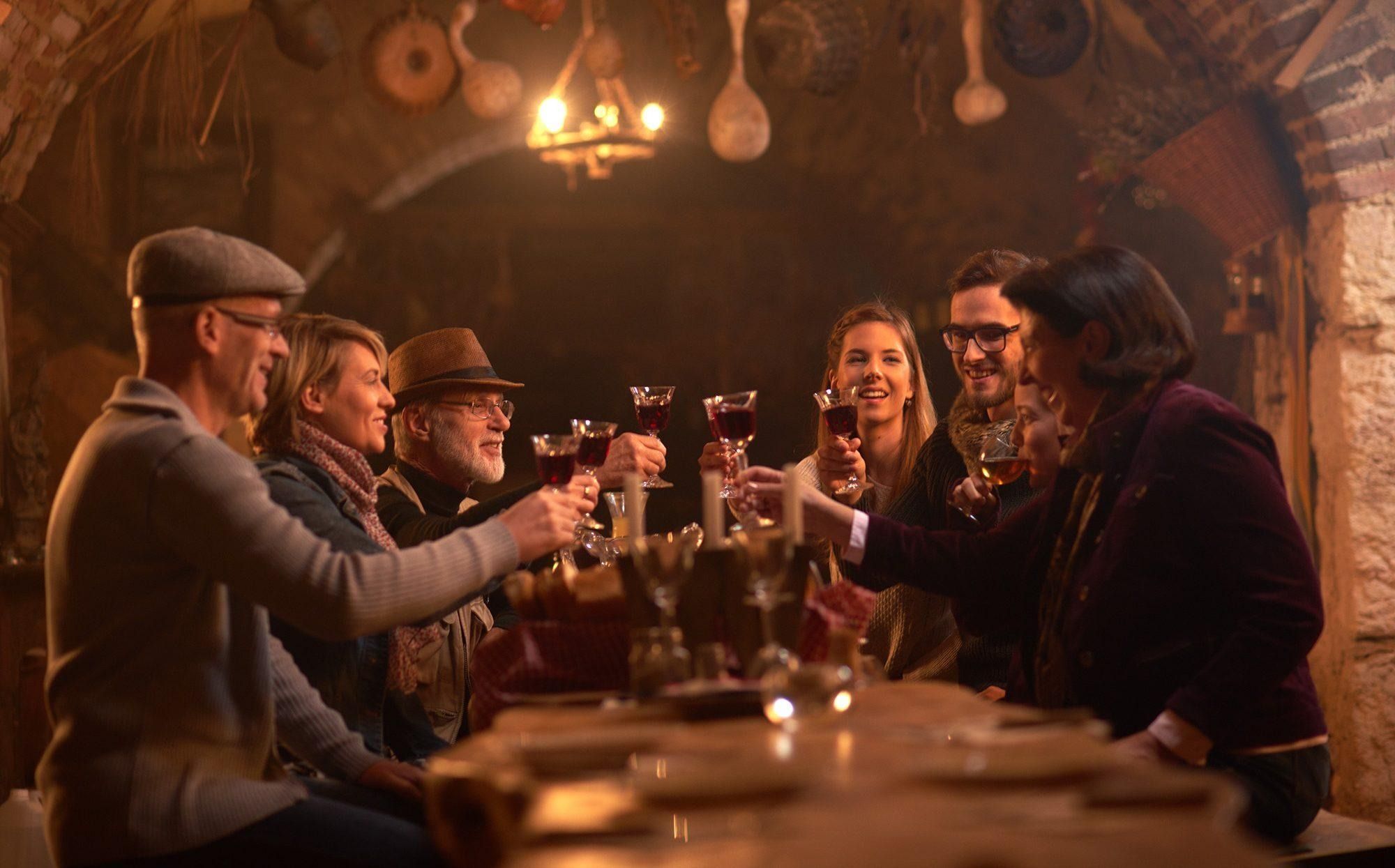
In autumn, during the time of the harvest, several food-related festivals take place in all Slovenian regions, such as the Bean Day, the Cabbage Fest, or the Pumpkin Fest, but the most popular and celebrated is St. Martin’s Day. The tradition says that on St. Martin’s Day, the 11th of November, the grape juice turns to wine. Although it is named after a Christian saint, it is thought to have also been an important pagan celebration. Especially in the wine regions, where wine was their main product, there have always been celebrations, feasts, and offerings to different deities.
St. Martin’s Day is still very alive in Slovenia, and is always celebrated with the St. Martin’s Day feast. The traditional main dish is roasted goose, but it can be replaced with duck or other poultry. The goose is often filled – the traditional filling is made from chestnuts and/or apples – served with stewed red cabbage and mlinci, which are often served with crackling. Mlinci is a type of long-lasting dried wheat flour flatbread made without yeast, which is then prepared following a special recipe. It used to be one of the better main dishes of the poor, but today it is a speciality that usually accompanies different roasts. It is most often prepared on St. Martin’s Day. The traditional St. Martin’s Day dessert is a slow-baked apple, sometimes with cranberries.
Photo: Iztok Medja
Photo: Dean Dubokovič
Photo: Dean Dubokovič
01/03