Slovenian wineries with long tradition
At the heart of the Jeruzalem Hills, nature conjures up a remarkable sight
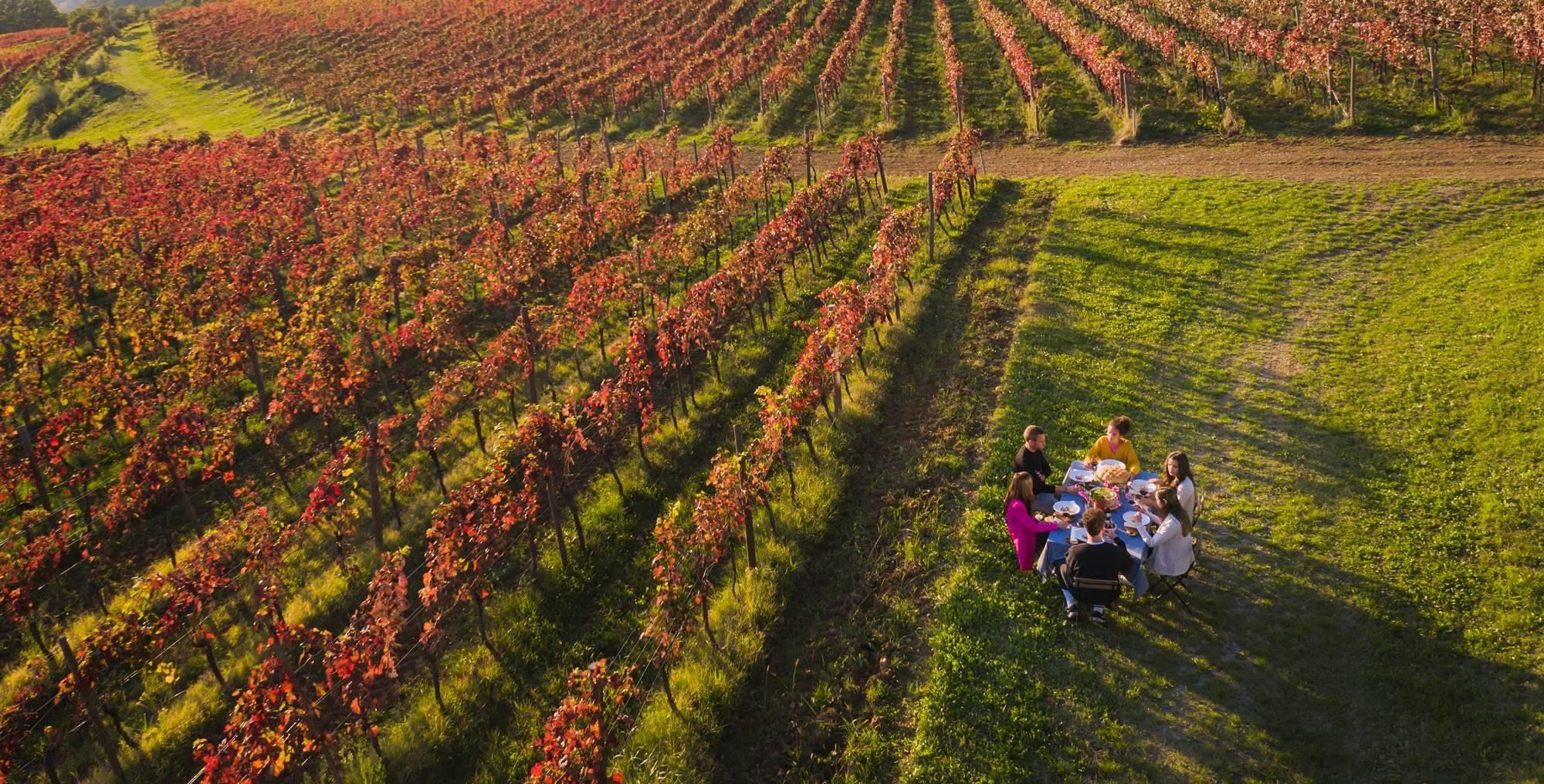
At dawn, when the sun has just risen, the light is dim, orange red. As far as the eye can see, thick fog lies with only small ‘islands’ peeking out if it, which are the sun-kissed peaks of hills Temnar, Veliki Brebrovnik, Malek, Litmerk, and Jeruzalem. Robust farm buildings are preserved on each of these hills where only some 50 years ago grapes were pressed and the wine of cooperative members was matured. This view stays with you forever.
The best-preserved building on these hills is the over 300-year-old vineyard cottage with equally old press. It serves as a time machine, a reminder of the importance of wine production in this region. The cottage is open every day during the season, and its visitors are welcomed by Robert Puklavec behind the bar. A local and a sommelier, who is not related to the owners (Puklavec Family Wines), but knows more about Malek than anyone else. He can take you to the old vaulted cellar with wooden barrels where he will show you a small archive collection and suggest tasting it. The tasting can be accompanied by Prlekija delights: meat from tünka lard, postržjača if ordered, which is a small flat cake made of leftover dough and laden with pork cracklings, and of course, the Prlekija gibanica layer cake. The tasting of Furmint, Pinot Gris or Sauvignon Blanc, ends best in a lounge chair among the vines while enjoying the light breeze and the view of the nearby Svetinje or Jeruzalem.
Jeruzalem Vineyards
Photo: Marco Copo
On the shoulders of giants
Cooperative wineries started emerging in Slovenia at the end of the 19th century. They united individual wine producers who were unable to place themselves in the market individually.
After the Second World War and up until the 1980s, cooperative wineries were practically the sole holders of viticulture and wine-making in Slovenia. Each wine-producing district had at least one cooperative winery – sixteen in total – which produced many an excellent wine. Large wineries still maintain their archive cellars, where some of the venerable wines can still be tasted. Some have kept their cooperative form until today, while others are now privately owned and some have gone completely.
On heroic viticulture and supreme Rebula
In the Goriška Brda Hills, this role was played by Klet Brda Winery, a cooperative that currently combines 400 private or family¸grape growers.
Each of them on average works on two-hectare large vineyards on the steep slopes of the Brda Hills. Due to the steep terrain, their work and approach rely particularly on manual labour that is frequently called ‘heroic viticulture’. Experts at Klet Brda Winery are certain that the quality of wine starts in the vineyard.
MY WAY OF EXPERIENCING PERFECTION.
Rebula, the queen of the Brda Hills
When visiting this region, ask about Rebula. The one from the Quercus line is perfect as an aperitif or a casual glass on any occasion since its excellent quality is unquestionable. Rebula from the Bagueri line deserves all praise. Its 2013 vintage received 97 points at the Decanter World Wine Awards and a platinum medal.
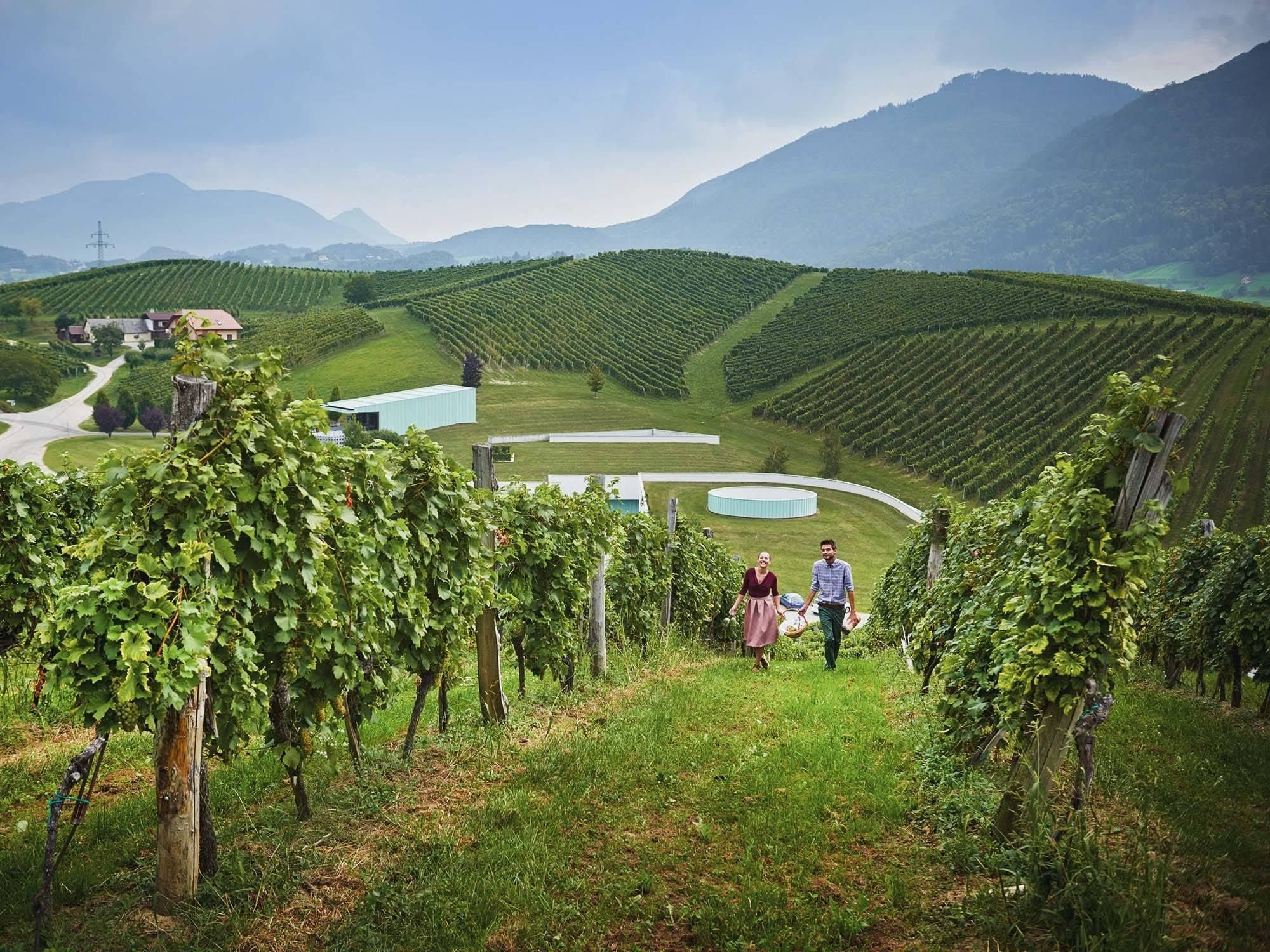
Wine tasting in the vineyards
Photo: Tomo Jeseničnik
What do Spanish wine innovator Silverij de Baguer and Ralf Schumacher, the former German F1 driver, have in common?
A special experience is a visit to the De Baguer wine cellar at Dobrovo Castle. It is type of museum where the best wines of Klet Brda Winery from the De Baguer in A Plus lines mature.
The wine cellar has been arranged in honour of Count Silverio de Baguer (1838–1927) who contributed greatly to the development of viticulture in the Brda Hills. A particularity and a rare artefact is a concrete cistern from 1910 with a glass interior. This is a very modern wine-making vessel of that time made in Klosterneuburg north of Vienna.
When visiting the De Baguer cellar, you will stumble upon a surprise: barrels full of wine maturing for Ralf Schumacher, the former Formula 1 driver. A while ago, Schumacher had a glass of Rebula in a Salzburg restaurant and liked it so much that he wanted to know where it was from. The wine impressed him to such a degree that he put Rebula from Klet Brda on the wine list of his Mediterranean restaurant in Cologne.
Which other traditional wine cellars are open at all times?
In the Radgonske Gorice winery, the home of sparkling wines, you can learn about the 150 years of history of sparkling wine, or enjoy a wine and culinary pampering experience in the middle of the vineyards of Zlati Grič Winery or in their Grič Restaurant. At Ptujstka klet winery, you can taste archive wines and see the bottles of Zlata trta 1917, the oldest Slovenian bottles of wine preserved.
Metlika Winery enables the tasting of wine, which is becoming a rarity – ice wine. If visiting Krško, Modra frankinja Prestige (Blaufränkisch) from Krško Wine Cellar is the reference example of this indigenous Slovenian variety. The Vipava 1894 Winery is experiencing a renaissance under its new owners, while you can visit the Vinakras Winery to taste Slovenian specialities, Teran and Vitovska. Vinakoper, the only coastal winery in Slovenia, offers a variety of wine experiences in its visitor centre.
Wine degustation
Photo: Vid Ponikvar