Typical dishes

Typical dishes

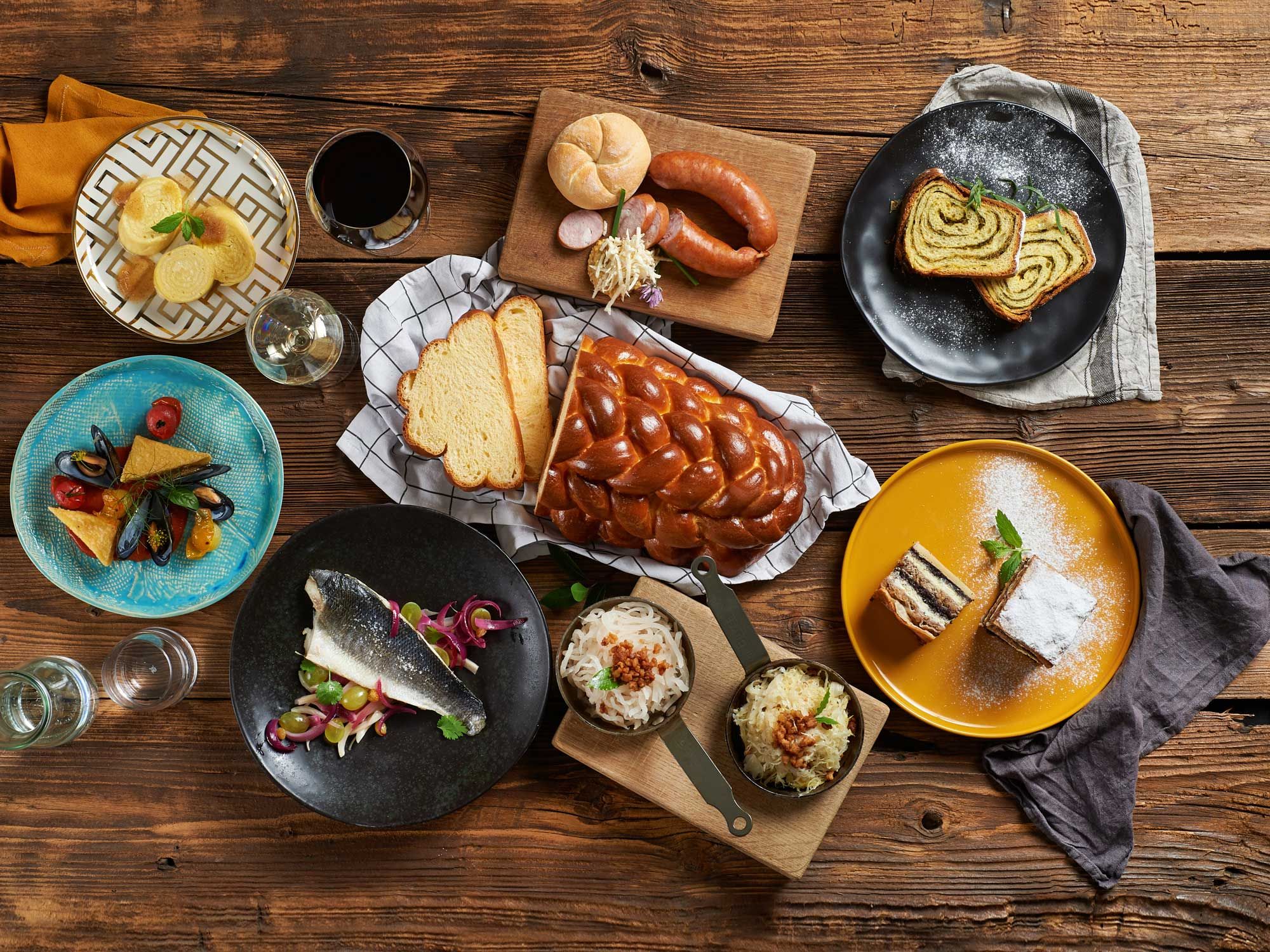
Different food is available on the coast than among the Alpine peaks. The flavours of the Pannonian Plain are different to those of the Karst. Everywhere you go, you will discover how nature and culture have always been combined here on a plate with distinctive local dishes.

Photo: Tomo Jeseničnik

1–16 of 16

  • THERMAL PANNONIAN SLOVENIA

    Ajdov krapec (buckwheat cake)

    This is a flatbread made from thin buckwheat dough, topped with ‘skuta’ curd cheese and sour cream. It is a speciality from Prlekija and a part of Slovenske Gorice; another dialect name for it is ‘kropec’. Locals believe that the name comes from ‘krop’ (boiling water), which is used to steam the buckwheat flour used for preparing this flatbread.
  • THERMAL PANNONIAN SLOVENIA

    ‘Bograč’

    This is a type of goulash hotpot that has been prepared in Prekmurje since 1950. It is made from three types of meat, potatoes, and mushrooms (in autumn). The name of the dish originates from the Hungarian word for a cauldron in which shepherds used to cook meat hotpots. The largest ‘bograč’ cooking competition is held in Lendava.

  • THERMAL PANNONIAN SLOVENIA

    ‘Bosman’ (wedding bread)

    In the past, no wedding in the region along the River Mura was complete without an ornately decorated ceremonial bread representing a happy marriage. This high-quality white bread made from many kinds of dough plaits and decorated with, among other things, paper flowers, was once also given at births and children’s baptisms.

  • THERMAL PANNONIAN SLOVENIA

    ‘Bujta repa’ (sour turnip and millet mush)

    The most popular hotpot in Prekmurje is ‘bujta repa’, which was initially a typical winter-time lunch dish. The name of the dish comes from the word ‘bujti’, which means ‘to kill’, so it is a dish eaten at the pig slaughter. Its main ingredients include grated turnip, the fatty parts of a pig head and neck, and cut up pig skin.

  • THERMAL PANNONIAN SLOVENIA

    ‘Dödöle’

    Potato mush which was established in Prekmurje in the 19th century as an everyday dish enjoyed for lunch or dinner. The name comes from Hungarian. The mush is topped with lard, pork crackling, ‘zaseka’ pork mash, pumpkin seed oil, or sour cream.

  • THERMAL PANNONIAN SLOVENIA

    Kozjanska kruhova potica (Kozjansko bread cake)

    Although it is called ‘potica’, this is actually a typical flatbread from filo dough, filled with three layers of white bread slices and a filling made from warmed cream, eggs, sugar (or honey), and raisins.

  • THERMAL PANNONIAN SLOVENIA

    Kozjansko capon

    This delicious poultry dish, which used to be a staple in the rich diet of castle lords and other privileged parts of society, is prepared in Kozjansko, where capons are also farmed. Capon is always available at Gostilna Kunst in Bistrica ob Sotli and in other restaurants.

  • THERMAL PANNONIAN SLOVENIA

    St. Martin’s roast duck or goose with ‘mlinci’ flat cakes and red cabbage

    This is one of the most distinctive dishes enjoyed during St. Martin’s festivities, held since the 1970's to celebrate the harvesting of wine grapes. This dish is prepared all around Slovenia and is virtually a mandatory element of these festivities that last anywhere from one day to two weeks.

  • THERMAL PANNONIAN SLOVENIA

    ‘Prekmurska gibanica’ (layer cake)

    The most recognisable and popular Slovenian holiday cake, it has a top and bottom layer of filo dough with layers of apple, ‘skuta’ curd cheese, walnuts, and poppy seeds in between. In was introduced in Prekmurje by seasonal labourers who used to go to work in Slavonija and Vojvodina.

  • THERMAL PANNONIAN SLOVENIA

    Prekmurje ham

    This world-class food product made by many generations is the result of high-quality smoking and drying of pork legs. It is celebrated for its mature pork meat and bacon complemented by the fine aroma of smoke and moderate saltiness

  • THERMAL PANNONIAN SLOVENIA

    ‘Prekmurske koline’ (pork meat and sausages)

    ‘Koline’ (pig slaughter) is one of the major autumn-winter holidays in Prekmurje. This is when buckwheat, white or millet, ‘čarne’ (black) or blood sausages (black pudding) and ‘žemlove krvavice’ (black pudding made from soaked dried bread) are made. In addition to the intestines, the pork stomach (‘ded’; man in dialect) and caecum (‘baba’; woman in dialect) are stuffed.

  • THERMAL PANNONIAN SLOVENIA

    ‘Prleška gibánca’

    ‘Prleška gibánca’ or ‘slovenjegoriška gibánca’ is a flatbread typical of two regions in north-eastern Slovenia. This flatbread consists of seven layers of filo dough with a ‘skuta’ curd cheese and sour cream filling between them. There are sweet and savoury versions.

  • THERMAL PANNONIAN SLOVENIA

    ‘Prleška tünka’, (meat from the lard barrel) ‘zábel’ (pork mash) and black bread

    There have been written testimonies about this excellent preserved pork meat in ‘zaseka’ pork mash since the second half of the 15th century. The name is connected to the way it is made, as high-quality pork meat pieces are topped (in a local dialect: “tünkati”) with ‘zaseka’ pork mash, also known as ‘zábel’.

  • THERMAL PANNONIAN SLOVENIA

    ‘Rajhov langaš’ (fried dough with toppings, such as horseradish, chives, etc.)

    This is Leon Pintarič's (Gostilna Rajh, Bakovci) interpretation of a Hungarian fried dough dish, which is also commonly served as street food. Pintarič's version introduces this dish to world-class gastronomy.

  • THERMAL PANNONIAN SLOVENIA

    ‘Vrtanek’ (holiday bread)

    A typical ceremonial bread which was recorded in writing as early as in the 17th century. ‘Vrtanek’ bread used to be a common gift given by girls to haymakers, and was also given out during maize husking and enjoyed at wedding feasts.

  • THERMAL PANNONIAN SLOVENIA

    Štajerska sour broth

    Only the best superlatives are used to describe this broth, as it is said to be a magical cure for both sleepless nights and the effects of alcoholic overindulgence. Most frequently, this broth is made during the pig slaughter and is enjoyed at wedding feasts when it is served to guests as a sign that the celebration is coming to an end.

Taste Slovenia

Read more

News with Flavour

Subscribe to the tastiest newsletter Taste Slovenia.