Slovenia, a wine-growing country
Tradition of producing wine
Wine production is a part of history as well as the modern everyday life of Slovenia.
It began with the Celts in the 3rd and 4th centuries BC, when wine-growing was thriving at the time of the Roman Empire.
The fact that wine has always been a significant part of life in this territory is tellingly corroborated by the fight for the right to trade in wine, the so-called wine war between Maribor and Ptuj, which lasted over 300 years from 1339 to 1654.
Photo: Jaka Ivančič
We can joke that every Slovenian either produces wine or knows someone who does.
Robert Gorjak, a quote from the book: "Slovenija, vinska dežela"
In Slovenia, wine is closely connected with daily life
Even the Slovenian anthem is a toast.
If you are invited to the home of a Slovenian family, you will soon find out that wine is closely connected with life and habits in Slovenia, and that wine is part of our daily life. We can joke that every Slovenian either produces wine or knows someone who does. People used to use wine to pay taxes or as a means of exchange, while today, we use it to toast at crucial turning points in life. Even our anthem “Zdravljica” is a toast. Let us give you a hint: wine consumption in Slovenia is around 42 litres per capita per year and is among the highest in the world. Almost every Slovenian knows that Chardonnay is white grape varitey, and that Rebula grows in Primorska.
From the Mediterranean over the Alps and the Karst to the Pannonian Plain
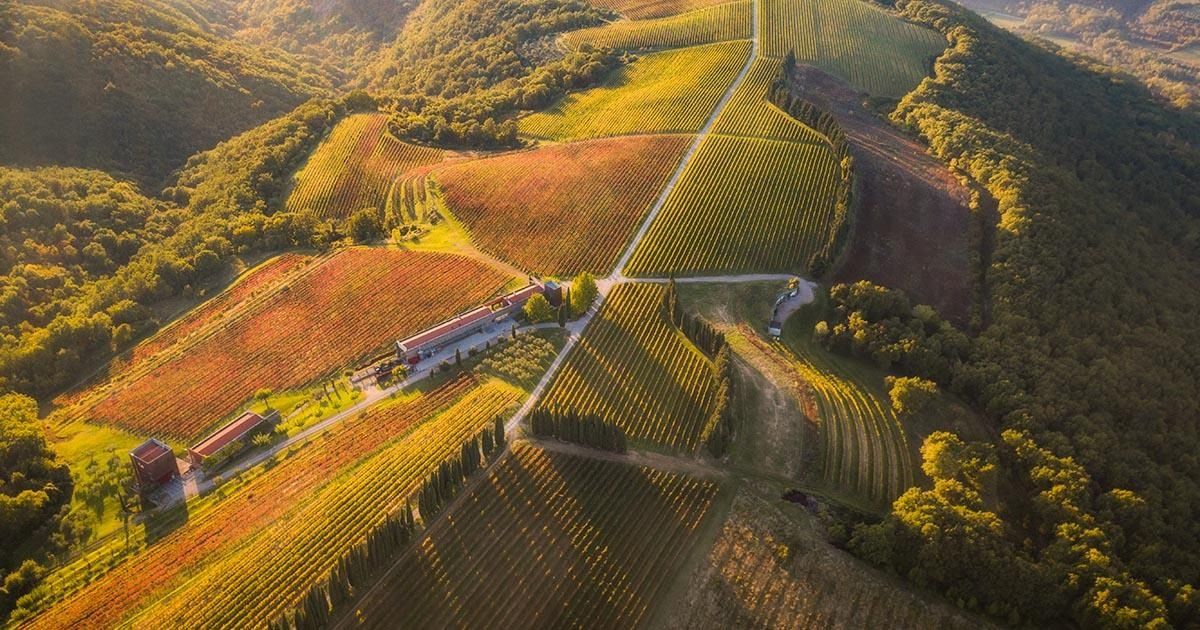
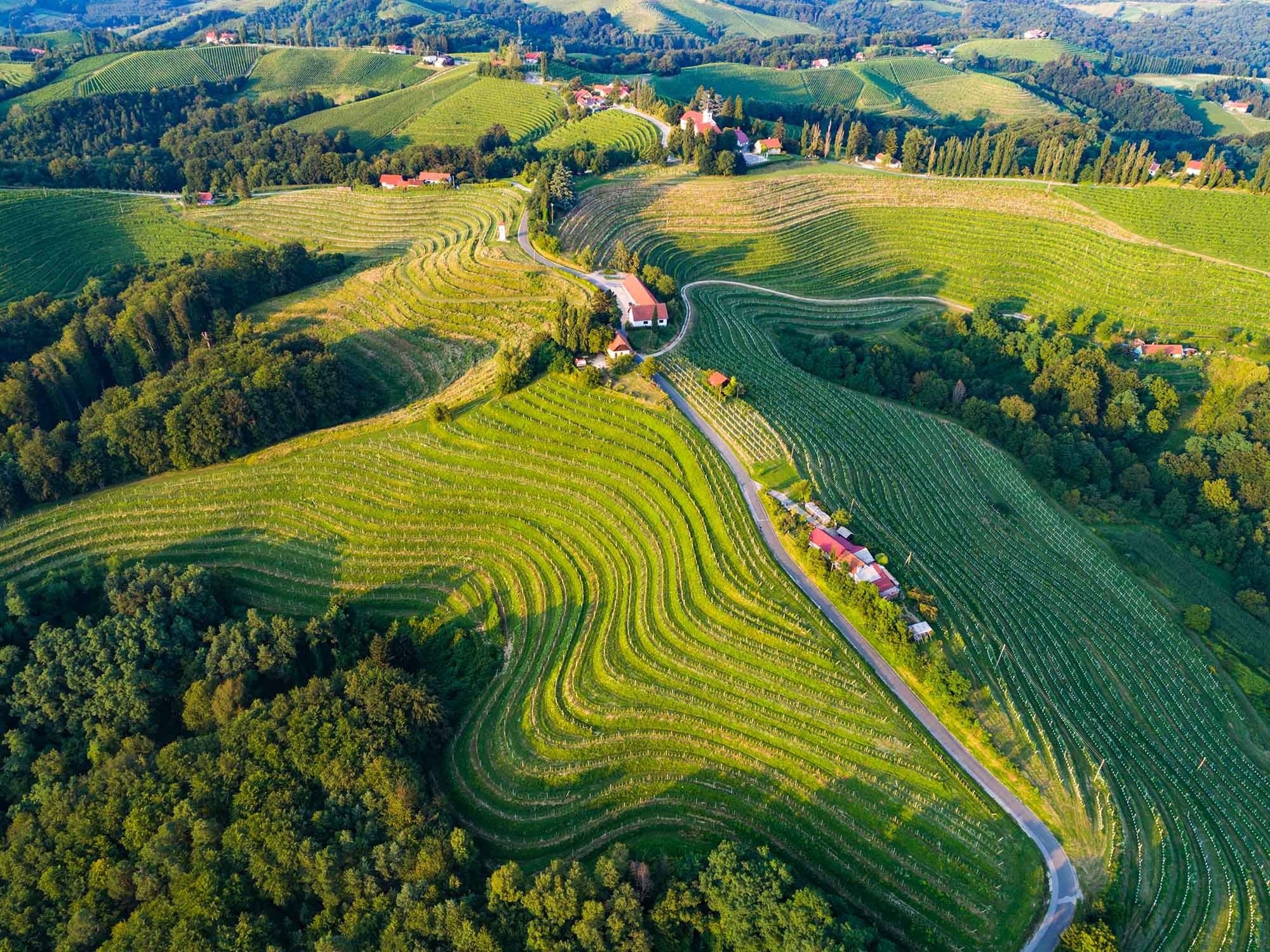
Slovenian wine-growing districts boats immense geographical and climatic diversity.
A flight over Slovenia would quickly reveal that the central part of our country is quite hilly, which is why high-quality wine-growing is not possible here, as it is too cold. But as we move eastwards or south-westwards, things change. As we move eastwards, the warm Pannonian Plain begins influencing the climate, and the conditions become suitable for wine-growing. It is here, in the continent, where the wine-growing regions of Podravje and Posavje are located.
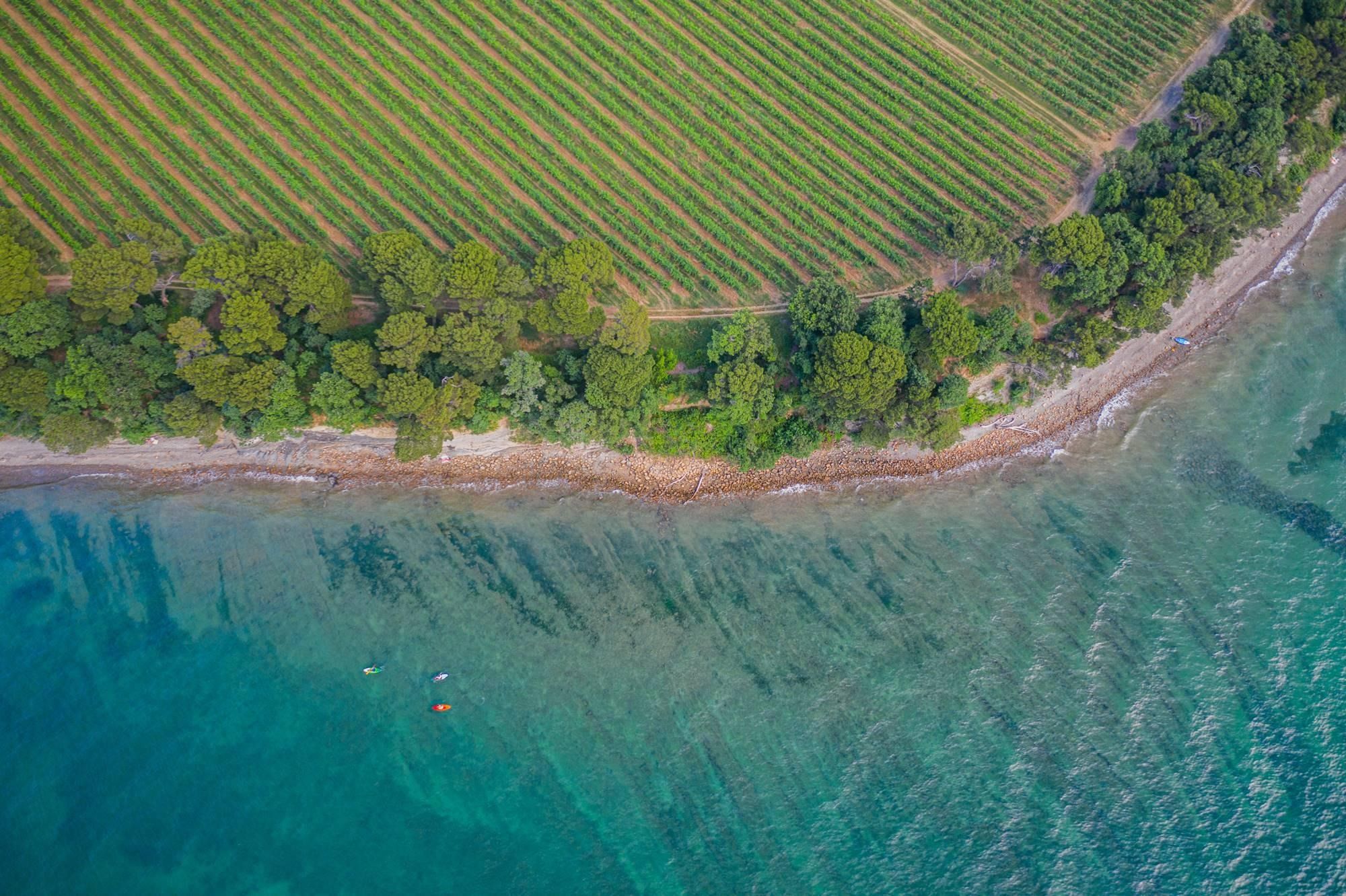
In the south-west, the warm Mediterranean provides favourable conditions for wine-growing. The Primorska wine-growing region extends here.
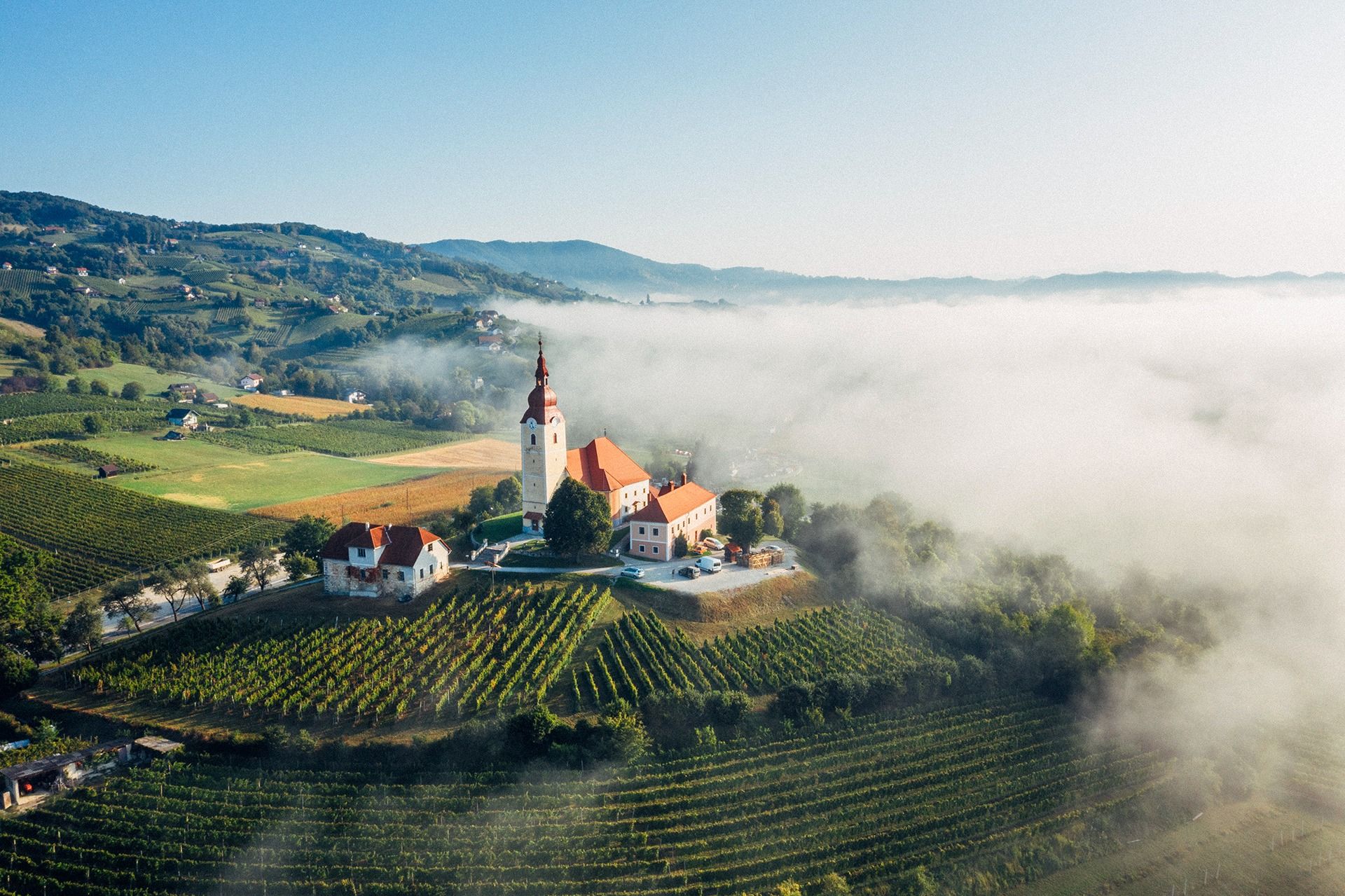
Geographical features and tradition divide Slovenian into three wine-growing regions and nine wine-growing districts. Most vineyards are located on slopes, which means that manual labour, particularly manual harvest, is a de facto standard. In Slovenia, vineyards in all districts receive enough precipitation, which is why irrigation is not necessary.
MY WAY OF WINE SAFARI.
What grows in Slovenian vineyards?
Family and craft approaches are characteristics of wine-growing in Slovenia.
There are no wine multinationals in Slovenia, and in view of the average size of vineyards, which is 0.32 hectares, it does not look like they are going to emerge soon. Grape and wine production are most frequently a family business, passion, and mission. Even the largest wine producer, i.e. the Klet Brda Winery, is a cooperative which brings together 400 farmers.
Wine in Slovenia is produced on 15,500 hectares of vineyards, which is approximately the same as Alsace, and constitutes 0.2 per cent of global production. Regardless of the size, which is not enormous, the diversity of grape varieties (53) is Slovenia is enviable. Around 70 per cent of wine produced is white, and 30 per cent is red, which is understandable given the moderate to cold climate in wine-growing districts. Welschriesling may be our most planted variety, but winemakers fire up wine lovers and critics with indigenous varieties and regional specialities. White varieties include Malvasia, Rebula, Furmint, Pinela, Zelén, Ranina, Vitovska Grganja, and Rumeni Plavec, which may be produced the traditional way or the “orange” way, while red varieties include Refosco, Blaufränkisch, and Žametovka.
Špičnik
Photo: Nea Culpa d.o.o.
Old Vine
Did you know that the oldest vine in the world grows in Slovenia?
The venerable Old Vine is almost 450 years old, and you can admire it by the Drava River in Lent in Maribor. It is our “well-kept secret”, which surprises even the greatest wine connoisseurs.
The Old Vine is the Žametovka variety, and despite its distinguished age, it yields between 40 and 50 kilograms of grapes each year.
However, wine is not for sale. The mayor of Maribor uses it for protocol purposes.
The Old Vine in Maribor
Photo: Andrej Tarfila