Posavje wine-growing region
Take a less beaten wine track and visit the Posavje wine-growing region
Taste excellent sparkling wines, increasingly better rosés, and extraordinary sweet wines.
The smallest Slovenian wine-growing region, Posavje, named after the Sava River, is divided into three wine-growing districts: Dolenjska, Bizeljsko–Sremič, and Bela krajina.
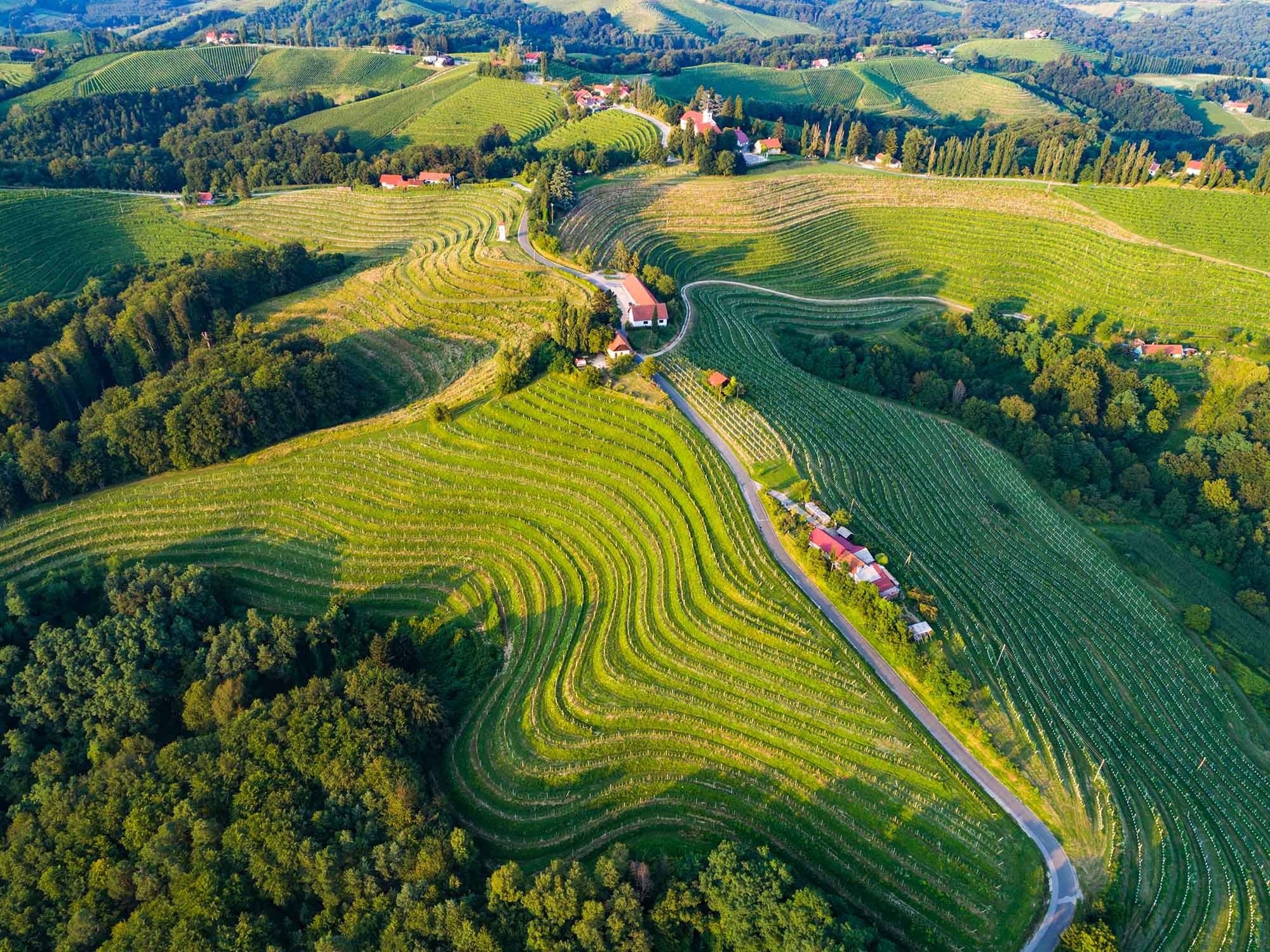
Posavje Vineyards near Krško
Photo: Andrej Tarfila
Dolenjska has 7,500 winemakers on 1,460 hectares, which is three times more than Australia.
Dotted with hills, this wine-growing district has 7,500 winemakers. Most of them are amateur winemakers, which is reflected in numerous cosy vineyard cottages scattered in vineyards. These are small wooden or stone-built cottages where locals make wine for their families and friends on just a few ares of vineyards.
Bizeljsko–Sremič wine-growing district
In the land of turnip caves (repnice) – cellars manually dug into sand.
The Bizeljsko–Sremič wine-growing district was named after two important villages located in south-eastern Slovenia. The district borders the Dolenjska wine-growing district in the west, and the Sotla River, along which the border with Croatia runs, in the east. The climate is continental with Pannonian influences. Winters are cold, while summers are warm and in recent years, increasingly hot. Vineyards extend at altitudes between 200 and 400 m. The soil is diverse with marl and limestone prevailing, which are covered with sandy soil mixed with clay. Red and white Bizeljčan constitute the bulk of production. These are drinkable, light bodied, and refreshing wines. Recently, varietal Blaufränkisch has been drawing more attention, which is generating good results. You can also try excellent sparkling wines which have a long tradition in Bizeljsko. In addition to Chardonnay and Pinot Noir, you will also find a local speciality – a white variety of Rumeni Plavec – in sparkling wine.
The special features of this district are turnip caves (repnice), which are cellars manually dug into sand. The oldest turnip caves are more than 200 years old, and are still used as rooms for storing bottles or have been rearranged into unique tasting rooms.
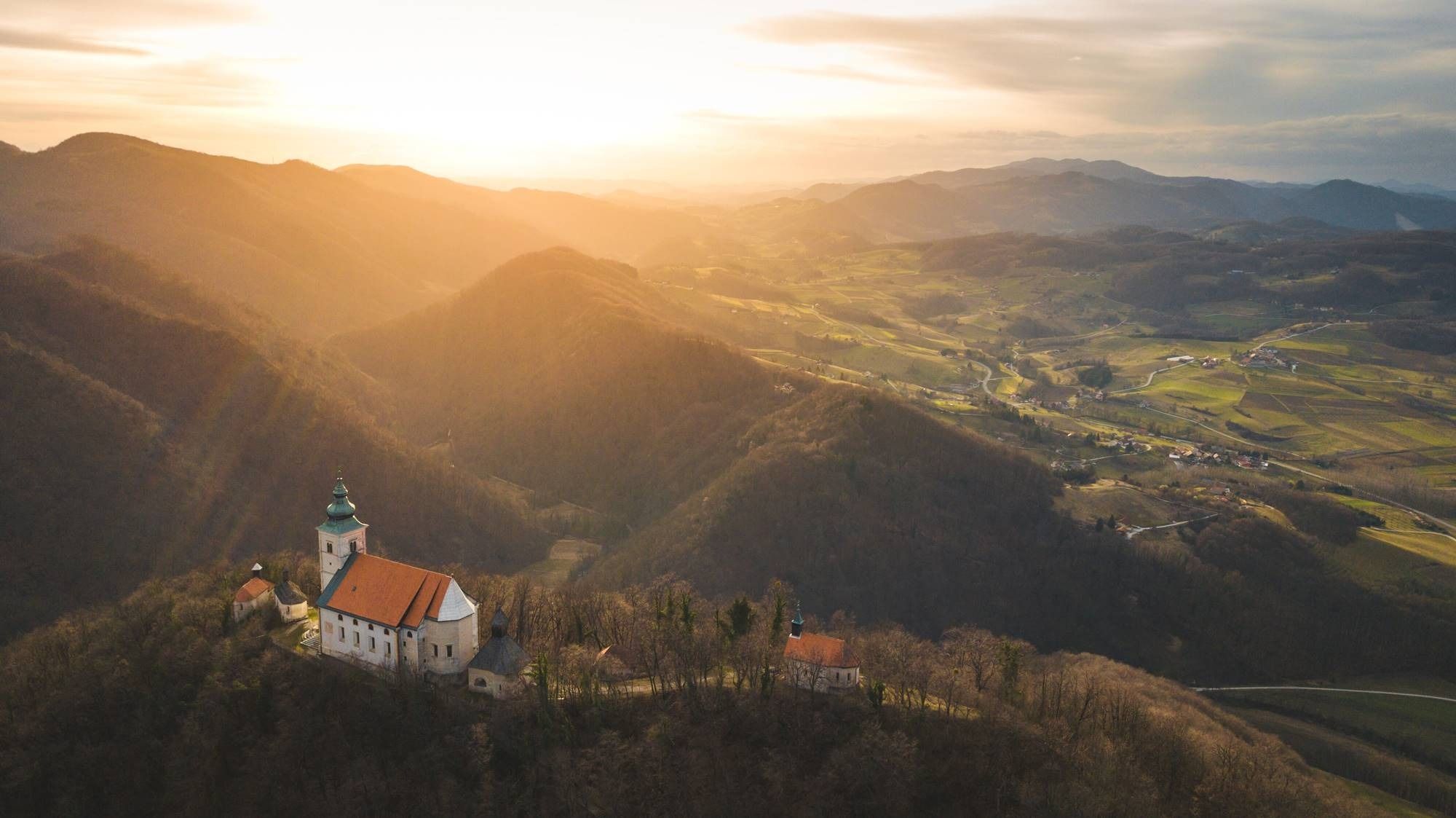
Bistrica ob Sotli
Photo: Amadej Knez
Dolenjska wine-growing district
From one vineyard cottage to the next.
The Dolenjska wine-growing district is the coldest district in Slovenia. Its climate is continental with Alpine and sub-Pannonian influences with very cold winters and warm summers. The geological soil composition in Dolenjska is diverse. We can find everything from slate, sandstone, and marl to prevailing limestones and dolomites. Dolenjska is most known for Cviček, a light red wine with a low alcohol level and characteristic bouquet of red berry flavour. In addition to Cviček, more advanced winemakers decide on varietal wine production, particularly from Blaufränkisch and Sauvignon Blanc. Dolenjska has recently been revitalised with rosés , superb sparkling wines made using traditional method from indigenous Žametovka , Chardonnay, and Pinot Noir.
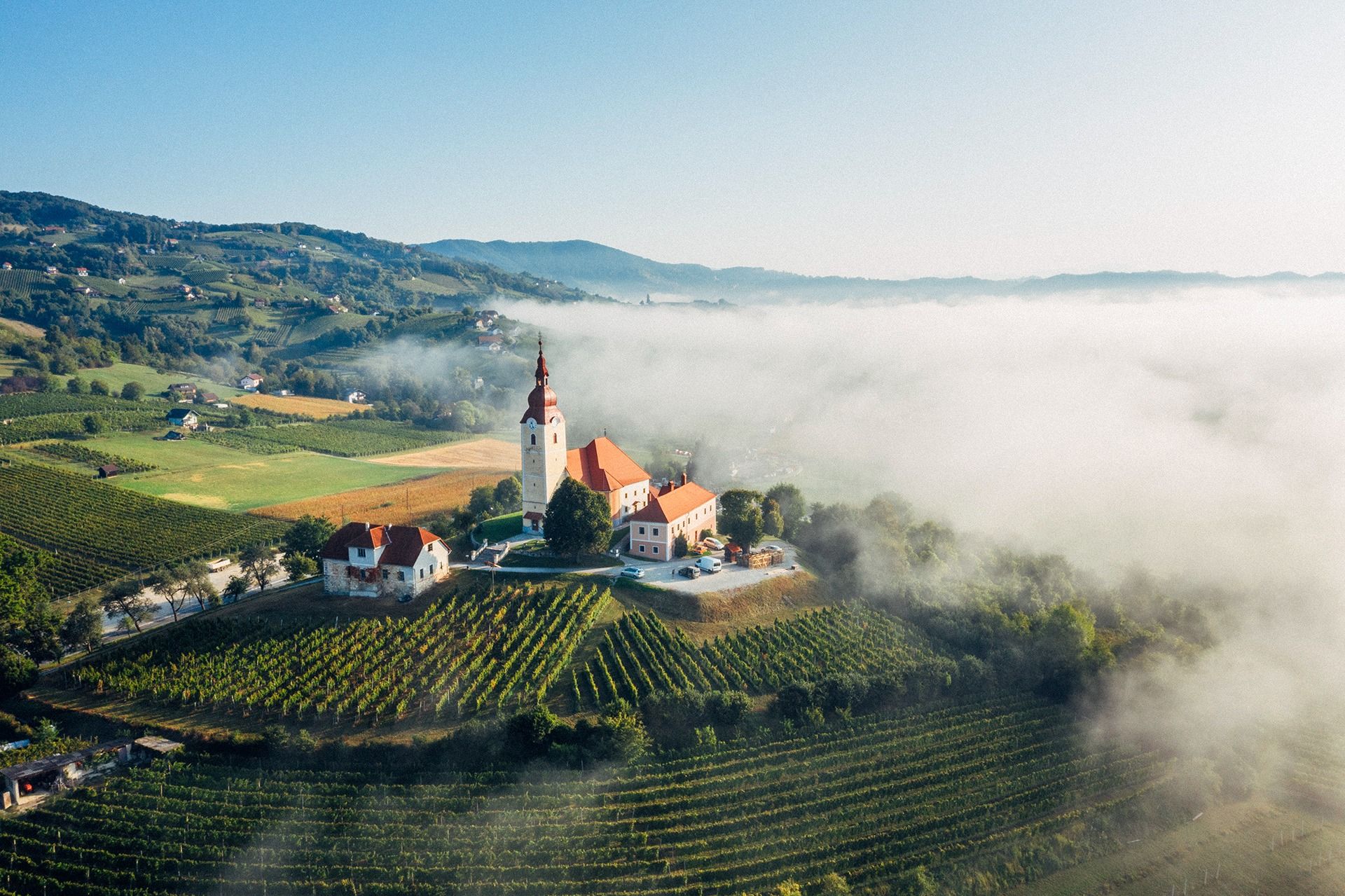
Vinji vrh at Dolenjska
Photo: Andrej Tarfila
Bela krajina wine-growing district
The smallest wine-growing district but with the biggest heart.
Bela krajina is Slovenia’s smallest wine-growing district. It is located in south-eastern Slovenia between the hills of Gorjanci and the Kolpa River along which the border with Croatia runs. It is the warmest Posavje district with continental, sub-Pannonian climate and Mediterranean influences. Limestone and dolomite prevail in Bela krajina’s geological composition, while red clay, flysch, sandstone, and marl. The considerable temperature difference between days and nights supports the production of aromatic wines which preserve their freshness.
Various wine styles are produced in Bela krajina. Traditionally, light bodied and drinkable wines Belokranjec (white) and Metliška Črnina (red) are produced the most. Lately, however, more attention is paid to varietal wines among which Yellow Muscat stands out among white wines. Among red wines, Blaufränkisch has become increasingly important. The district’s speciality is predicate wines which are made with noble rot. Their quality is among the best in the world and the wines have several-decade ageing potential. Slovenia’s first ice wine was produced in Bela krajina in 1986 under the leadership of Dr Julij Nemanič, who was an oenologist in the Metlika Agricultural Cooperative at the time.
Bela krajina
Photo: Jošt Gantar