
Natural wine
Not just a trend, but a way of life
What does it mean if a wine is made in a sustainable way?
If you’re a wine enthusiast then you have undoubtedly gone into a hip wine bar in one of the large cities around the world in recent years, offering wines made exclusively in a sustainable way. When browsing through the wine list you might have noticed Slovenian wine producers, since many are at the very top when it comes to natural wines. Did the waiter start explaining about organic and biodynamic wine producers, and about orange, amber or natural wines? So, what does it mean if a wine is produced in a sustainable way?
Producing wine sustainably involves a philosophy and a way of life that are based on a caring and respectful attitude towards nature, wine and people. Vineyards are not isolated industrial units, but are part of a natural ecosystem with all microbiological, plant and animal components. It’s about a comprehensive approach to nature. Natural wine producers wish to produce wine in a way enabled by sustainable farming.
Photo: Jošt Gantar
A comprehensive approach to nature and minimal human intervention
What does that mean in practice?
The basic guideline of sustainable viticulture is minimal human intervention in the vineyard and the cellar. When protecting vines, the possibilities are very limited and chemicals are practically not used. Some wine producers use only home-made preparations with chamomile, nettles, seaweed and tea. There’s no irrigation and watering in vineyards. The produce is moderate, even minimal; grapes are more delicious and hand-picked.
The work in the cellar is similar. If the European Union permits 70 different preparations and additives that wine producers may use when cellaring, these will not be found with wine producers working in a sustainable way. They do not add sugar, acids, enzymes, tannins, protein, etc., but only use local yeasts from the vineyard and not selected ones. Spontaneous fermentation is the rule. Alcoholic fermentation takes place without controlled temperature. Wines are usually unfiltered. Sulphur is used minimally; perhaps before bottling, some producers do not use it at all. The length of maceration, i.e. the contact of must with the grape skins, and maturing in wooden or stainless steel barrels or amphorae is not clearly defined and is left to the inspiration of the wine producers’ philosophy. Their sustainable approach can be affirmed with a certificate for integrated, organic or biodynamic production. The most known among the latter is Demeter.
Natural is not necessarily extreme
Do you wish to expand your horizons when it comes to aromas and flavours?
Wine produced in a sustainable way may taste and smell very similar to the wines produced according to the classic method. Examples of such biodynamic wines of exceptional quality include wines from Château Palmer from Bordeaux, Cristal of the Louis Roederer champagne house or white wines of Zind-Humbrecht from Alsace. On the other hand, there are a number of wines produced in a sustainable way that introduce a whole new array of aromas and flavours.
MY WAY OF TASTING LOVE.
The orange revolution of Slovenians living in Italy
From Georgia to Italian Oslavje.
A special chapter are orange or amber wines, which are usually produced in a sustainable way. These include white varieties produced according to the method for red wines, with extended maceration. Globally renowned promoters of orange wines responsible for the so-called orange revolution are Joško Gravner and Stanko Radikon, Slovenians living in Oslavje in Italy. In the 1990s, Gravner visited Georgia, the birthplace of wine traditionally macerated in clay vessels or amphorae called qvevri. Gravner brought amphorae from Georgia, and although the majority of them broke in transit, he successfully started a new wine chapter. At the same time, Božidar Zorjan also started maturing wine in clay vessels in the Štajerska region. Nowadays, orange wines are produced in all Slovenian wine regions. They are also made by the most internationally acclaimed Slovenian wine producers, such as Movia, Kabaj, Batič, Burja and Marjan Simčič.
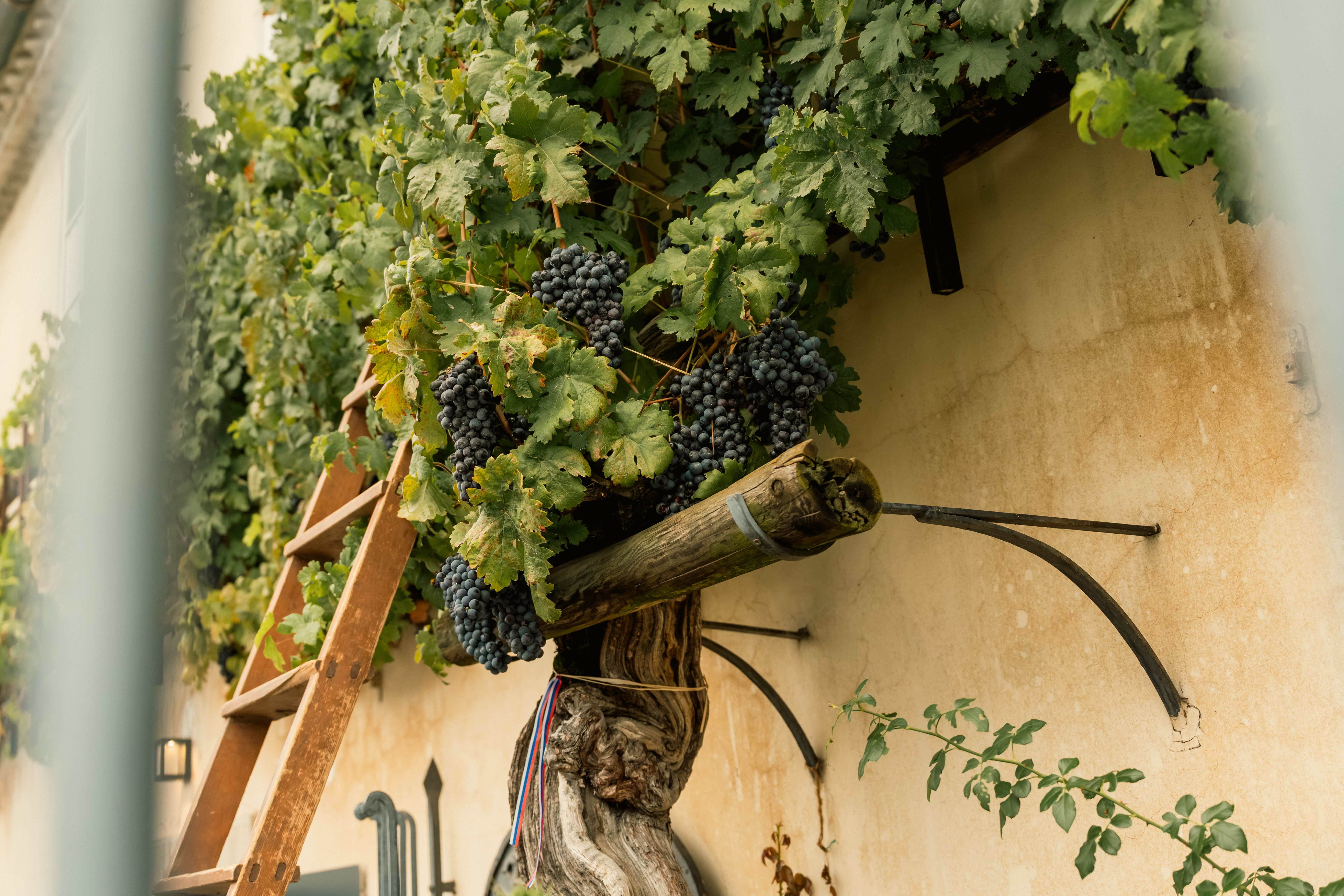
Harvesting
Photo: Dean Dubokovič
Sustainable wines are an important part of Slovenian gastronomy
Hiša Franko, the recipient of two Michelin stars, only serves sustainably produced wines.
Wines made in a sustainable way can be found in many top Slovenian restaurants. In addition to the already mentioned Hiša Franko, 38th best restaurant in the world according to San Pellegrino, where guests are only offered natural wines, these wines are also served at Gostilna Pri Lojzetu, the recipient of a Michelin star in 2020 and holder of the title Best Slovenian Restaurant 2020 by Gault & Millau 2020, Strelec Restaurant, JB Restaurant and others. A wide variety of these wines is also on offer in the Slovenian tapas and wine bar in the centre of Ljubljana – TaBar and Domačija Novak in Dvor pri Žužemberku.
Valter Kramar, Hiša Franko
Photo: Suzan Gabrijan, Hiša Franko Archive