Gostilna Mihovec: Bringing tradition into the 21st century
Alpine Slovenia
That morning, the kitchen at Gostilna Mihovec is filled with the aromas of frying, freshly baked bread and hearty soup. There is no mistaking who is calling the shots at this popular family-run inn in Zgornje Pirniče, on the outskirts of Ljubljana: Mojca Trnovec.
Confident, decisive and highly skilled, she moves deftly around the kitchen, from the hob where the beef soup is simmering to the one where pork cracklings are sizzling, then over to the tray of freshly fried flancati dusted with icing sugar, and finally to the counter where she slices into a freshly baked savoury flatbread.
Photo: Suzan Gabrijan
Photo: Suzan Gabrijan
"We get through a huge amount of this stuff," she says, pointing to a giant pot in which pork cracklings are bubbling away with onions. "We serve our flatbread as a welcome bite, and since we're in the Gorenjska region, we enrich it with cracklings, onions, caraway seeds and fleur de sel. Try some," she says, gesturing towards a slice of flatbread. The pastry melts in the mouth: a perfect combination of warm, yeasty softness, the umami punch of golden cracklings and the distinctive, earthy flavour of caraway seeds.
Veal cheeks are cooking in another pot, while a third holds beef soup that has been simmering since seven that morning. Thick, rich and full of flavour, it is loaded with marrow bones and vegetables and will not be ready until the afternoon. On a napkin on a small wooden table lie bleki – little squares of pasta served with cabbage, porcini mushrooms and homemade sausage, a lunchtime favourite at Mihovec.
Photo: Suzan Gabrijan
Since 1857, this inn, housed in a building opposite the local fire station, has been welcoming hungry and thirsty guests. On the 30-hectare farm, which is run by Mojca's brother Miha and his sons, they grow everything from wheat, soya and buckwheat to hemp, barley and maize. Some of the produce is used in the kitchen, while most is sold.
In the early days of Gostilna Mihovec, each carter kept his own small flask of spirits, known as a frakelj, on the windowsill, taking a swig on his way to work. Next to the house stood a shop, where today the family stores groceries, including wheat, which they take to the mill to be ground into their own flour.
"We were more of a carters' inn, whereas there was another inn in the village back then, associated with the parish, the sort of place that catered more to the snobs," Mojca laughs.
Seven generations have come and gone since then, each leaving its own mark on the inn and helping it move with the times.
The person who has had the greatest influence on the current generation is Mojca's grandmother, Ivanka Petač, from the Kovač family of innkeepers in Vikrče, at the foot of Šmarna Gora. Mojca regards her as both a role model and a mentor. Together with Mojca's grandfather, Jože Petač, from the Mihovec family of innkeepers, she raised their daughter Štefka, who now takes care of the inn's accounts, and their son Jernej.
Jernej Petač ran a restaurant with his wife Mihaela until 2010, was one of the first sommeliers in Slovenia, and continues to oversee the farm’s technological development. A talented accordionist and guitarist, he founded the Mihovec House Band in the 1970s, with the aim of bringing dancing, celebrations and good cheer to the countryside, along with entertaining guests at the family inn at weekends.
Today, the inn is run by their daughter Mojca. At the door, you will be greeted by Mojca's husband Tomaž, known locally as Čarli, who entertains guests with his humour and lively banter as he serves them. Both of their children have also found their way into the hospitality industry: their daughter Ela helps in the kitchen, while their son Martin is head sommelier at Schloss Schauenstein, a castle restaurant with three Michelin stars in Switzerland.
Photo: Suzan Gabrijan
"Back when my grandmother was in charge, I wouldn't have dared to think about going abroad for work experience, as young people do today. She would've said, 'And who's going to do the work at home?!'" Mojca recalls. Earning a living at the inn was never easy, she explains. "When other children started their summer holidays, we were out harvesting," she says with a shrug.
Even so, she would never trade the life of an innkeeper for anything else. After all, this is the life she was born into, and she seems to have been made for it.
"The hospitality business has certainly changed over the years, even in my time. Things have changed here at Mihovec. There used to be a lot of partying, especially at weekends. When dad played the accordion, couples would come here to dance and meet one another. But things have changed over time, as generations have come and gone.
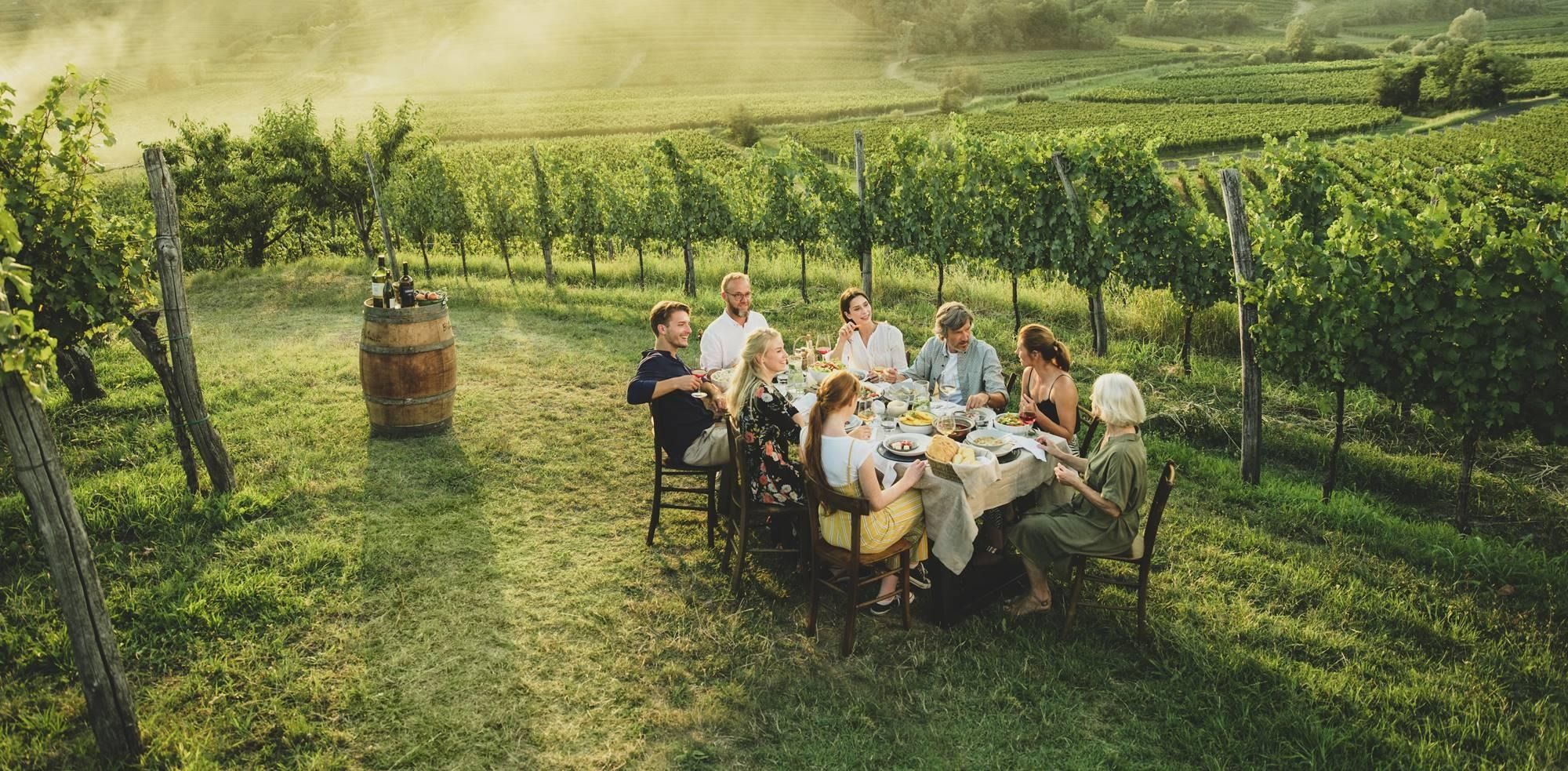
"The guests have changed, too. Children who once came here with their parents now return with their own families," Mojca recalls. "Today, we cater for everything from couples and wedding anniversaries to business lunches, Sunday family celebrations and post-funeral gatherings. It is precisely because of this multigenerational tradition and our dedication to local cuisine that we proudly bear the Gostilna Slovenija certification. This label only serves to confirm what we believe with all our hearts: that we are a restaurant in the truest sense of the word—a place where every guest who steps through the door is treated to genuine Slovenian hospitality and a warm welcome."
The smiling hostess spikes her stories of the good old days with village anecdotes and legends, from the familiar local tippler, whom everyone knew, to runaway horses that had to be tied to the chestnut tree in the inn's front courtyard, where the distraught farmer would eventually come to find them.
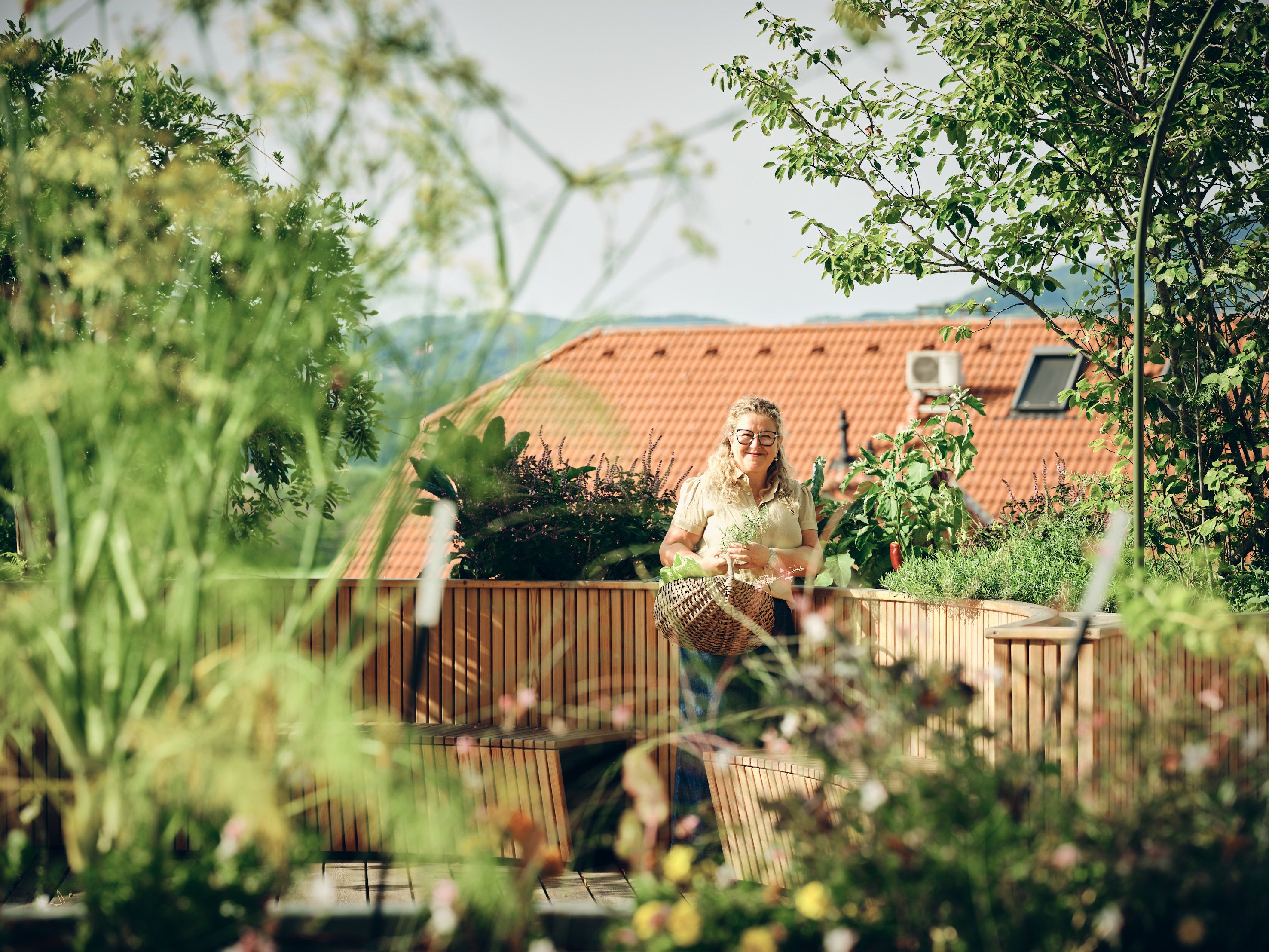
Photo: Suzan Gabrijan
Over the years, Slovenians' attitude towards food and dining has changed, too – and continues to do so. "There was a period when pizzerias were very popular, followed by the fine-dining era, when traditional inns like ours were overlooked. But this is what we want to preserve: an inn where we cook and prepare every dish as if we were cooking for ourselves," she explains.
"In recent years, thankfully, traditional inns have been making a comeback. People have started appreciating them again and actively seeking them out. And now I'm no longer embarrassed to greet guests wearing flip-flops and shorts," laughs the smiling chef, who is otherwise always impeccably turned out.
Where does she find the energy to keep going every day, "practically from eight in the morning until one at night"? To put the first pots on the stove at the crack of dawn, then head out to the fields to collect buckwheat, make use of every last ingredient in keeping with her zero-waste philosophy, whether by pickling or drying it, and take reservations while feeding a calf? Judging by what we see, it is her genuine love of hospitality that keeps her going. Something that has become rare these days.
"We are a traditional inn where we still enjoy spending time with our guests and value personal contact," she confirms.
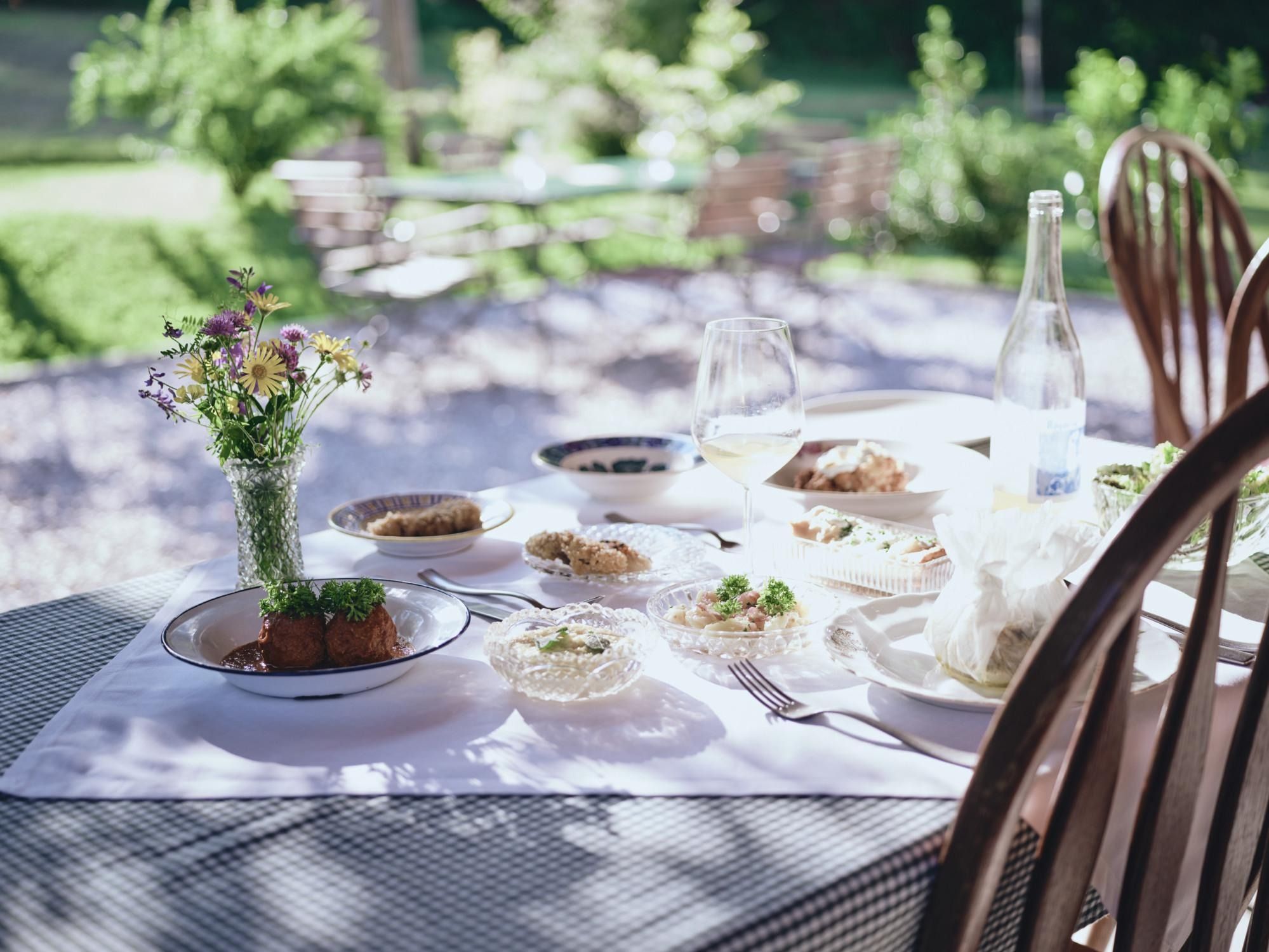
She hurries to set one beautifully presented dish after another in front of us: warm-smoked pork tongue drizzled with Kocbek pumpkin seed oil, followed by pork knuckle aspic with pumpkin seed oil, onion and egg freshly grated at the table. Then comes beef tartare with goat's yoghurt, cold-smoked trout with pickled fennel from the garden in front of the inn, a wooden board laden with homemade cured meats and cheeses, and radicchio with warm potatoes, sizzling pork cracklings and grated egg.
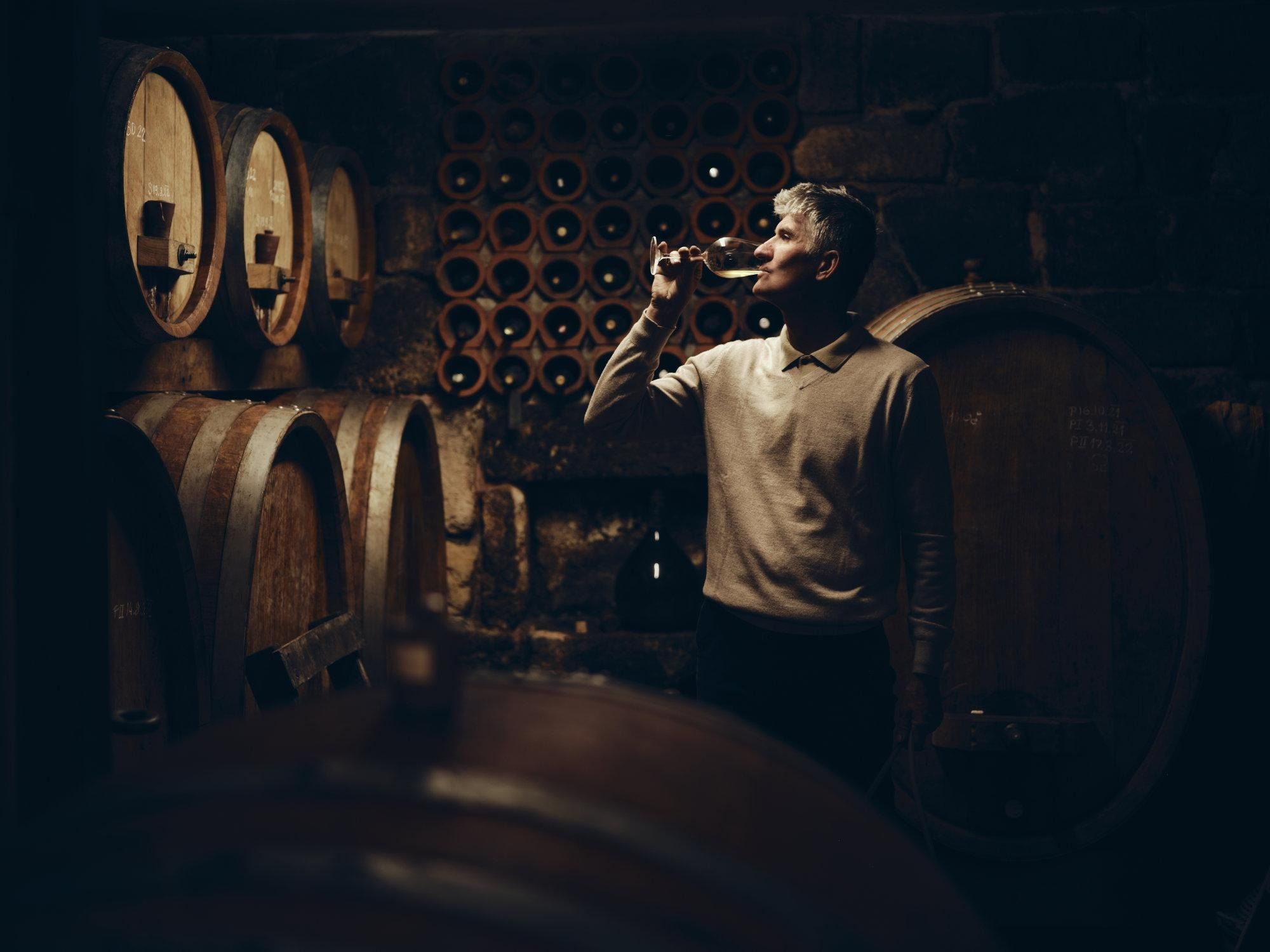
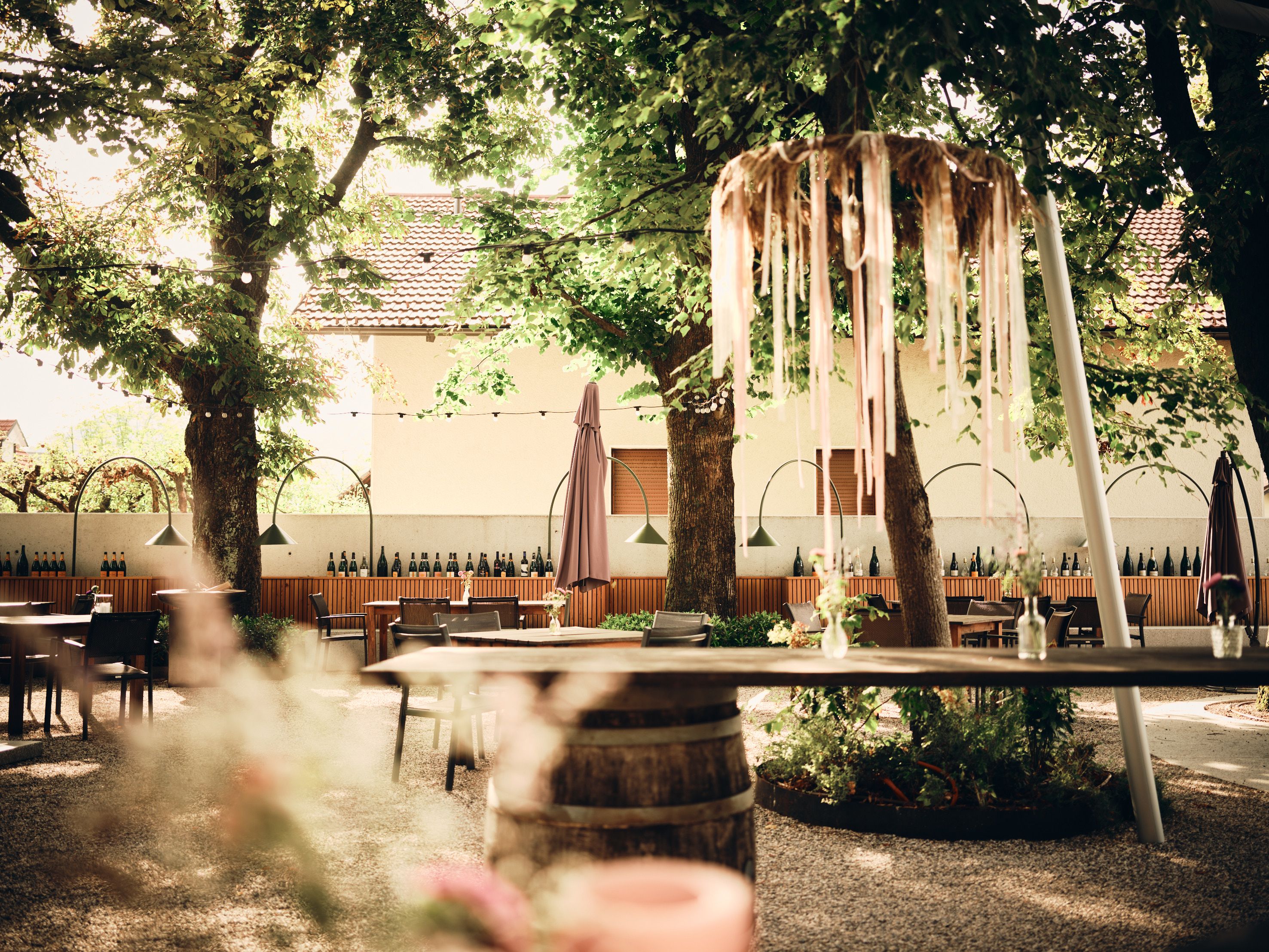
Mojca, who has also completed the third level of sommelier training, casually pours us a glass of Fedora's latest sparkling wine. Meanwhile, Čarli strides past us towards a table of foreign visitors beneath the lush chestnut tree, carrying a tray of mushroom soup so rich that its intense woodsy aroma reaches us from across the courtyard.
Photo: Suzan Gabrijan
Photo: Suzan Gabrijan
At Mihovec, they make everything themselves, including their pečenice (grilled sausages) and krvavice (blood sausages). For the latter, Mojca uses her own family recipe, made with millet, rice, marjoram and mint. "I love that herbal punch of flavour!" she says with a laugh.
The larger cuts of meat, too – pork ribs, beef sirloin and stuffed veal breast – are prepared just as Grandma Ivanka perfected them. They are slow-roasted in the oven until the meat is so tender that it almost falls apart when Čarli carves it in front of you. Most of their meat comes from a local butcher, while the finer cuts are sourced from the nearby 300-year-old Pr' Črnet farm in Verje, the only certified organic farm in the Medvode area.
At Pr' Črnet, where the highly talkative and naturally entertaining Štefan Čebašek runs the farm according to the principle of a complete production cycle, they have 30 hectares of arable land on which they grow organic grain, along with having organic meadows for hay, a stone mill and their own bakery. Most importantly, at least as far as the carnivorous side of Mihovec is concerned, they raise 50 head of top-quality French Limousin cattle.
Čebašek lets the cattle out to pasture, and they charge out of the enclosure like something out of a Western. "Look at him – he weighs 150 kilos and jumps like an athlete," the proud farmer chuckles, watching one of the calves, while Mojca is already thinking about how delicious its meat will be.
Photo: Suzan Gabrijan
And perhaps the biggest hit at Mihovec, the dish that has helped reconnect younger generations with traditional Slovenian cuisine, is veal liver. Here, too, Mojca swears by her grandmother's recipe, which remains a winning formula.
"I gently cook the liver with sautéed, caramelised onions, then pour in some wine and season it with salt and pepper. That's it – really simple," the chef rattles off. Depending on the season, she adds asparagus in spring or porcini or chanterelle mushrooms in autumn.
Mihovec's liver has been a fixture at Odprta kuhna for years and has even become one of the food market's most popular dishes. "No matter which high-profile fine-dining restaurant we had on offer, the longest queue was always for Mihovec's liver. This is what young Slovenian chefs should be building on," notes Lior Kochavy, who runs the popular food market at Pogačar Square.
"Knowing your ingredients is key," Mojca reveals, explaining the secret behind her cooking. As it happens, she is also related to many of the local farmers she works with. One of their closest partnerships in dairy products is with Mis Farm, which extends across the hillside in the village of Zavrh, near the starting point of the trail up Šmarna Gora.
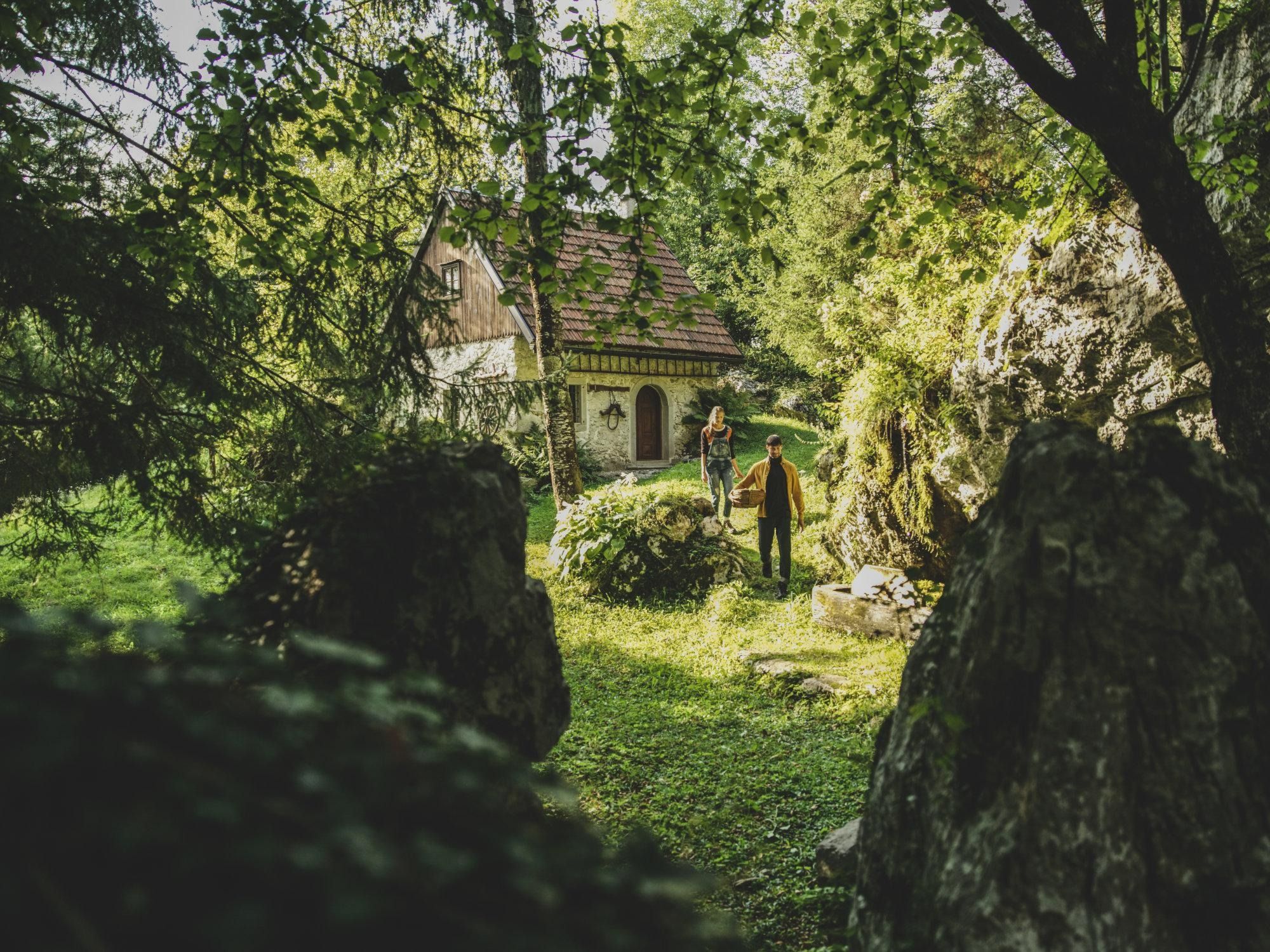
The first thing to greet visitors there is a replica of the Aljaž Tower with a signpost bearing the inscription "Stop and look!" This is where Jakob Aljaž was born in 1845, the brother of Mojca's great-great-grandmother. A pear tree dating back to the time of Maria Theresa grows in front of the house, while beyond it, in the distance, the view stretches towards Mount Triglav. "He was a great patriot and even back then, when Triglav was still German, he would gaze towards it," Mojca says with a smile.
In the house—which is now a museum and occasionally hosts literary evenings—visitors can see, among other things, a 1895 purchase agreement in which Jakob Aljaž bought the summit of Triglav from the municipality of Dovje for 1 goldinar. Also on display are poems associated with him—most notably the mountaineering anthem “Oj, Triglav, moj dom” (“Oh, Triglav, My Home”), which he set to music, and “Silent Night,” which he was the first to translate into Slovenian.
Photo: Suzan Gabrijan
Photo: Suzan Gabrijan
The Triglav theme continues in the building that houses the Mis Farm dairy, where the walls are adorned with old photographs of ascents of Slovenia's highest mountain, crucifixes, cowbells and awards, alongside oil paintings depicting rural life and traditional dairy production.
Today, the family farm, with its 300-year tradition, is run by the young Tomaž Mis, who belongs to a generation that has returned to supplying milk directly to consumers after years of sending it to dairies.
Whereas in the past the family had to cycle to the market in Ljubljana to sell their milk and eggs, Mis Farm now has its own milk vending machine in a prominent spot at the market. "We're the biggest attraction in Ljubljana after the Dragon Bridge," Tomaž laughs.
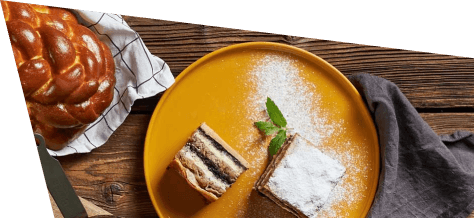
Mojca scoops up some fresh curd cheese, still warm and creamy, ready to be turned into štruklji. “Where is the restaurant industry in our country headed?” she wonders as she describes the daily struggle for survival, when gems like hers face competition from everything that’s foreign and cheaper. And yet, despite everything, the future looks bright for the Mihovec family. Genuine hospitality cannot be taught at any school or bought with money. It is passed down from one generation to the next. And the younger generation at Mihovec is clearly carrying on that tradition.
Unique stories