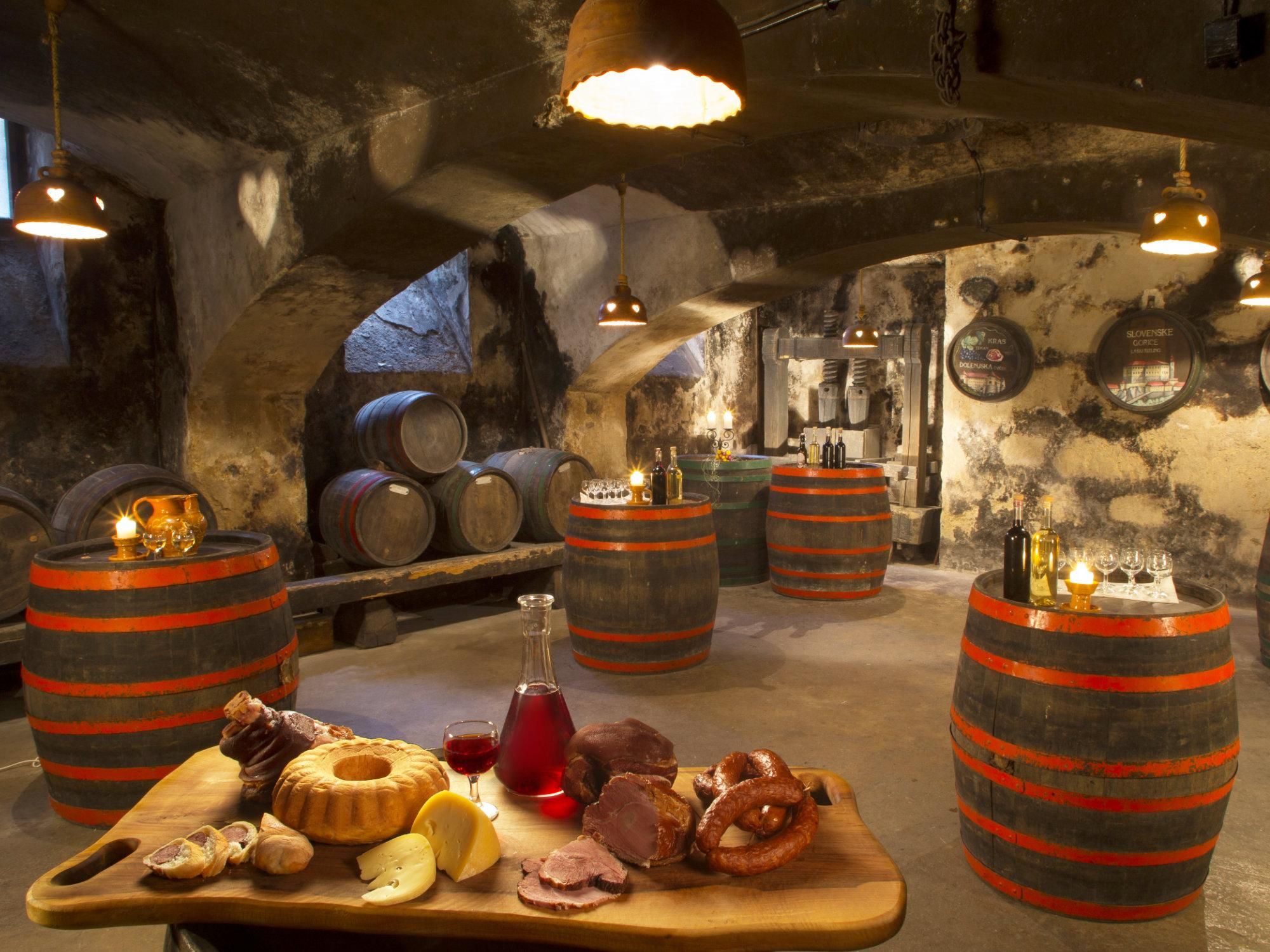
Sauerkraut, sour turnips and meats reign supreme in winter
Despite the shorter days and nature's slumber, winter begins on a festive note. Family Christmas celebrations, followed by New Year celebrations accompanied by the bangs and flashes of fireworks, herald the new calendar year and the beginning of the calendar winter. But don't let the cold bring you down, as winter is a time with many delicious events.
Poprtnik and other Christmas treats
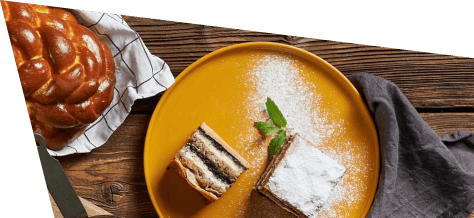
A variety of dishes is typically served at Christmas, the most festive of which is the celebratory Christmas bread, or poprtnik. The making of this elaborately decorated ceremonial bread has a rich heritage in Slovenia, dating back to pagan times. There are many names for it, and it’s made in different forms all over the country. Although the tradition continues even today, potica has come to dominate the table in modern times.
Potica, the queen of Slovenian gastronomy and the symbol of Slovenian cuisine, is a type of cake prepared with various fillings. At this time of year it’s usually made with a walnut, honey, poppy seed, carob or hazelnut filling, to name but a few options. The first mentions of potica, which was once mainly a festive dish, date back to the 16th century.
In addition to these two typical dishes, the Christmas table in the Primorska region includes a dish called bakala in bianco, a creamy cod fish spread. Cod was also served in Ljubljana, but with potatoes and cabbage. Carp is another fish that was traditionally served for Christmas lunch in the capital. Other classic Christmas dishes include the koline pork products in the form of various roasts, žolca (brawn) and the like. More recently, prosciutto has become popular.
Festive cake potica
Photo: Tomo Jeseničnik
Meats are prepared in the winter
Preparations for winter traditionally start a little earlier, with a koline, or pig slaughter and processing. This used to be a truly festive day, in which all members of the family, as well as the neighbours, took part. With changing dietary habits, however, the celebration of koline has diminished somewhat, but it has by no means lost its importance. In various parts of the country the meat is used to produce a multitude of different meat products, from sausages, prosciutto, ham, zašinek (cured pork neck), pancetta, and želodec (cured salami pressed in pig stomach casing), to a plethora of cured sausages and salami, blood sausages, lardo and bržola (rib eye). As many as eight different traditional Slovenian meats bear the Protected Geographical Indication (PGI). And let’s not forget žolca, crackling and zaseka (minced lard). The latter two dishes in particular are extremely popular and can still be found in many pantries and fridges across Slovenia.
"Franjska klobasa"
Photo: Tomo Jeseničnik
Two seasonal superfoods and other winter vegetables
Sauerkraut and sour turnips have been a staple of the winter diet for centuries, and were once part of almost every meal. The Slavs are thought to have been the first to make sauerkraut. These fermented foods can be the basis for soups, such as jota (pork, sauerkraut and bean stew), a main course or a side dish, for example with Carniolan sausage. They were also eaten with buckwheat žganci for breakfast. More recently, sauerkraut and sour turnips have been called superfoods because they contain probiotics that are good for your health and help eliminate toxins from the body.
Sauerkraut and turnips
Photo: Tomo Jeseničnik
Nature does not rest completely in winter. Long into winter we can continue to harvest quite a few vegetables that we planted in summer or autumn. In addition to the already mentioned cabbage, these vegetables – which provide us with much-needed vitamins and minerals in the colder months – include various types of chicory and winter lettuces, including the legendary Ljubljana iceberg lettuce, as well as kale and Brussels sprouts, lamb’s lettuce, spinach, beetroot, yellow kohlrabi, celery, leeks and much more. All these foods form an important part of Slovenia’s gastronomic tradition.
One of these traditions is bloška kavla or trojka, a stew of kohlrabi, beans, potatoes and meat, as well as loška smojka, a dish of boiled turnips stuffed with millet porridge, oven-cooked and served with pork cracklings or minced lard. Other legendary and traditional dishes include bujta repa, a Prekmurje dish of turnips, millet porridge and pork, and the Ljubljana všenat zelje, a dish of stewed sauerkraut with millet porridge. In Idrija smukavc, a lard-dressed stew made of kale, chicory, turnips, cabbage and potatoes, is well known, and in northern Primorska, poštoklja. This is a mash-like dish of boiled potatoes and turnip leaves, served with grated cheese. In the Goriška region a kale stew called k’p’rouc is cooked, and in Vipava šelinka is popular, a soup made of root vegetables and celery leaves, vegetables and pig’s trotters.
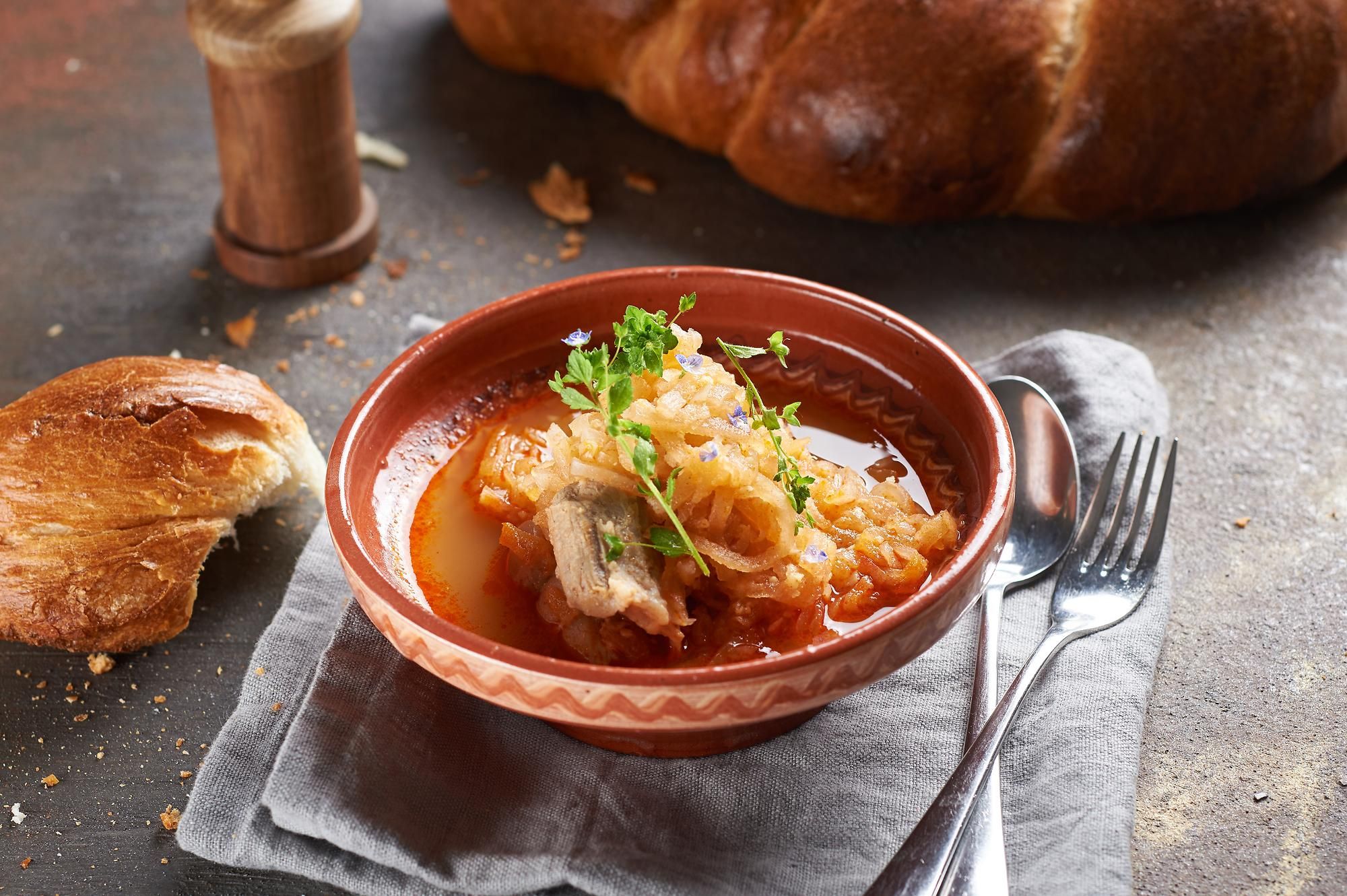
"Bujta repa"
Photo: Tomo Jeseničnik
Shrovetide is the time of abundantly laden tables
Shrovetide marks the end of winter and the beginning of the traditional 40-day season of Lent. But before Lent begins, it’s time for festive cuisine and tables groaning with delicious food. Typical for this time of year are fatty and fried dishes, with fried yeast dough in the form of doughnuts, fritule, koštole and a number of similar fried treats derived from them, as their names suggest. Shrove Sunday is sometimes called Fat Sunday and the Thursday before it is also called Fat Thursday. The Slovenian proverb “Whoever does not fill up on Shrovetide will starve all year round” captures the spirit of this time. The main Shrovetide dishes include pork, either fresh or smoked, and various meat products that characterise the whole winter season.
Doughnuts
Photo: Tomo Jeseničnik
Whose salami is best?
In addition to International Women’s Day and Mother’s Day, which is celebrated in Slovenia on 25 March, the third month of the year sees Martyrs’ Day, a celebration of boys and men, accompanied by competitions for the best salami – salami festivals. There are many of these festivals all over Slovenia at this time, but it all started on Martyrs’ Day, 10 March, back in 1962.
The Sevnica Salami Makers’ Association still holds Slovenia’s first and oldest competition for the best salami, called the Sevnica Salami Festival, and hailed as the mother of all such festivals. The special feature of this event, which has been organised in Sevnica for more than 60 years, is that it is open only to men. Since 1996, there has also been the Pomurje Salami Festival in Radenci. Then there are the Pohorje Salami Festival in Zreče, the Braslovče Salami Festival… the list goes on.
While nature is resting, festive experiences and traditional cuisine bring warmth and a sense of belonging. Customs and traditions, some dating back to ancient times, enrich the cultural heritage, which is also expressed through the typical culinary offer.