Typical dishes

Typical dishes

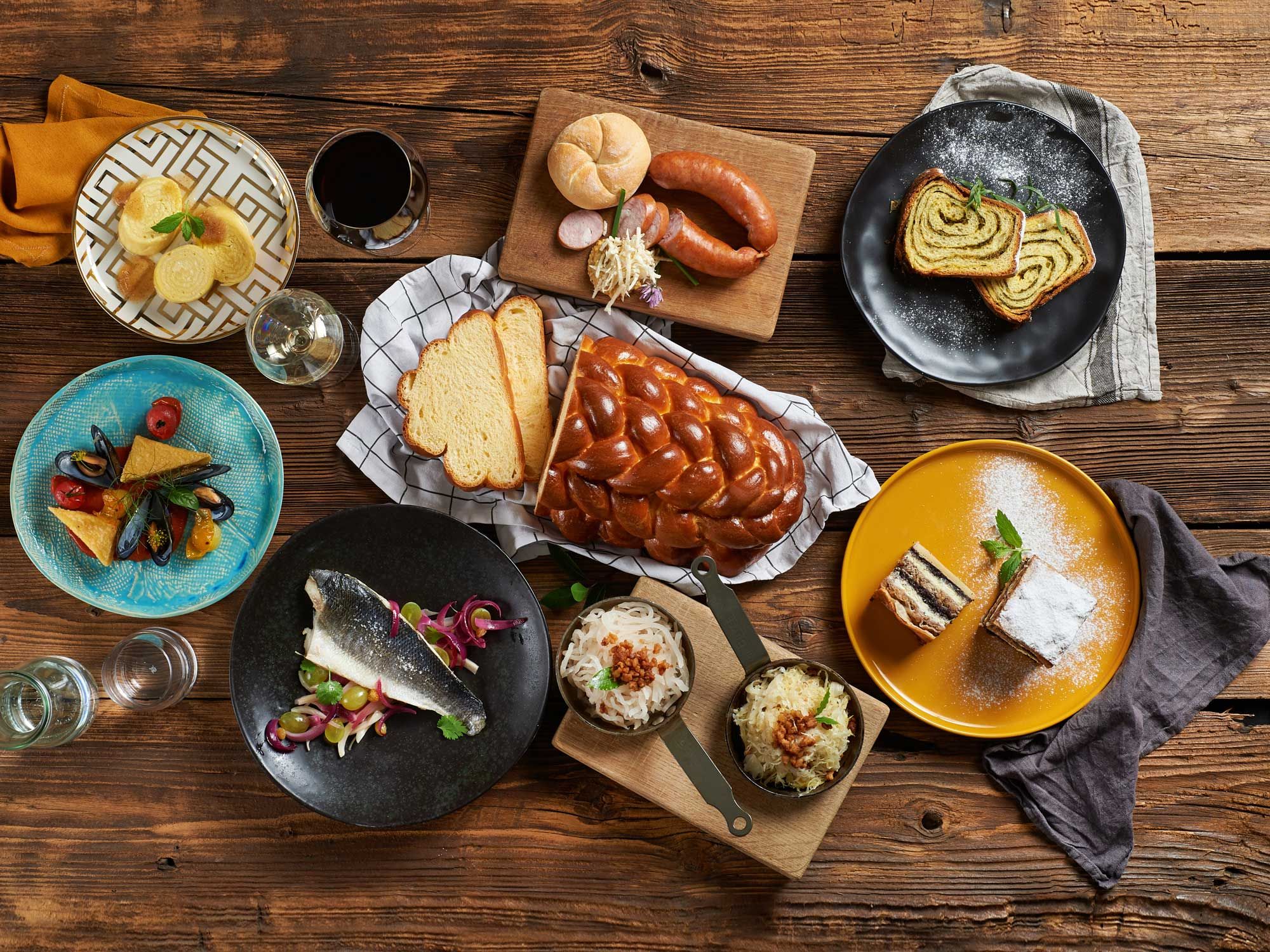
Different food is available on the coast than among the Alpine peaks. The flavours of the Pannonian Plain are different to those of the Karst. Everywhere you go, you will discover how nature and culture have always been combined here on a plate with distinctive local dishes.

Photo: Tomo Jeseničnik

1–21 of 57

  • THERMAL PANNONIAN SLOVENIA

    Ajdov krapec (buckwheat cake)

    This is a flatbread made from thin buckwheat dough, topped with ‘skuta’ curd cheese and sour cream. It is a speciality from Prlekija and a part of Slovenske Gorice; another dialect name for it is ‘kropec’. Locals believe that the name comes from ‘krop’ (boiling water), which is used to steam the buckwheat flour used for preparing this flatbread.

  • ALPINE SLOVENIA

    ‘Ajdovi in koruzni žganci’ (buckwheat and maize mush)

    The most widespread everyday dish in Alpine and Central Slovenia used to be ‘žganci’ (mush). It was said in the 19th century that this was the ‘pillar of the Land of Carniola’. ‘Žganci’, also known as ‘drobljenci’, can be the main course or a side dish to hotpots, sweet or sour milk, or yoghurt. They also taste great with eggs, sauerkraut, and turnip.

  • MEDITERRANEAN & KARST SLOVENIA

    ‘Bakala na belo ali rdeče’ (dried codfish, white and red)

    A delicious cold dish, spread, or a dish commonly served with polenta. The basis for this dish is dried cod. This is a typical Christmas Eve dish and a dish served when tasting new olive oil. The dish is called ‘na rdeče’ if the codfish is prepared in tomato sauce.

  • LJUBLJANA & CENTRAL SLOVENIA

    Belokranjska pogača (Bela Krajina flatbread)

    This dish is never cut, but broken up by hand; it is salted and sprinkled with caraway. This delicious flatbread has a European traditional specialities guaranteed designation.

  • ALPINE SLOVENIA

    ‘Blejska kremšnita’ (Bled Cream Slice)

    A special feature of Bled cuisine since 1953. This dessert consists of filo dough with vanilla cream, a thinner layer of whipped cream, and another layer of filo dough with caster sugar on top. By the autumn of 2011, eleven million original Bled Cream Slices had already been prepared at the Hotel Park in Bled.

  • THERMAL PANNONIAN SLOVENIA

    ‘Bograč’

    This is a type of goulash hotpot that has been prepared in Prekmurje since 1950. It is made from three types of meat, potatoes, and mushrooms (in autumn). The name of the dish originates from the Hungarian word for a cauldron in which shepherds used to cook meat hotpots. The largest ‘bograč’ cooking competition is held in Lendava.

  • ALPINE SLOVENIA

    ‘Bohinjska zaseka s suho klobaso’ (Bohinj pork mash with dry sausage)

    A special type of ‘zaseka’ or pork mash is made in Bohinj – this is a spread made from ground smoked bacon. Dry sausage and pieces of meat are conserved in ‘zaseka’. Dry sausage with ‘zaseka’ is an incredibly tasty snack and smoked ‘zaseka’ gives amazing flavour to dishes if used as a dressing.

  • ALPINE SLOVENIA

    ‘Bohinjski mohant’ (Bohinj Mohant cheese)

    A special type of spicy ‘skuta’ curd cheese or sour milk curd cheese, which matures in wooden firkins known as ‘deža’. Maturing is faster in the summer months, so ‘Mohant’ is full-fat during this season, while in the winter skimmed milk is used. This incredible Slovenian delicacy has a European protected designation of origin.

  • THERMAL PANNONIAN SLOVENIA

    ‘Bosman’ (wedding bread)

    In the past, no wedding in the region along the River Mura was complete without an ornately decorated ceremonial bread representing a happy marriage. This high-quality white bread made from many kinds of dough plaits and decorated with, among other things, paper flowers, was once also given at births and children’s baptisms.

  • THERMAL PANNONIAN SLOVENIA

    ‘Bujta repa’ (sour turnip and millet mush)

    The most popular hotpot in Prekmurje is ‘bujta repa’, which was initially a typical winter-time lunch dish. The name of the dish comes from the word ‘bujti’, which means ‘to kill’, so it is a dish eaten at the pig slaughter. Its main ingredients include grated turnip, the fatty parts of a pig head and neck, and cut up pig skin.

  • THERMAL PANNONIAN SLOVENIA

    ‘Dödöle’

    Potato mush which was established in Prekmurje in the 19th century as an everyday dish enjoyed for lunch or dinner. The name comes from Hungarian. The mush is topped with lard, pork crackling, ‘zaseka’ pork mash, pumpkin seed oil, or sour cream.

  • MEDITERRANEAN & KARST SLOVENIA

    Fig loaf

    One of the culinary traditions in Istria is making loaves from dried figs. Figs are cut up and kneaded into a thick dough together with grape juice. This dough is then formed into loaves and dried in the sun, covered in bay leaves, for at least a week. The loaves can then be stored and enjoyed for months.

  • MEDITERRANEAN & KARST SLOVENIA

    ‘Fritole and kroštole’

    ‘Fritole’ are fried dough balls, also known as ‘miške’, a typical Christmas dish. In some places, raisins are added to the dough, too. ‘Kroštole’ or ‘hroštole’ are a fried brittle pastry, also known as ‘flancati’. This is a typical holiday dessert that was most typically enjoyed during the Shrovetide period in Istria.

  • MEDITERRANEAN & KARST SLOVENIA

    Frtalja ali fritajaFrtalja or fritaja (omelette)

    An omelette typical of Istria and Mediterranean cuisine in general in Slovenia. It is particularly common in the spring when there are many fresh young plants, herbs, and vegetables available. Throughout the year, other ingredients are also added to the eggs, such as mushrooms, ‘pršut’ ham, sausages, bacon, and white and red wine.

  • MEDITERRANEAN & KARST SLOVENIA

    ‘Goriška gubánca’ (potica cake made from sweet dough)

    A typical holiday dessert from Mediterranean Slovenia and the neighbouring Friuli-Venezia Giulia region. It is an older ‘relative’ of the Slovenian ‘potica’ cake; however, it differs in how it is made and shaped, as it does not have a hole in the middle but is snail-like in shape. The first written record about the ‘gubanca’ dates back to the second half of the 16th century. ‘Gubanca’ is made in the Gorica region from filo dough, while it is made from leavened dough in the Vipava Valley.

  • LJUBLJANA & CENTRAL SLOVENIA

    Idrijski žlikrofi z bákalco (flour dumplings with sauce)

    Flour dumplings filled with potatoes, onions, pork crackling, and seasoning are a typical dish once enjoyed by miners in Idrija from the turn of the 19th to the 20th century. They are prepared with a sauce called ‘bákalca’ made from ram or hare meat, buttered or with goulash.

  • MEDITERRANEAN & KARST SLOVENIA

    ‘Jota’ (a sauerkraut/turnip hotpot from the Karst, Vipava, and Istria regions)

    There are three types of this hotpot, which is originally from Carnia, but has since been adapted to the dietary needs of locals from the Karst, the Vipava Valley, and the Slovenian Istria. ‘Kraška jota’ is made from sauerkraut and potatoes, ‘vipavska jota’ from sour turnip, also from sauerkraut, Savoy cabbage or beet leaves, and ‘istrska jota’ is made without potatoes.

  • MEDITERRANEAN & KARST SLOVENIA

    Calamari

    The Italian world ‘calamari’ is often used for different squid dishes made in Slovenia. Due to their various fillings, these dishes represent a wide array of different flavours. The most common method for preparing calamari with different fillings is grilling.

  • ALPINE SLOVENIA

    Sauerkraut and sour turnip

    Traditional natural sauerkraut and sour turnip are held in high regard in all of Slovenia's gastronomic regions. Particularly in the winter, these foodstuffs enrich everyday dishes and holiday dishes alike – as a side dish or as an ingredient in main dishes. Due to their pleasant acidity, they are considered to aid digestive health.

  • MEDITERRANEAN & KARST SLOVENIA

    Klapavice or pedoči (Mediterranean mussels)

    Klapavice or pedoči (Mediterranean mussels) are a popular type of seafood, which can be found in the sea off the Slovenian coast. They are prepared in various ways, e.g. in a ‘na belo’ sauce or ‘na tržaški način’ (Trieste-style), in a soup, grilled, or in delicious risottos.

  • ALPINE SLOVENIA

    ‘Kobariški štruklji’ (Kobarid filled dumplings)

    These cooked flour dumplings or pockets with a filling made of bread crumbs, raw butter, walnuts, raisins, and aromatic herbs is a typical holiday dish. A similar dish was mentioned by the cook of the Bishop of Aquileia as early as in the 15th century.

Taste Slovenia

Read more

News with Flavour

Subscribe to the tastiest newsletter Taste Slovenia.