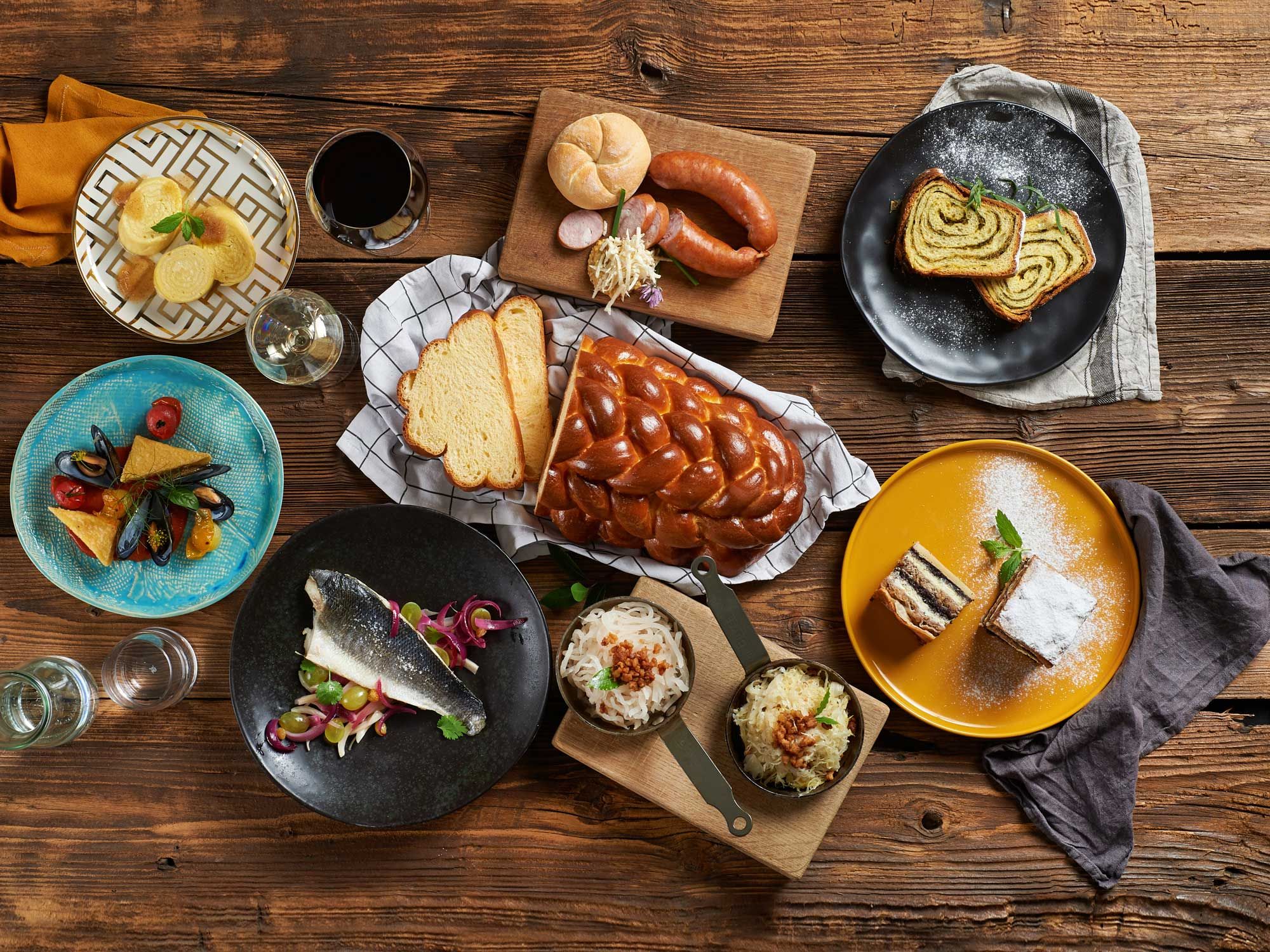
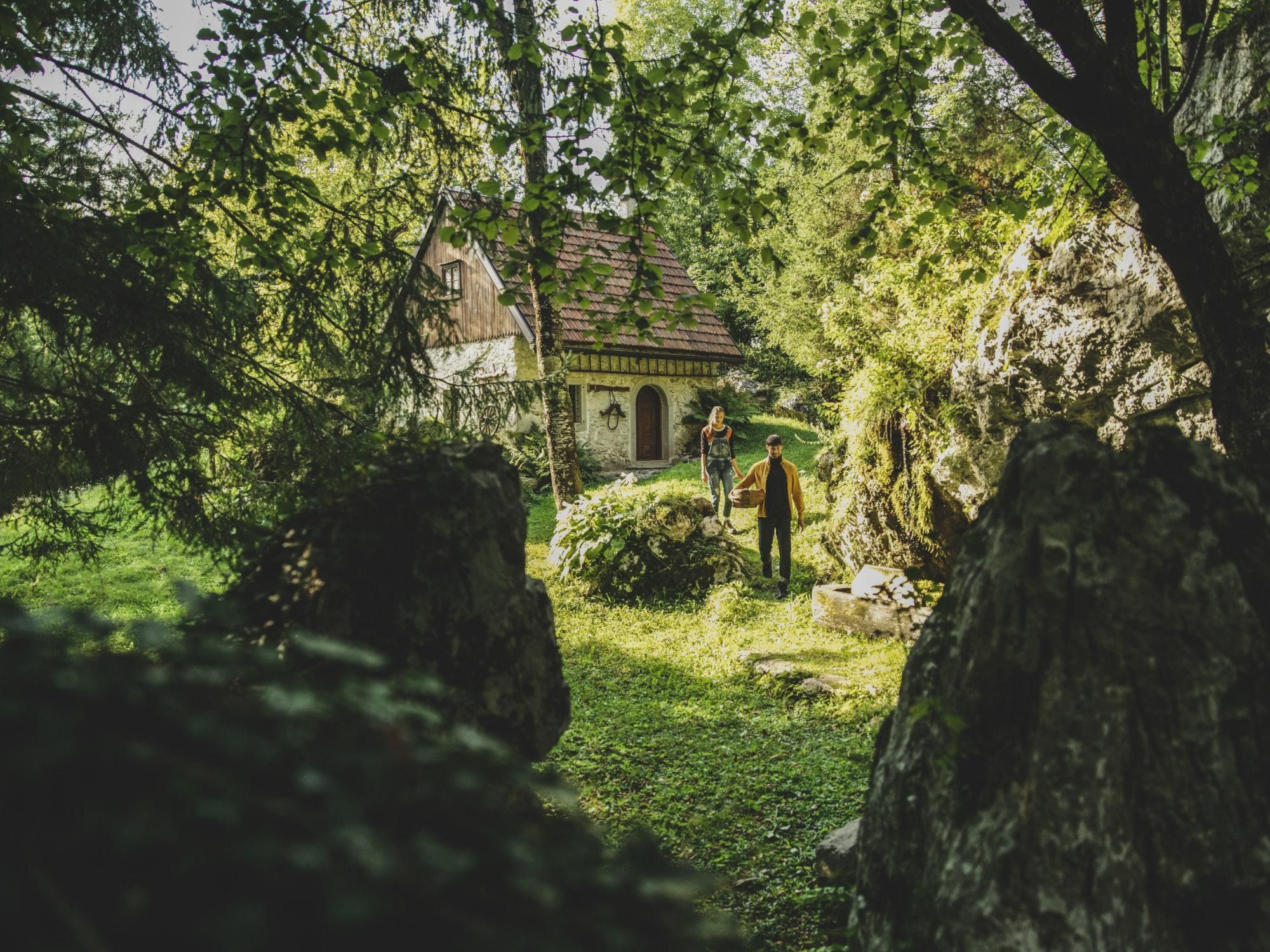
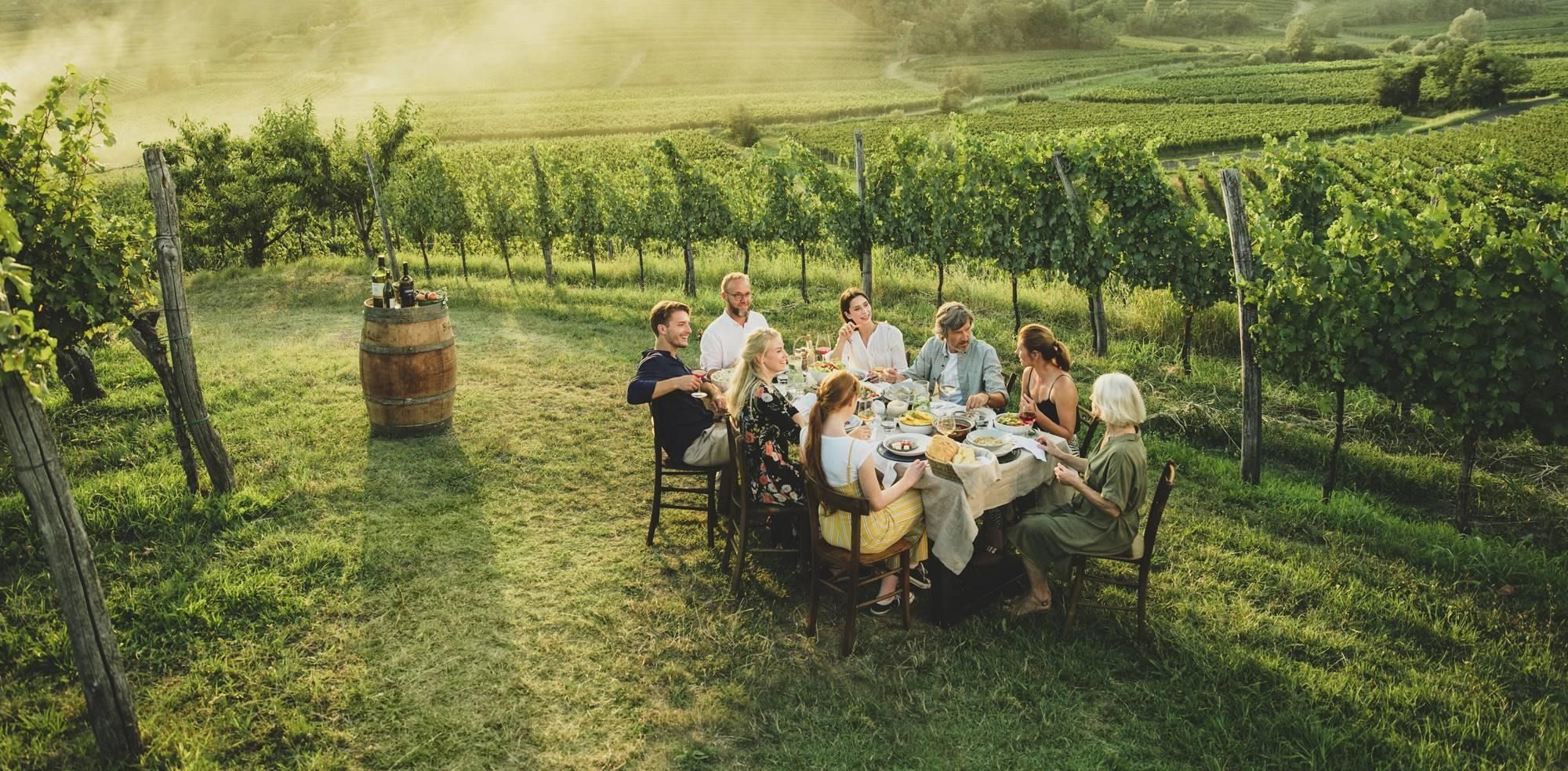
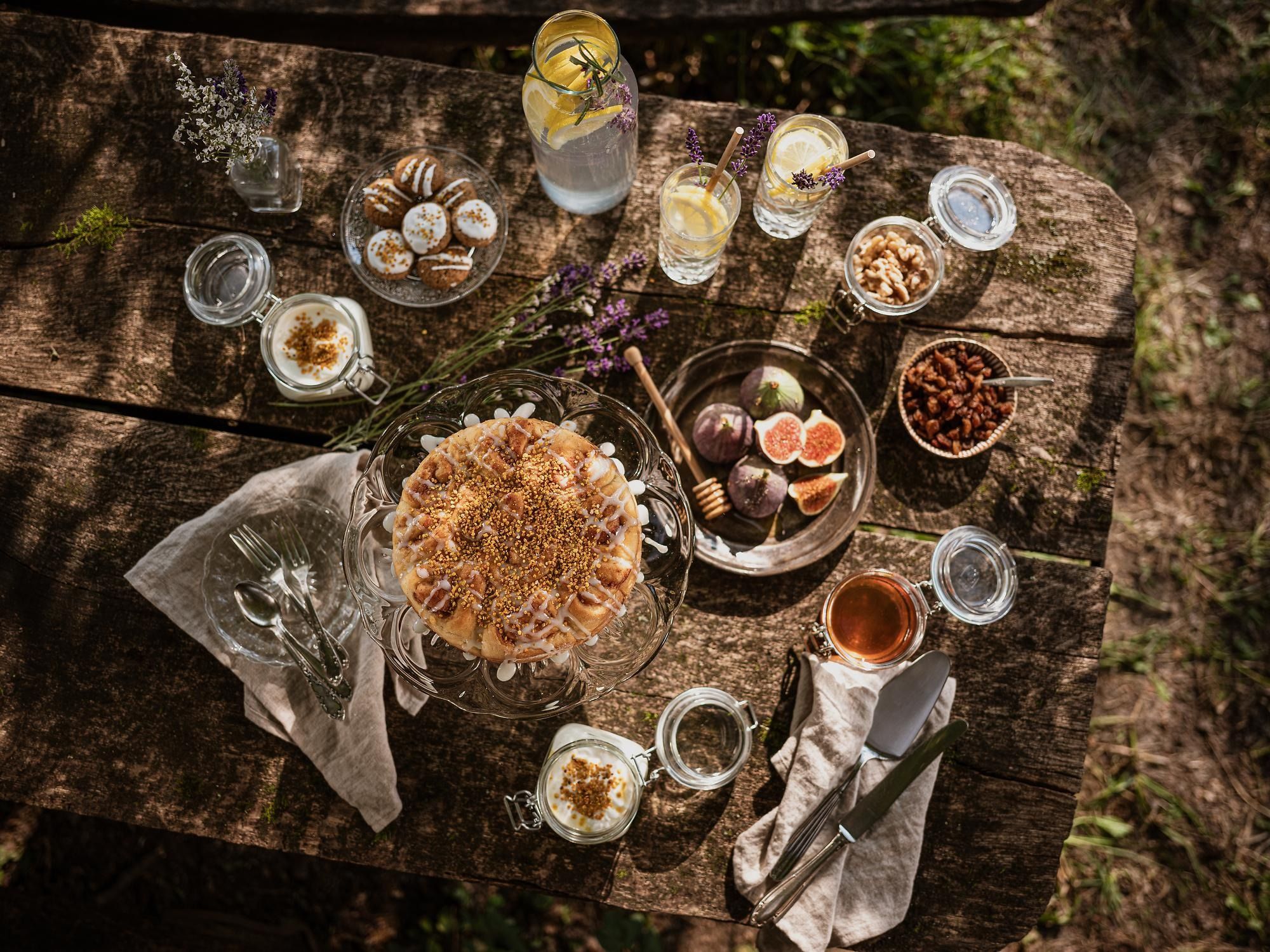
Different food is available on the coast than among the Alpine peaks. The flavours of the Pannonian Plain are different to those of the Karst. Everywhere you go, you will discover how nature and culture have always been combined here on a plate with distinctive local dishes.
Photo: Tomo Jeseničnik
43–57 of 57
ALPINE SLOVENIA
‘Tolminc’ cheese and ‘Bovec’ cheese
The tall mountains towering above the River Soča have been home to cows and indigenous Bovec sheep for centuries. The ‘Tolminc’ and ‘Bovec’ sheep cheeses, which have a European protected geographical indication, are made from extremely high-quality milk.
LJUBLJANA & CENTRAL SLOVENIA
Slovenian ‘potica’ cake
The symbol of Slovenian cuisine is a roll cake made with various fillings; it is currently being considered for ‘traditional specialities guaranteed’ protection from the European Commission. This original dessert, which has been taken to all parts of the world by Slovenian immigrants, is a true ambassador of Slovenia. The first mentions of this dessert, which was once mostly eaten on holidays, date back to the 16th century. Various sweet and savoury fillings are used in the ‘potica’ cake to adapt it to various seasons of the year and holidays. The most widespread and popular is the Slovenian ‘potica’ cake with walnut filling, while ‘potica’ cakes with walnut and raisin filling, with raisin filling, with tarragon filling, and with tarragon and ‘skuta’ curd cheese filling are also protected.
ALPINE SLOVENIA
Soča trout in buckwheat or maize flour
The crystal-clear River Soča is home to the indigenous Soča trout (Salmo trutta marmoratus), an incredible culinary delicacy. This is prepared by rolling it in buckwheat or maize flour and then frying; it is also very delicious if enjoyed with dried ‘pršut’ ham.
ALPINE SLOVENIA
‘Srna po bohinjsko’ (Bohinj-style roe deer)
The vast forests in Triglav National Park provide a habitat for numerous wild animals. This is why venison is often represented in the locals’ food culture.
ALPINE SLOVENIA
‘Tepkin kompot’ (Tepka pear compote)
The once widespread pear variety used to cook delicious compote also enriches snacks with cheese and ‘skuta’ curd cheese, ‘štruklji’ (traditional dumpling) fillings, and many other dishes. Their reputation has also been kept alive due to ‘Gorenjski Tepkovec’, a natural Tepka brandy with a protected geographical indication.
ALPINE SLOVENIA
‘Tolminska frika’ (Tolmin omelette)
Carnia is the home of ‘frika’ or fried cheese. From there, the dish spread to the Bovec region, where it is prepared using potatoes, cheese, and bacon. In the Trenta Valley area, it’s prepared using cheese, polenta, bacon, and eggs, while potatoes, cheese, bacon, eggs, and onions are used on the Alpine dairy farms of the Soča Valley.
LJUBLJANA & CENTRAL SLOVENIA
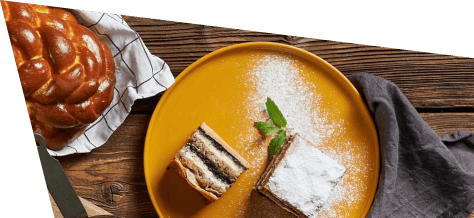
Ljubljana Cake
As the story goes, a cook created an incredible dessert to impress the daughter of the lord of the Ljubljana Castle so she would marry him. During the wedding feast, only this cake was eaten for seven days and seven nights, and it is still one of the main delicacies served in Ljubljana.
LJUBLJANA & CENTRAL SLOVENIA
‘Velikoplaninski trnič’ (Trnič cheese from Velika Planina)
These decorated cheese buns made from the remains of curd are traditional gifts given by herdsmen from the Velika Planina plateau to their girlfriends, female friends, and wives after they came down from summer pasture on the Kamnik mountain pastures. They would give them two buns of cheese, which symbolised female breasts.
LJUBLJANA & CENTRAL SLOVENIA
Vodnik’s salad
Lamb's lettuce seasoned with oil and vinegar in a symmetrical arrangement, accompanied by finely chopped hard-boiled eggs, pickled beets, and an entire head of cauliflower. This salad with a pleasant appearance is made according to a recipe from the first cookbook written in Slovenian, published by Valentin Vodnik in 1799
THERMAL PANNONIAN SLOVENIA
‘Vrtanek’ (holiday bread)
A typical ceremonial bread which was recorded in writing as early as in the 17th century. ‘Vrtanek’ bread used to be a common gift given by girls to haymakers, and was also given out during maize husking and enjoyed at wedding feasts.
‘Zgornjesavinjski želodec’ (stuffed pig’s stomach from the Upper Savinja Valley)
The Upper Savinja Valley is home to a typical dried meat delicacy made from high-quality meat and bacon. A suitably salted and seasoned filling is stuffed into a natural wrapping. Pig stomachs were typically used in the past. This popular meat product has a European protected geographical indication.
ALPINE SLOVENIA
‘Čompe s skuto’ (potatoes and curd cheese)
‘Čompe’ is just one of the 132 names for potatoes in Slovenia. As ‘čompe’, potatoes have been cooked in abundance in the Soča Valley since the 19th century, complemented with delicious ‘skuta’ curd cheese. Every year, the Čompe Night (Čomparska noč) tourist event is held in Bovec.
LJUBLJANA & CENTRAL SLOVENIA
Šmarnogorski ričet (barley mush from Šmarna Gora Hill)
Cooked barley mush with vegetables and smoked pork is a famous dish served in the ‘gostilna’ (traditional restaurant) on top of Šmarna Gora Hill (669 m), a popular day-trip destination on the outskirts of Ljubljana. In general, ‘ričet’ or ‘ječmen’ is considered to be one of the most widespread dishes in Slovenia.
THERMAL PANNONIAN SLOVENIA
Štajerska sour broth
Only the best superlatives are used to describe this broth, as it is said to be a magical cure for both sleepless nights and the effects of alcoholic overindulgence. Most frequently, this broth is made during the pig slaughter and is enjoyed at wedding feasts when it is served to guests as a sign that the celebration is coming to an end.
LJUBLJANA & CENTRAL SLOVENIA
Štruklji (cooked dumplings with curd cheese, apple, tarragon, and walnut fillings)
These dumplings made from filo or leavened dough with various fillings, cooked in boiling water, baked or steamed, have been a staple in Ljubljana's cuisine since the 17th century. In the culinary culture of modern Slovenia, ‘štruklji’ dumplings are one of the most recognisable dishes. They are made with some 80 different sweet or savoury fillings.